


Nasir Khusraw's seven-year Middle Eastern odyssey, which took place in the 11th century, is renowned for its profound impact on the cultural, intellectual, and spiritual landscape of the time. This extraordinary journey, meticulously chronicled in his celebrated travelogue, Safarnama, offers a unique glimpse into the lives of revered scholars, spiritual masters, and the people he encountered along the way.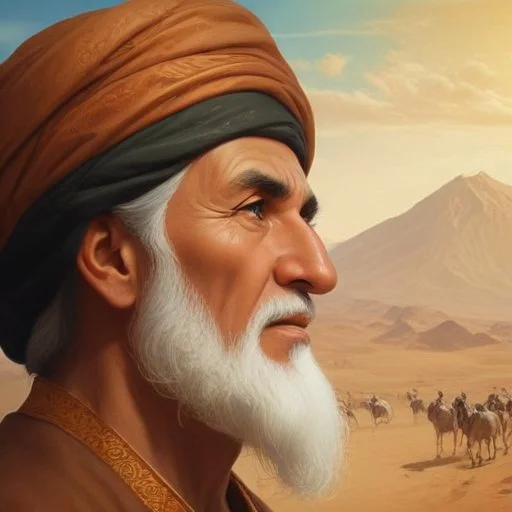
The 11th century was a time of great cultural and intellectual exchange, with the Silk Road playing a vital role in connecting the East and the West. This era saw the rise of Sufism, a mystical tradition within Islam that emphasized the inner dimension of faith and the pursuit of spiritual growth. It was against this backdrop that Nasir Khusraw embarked on his extraordinary journey, driven by a deep-seated desire for spiritual enlightenment.
In 1046 CE, Nasir Khusraw departed from Marv, modern-day Turkmenistan, marking the beginning of his epic journey. Over the next seven years, he traversed the ancient Silk Road, crossing vast deserts, and navigating treacherous mountain passes. His travels took him through present-day Iran, Afghanistan, and Iraq, as he sought out revered scholars and spiritual masters.
Nasir Khusraw's journey was marked by encounters with several key figures who played a significant role in shaping his spiritual and intellectual development. These included prominent Sufi mystics, Shia theologians, and scholars who shared their wisdom and insights with him. Some of the notable figures he met during his journey include the renowned Sufi master, Abu Sa'id Abu'l-Khayr, and the esteemed philosopher, Ibn Sina.
Nasir Khusraw's journey had a profound impact on his spiritual and intellectual development, culminating in the writing of his celebrated travelogue, Safarnama. This remarkable work offers a unique window into the cultural, intellectual, and spiritual landscape of the 11th century, providing valuable insights into the lives and teachings of prominent Sufi mystics and scholars.
Nasir Khusraw's journey and subsequent writings had a significant impact on the cultural and social landscape of the time. His encounters with revered scholars and spiritual masters helped to foster greater understanding and exchange between different cultures and intellectual traditions. His writings, in turn, inspired a new generation of scholars and spiritual seekers, contributing to the growth and development of Sufism and Islamic thought.
Nasir Khusraw's epic journey and celebrated travelogue, Safarnama, have left an indelible mark on the cultural, intellectual, and spiritual heritage of the Middle East. His quest for spiritual enlightenment and his encounters with revered scholars and spiritual masters continue to inspire and guide seekers of knowledge and wisdom to this day.
Nasir Khusraw's Early Life and Motivations
Before embarking on his epic journey, Nasir Khusraw was a high-ranking official in the Ghaznavid court, where he served as a tax collector and financier. However, he grew disillusioned with the materialism and corruption that pervaded the court, leading him to seek a deeper sense of spiritual fulfillment.
Khusraw's fascination with Sufism was sparked by his encounters with Sufi mystics, who emphasized the importance of spiritual purification and self-reflection. He was particularly drawn to the teachings of the celebrated Sufi master, Abu Sa'id Abu'l-Khayr, who would later become a significant figure in his journey.
The Cultural Significance of Nasir Khusraw's Safarnama
Nasir Khusraw's Safarnama is more than just a travelogue – it's a cultural treasure trove that offers a unique window into the intellectual, spiritual, and cultural landscape of the 11th century. The work is a testament to the rich cultural exchange that took place along the Silk Road, highlighting the diversity and richness of Middle Eastern cultures.
Through his vivid descriptions of Sufi centers, mosques, and madrasas, Khusraw's Safarnama provides a fascinating glimpse into the architecture, art, and literature of the time. Moreover, his encounters with scholars, poets, and mystics offer a nuanced understanding of the cultural and intellectual ferment that characterized the era.
The Manuscript Tradition of Nasir Khusraw's Safarnama
The Safarnama has survived for centuries through a rich manuscript tradition, with numerous copies and translations attesting to its enduring popularity. The earliest known manuscript dates back to the 12th century, with subsequent copies emerging in the 14th and 15th centuries.
One of the most significant manuscripts is the 14th-century copy housed in the Topkapi Palace Museum in Istanbul, which features exquisite calligraphy and intricate illuminations. Other notable manuscripts can be found in libraries and museums across the Middle East, Europe, and Asia, underscoring the Safarnama's status as a cultural treasure shared across continents.
Nasir Khusraw's Philosophical and Ideological Influences
Nasir Khusraw's encounters with prominent scholars and spiritual masters had a profound impact on his philosophical and ideological outlook. He was deeply influenced by the teachings of the Persian philosopher, Ibn Sina, and the Sufi mystic, Abu Sa'id Abu'l-Khayr, who shaped his understanding of the nature of reality and the human condition.
Khusraw's Safarnama reflects his synthesis of Sufi and philosophical ideas, emphasizing the importance of spiritual purification, self-reflection, and the pursuit of wisdom. His work also underscores the significance of intellectual curiosity and the need for ongoing spiritual growth and development.
The Geopolitical Context of Nasir Khusraw's Journey
Nasir Khusraw's journey took place against the backdrop of a tumultuous geopolitical landscape, marked by the rise and fall of empires, dynasties, and city-states. The Ghaznavid Empire, which ruled much of Afghanistan, eastern Iran, and northern India, was facing internal strife and external threats from rival powers.
The Silk Road, which Khusraw traversed, was a vital artery of commerce, culture, and learning, connecting the East and the West. However, it was also a hotbed of political intrigue, with various factions vying for control of the lucrative trade routes and strategic territories.