


In 1988, Myanmar (formerly Burma) witnessed a pivotal moment in its quest for democracy with the formation of the National League for Democracy (NLD) by Aung San Suu Kyi and other prominent activists. This bold move marked a significant challenge to the military dictatorship that had gripped the country since 1962.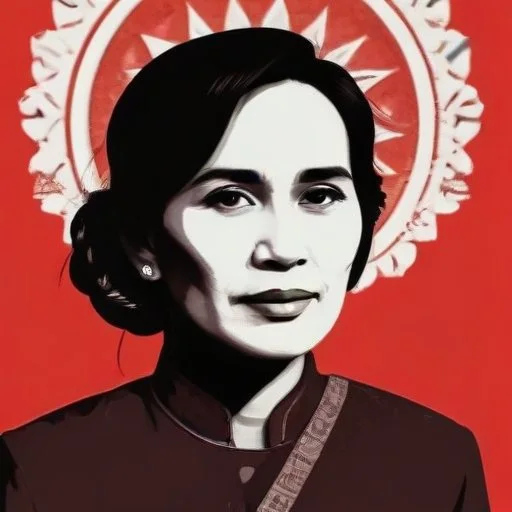
The NLD's primary objective was clear: to bring an end to the oppressive regime and establish a democratic government that truly represented the people of Myanmar. As the daughter of Burma's liberation hero, Aung San, Suu Kyi's leadership was seen as a beacon of hope for a nation longing for freedom and justice.
Myanmar's struggle for democracy dated back to the 1960s, when General Ne Win seized power in a military coup. The subsequent decades saw widespread human rights abuses, economic stagnation, and the suppression of political dissent. The 8888 Uprising in 1988, a nationwide pro-democracy movement, sparked widespread protests and demonstrations, ultimately leading to the formation of the NLD.
The formation of the NLD marked a turning point in Myanmar's struggle for democracy, giving voice to a nation tired of living under military rule. The party's unwavering commitment to non-violent resistance inspired a generation of activists and galvanized international support for Myanmar's democracy movement.
The NLD's emergence also had a profound impact on Myanmar's cultural landscape. The party's emphasis on democracy and human rights resonated deeply with a population tired of living in fear. The NLD's struggle became a symbol of hope, inspiring countless artists, writers, and musicians to express their discontent with the regime.
Despite its commitment to democracy, the NLD has faced criticism for its perceived inefficiencies and lack of transparency. However, the party's unwavering commitment to non-violent resistance has earned it widespread international support and admiration.
"The struggle for democracy is a struggle for sanity, for the right to think and feel and live as human beings."- Aung San Suu Kyi
The National League for Democracy's formation in 1988 marked a bold challenge to Myanmar's military dictatorship, inspiring a generation of activists and giving voice to a nation tired of living under oppression. As the country continues its fragile journey towards democracy, the NLD remains a beacon of hope, a testament to the power of courage and resilience in the face of overwhelming odds.
Tin Oo: The Unwavering Ally
Tin Oo, a former general and close ally of Aung San, played a crucial role in the formation of the NLD. His military background and experience in the government provided a unique perspective to the party's leadership. Tin Oo's dedication to democracy and human rights was unwavering, and he worked tirelessly alongside Suu Kyi to promote the NLD's message.
As a co-founder of the NLD, Tin Oo was instrumental in shaping the party's platform and strategy. His leadership skills and ability to build alliances were essential in navigating the treacherous political landscape of Myanmar. Through his work with the NLD, Tin Oo demonstrated a deep commitment to the principles of democracy and human rights, earning him the respect and admiration of his peers and the international community.

The Cultural Significance of the NLD
The National League for Democracy's emergence had a profound impact on Myanmar's cultural landscape. The party's emphasis on democracy and human rights resonated deeply with a population tired of living in fear. The NLD's struggle became a symbol of hope, inspiring countless artists, writers, and musicians to express their discontent with the regime.
The NLD's message of freedom and democracy also influenced Myanmar's literary scene. Many writers and poets used their work to subtly criticize the government, while others wrote openly about the need for democratic reform. The party's cultural impact extended beyond the literary world, with musicians and artists creating works that reflected the people's desire for change.
The 8888 Uprising: A Turning Point in Myanmar's History
The 8888 Uprising, also known as the "Four Eights" or "People Power Uprising," was a nationwide pro-democracy movement that swept across Myanmar in 1988. The uprising was sparked by growing discontent among students, workers, and monks, who were frustrated with the military government's corruption, mismanagement, and human rights abuses.
The 8888 Uprising marked a turning point in Myanmar's struggle for democracy. The widespread protests and demonstrations brought international attention to the country's plight, and the subsequent formation of the NLD provided a focal point for the democracy movement. The uprising's legacy continues to inspire activists and democracy advocates around the world.

Opposition and Repression: The NLD's Early Years
Following the NLD's formation, the party faced intense opposition from the military government. The regime, fearful of the NLD's growing popularity, used various tactics to suppress the party's activities, including arrests, intimidation, and censorship.
Despite the government's efforts to silence them, the NLD continued to advocate for democratic reforms and human rights. The party's leadership, led by Suu Kyi and Tin Oo, worked tirelessly to organize protests, rallies, and awareness campaigns, often at great personal risk.
The Geopolitical Context of the NLD's Formation
The National League for Democracy's formation in 1988 took place against a backdrop of shifting global politics. The end of the Cold War and the decline of communism created an environment in which democracy movements around the world were gaining momentum.
Myanmar's geostrategic location, sandwiched between India, China, and Southeast Asia, made it a focal point for regional and international powers. The formation of the NLD, and its subsequent calls for democratic reforms, put pressure on the international community to support Myanmar's transition to democracy.