


The NATO-led bombing of the Radio Television of Serbia (RTS) headquarters in Belgrade, Yugoslavia, on the night of April 23, 1999, will be forever etched in the annals of modern warfare as a controversial and tragic event. The deliberate targeting of a civilian media outlet, resulting in the loss of 16 lives and injuring 16 more, sent shockwaves across the globe, sparking widespread outrage and debate.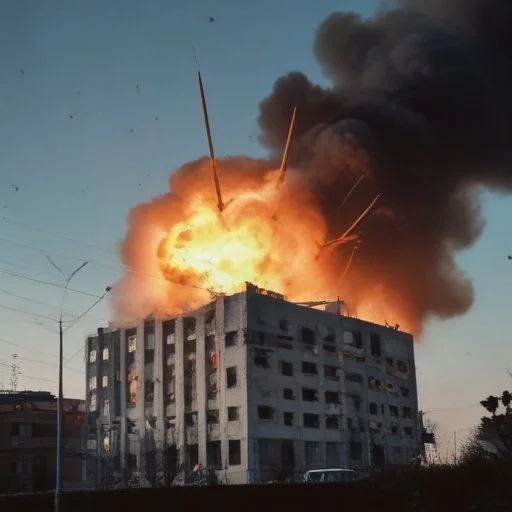
In the late 1990s, the disintegrating Yugoslav Federation was embroiled in a brutal conflict, with ethnic Albanians in Kosovo demanding independence from the Serbian-dominated government. The situation escalated into a full-blown war, prompting NATO to intervene in March 1999. Code-named Operation Allied Force, the alliance's aerial campaign aimed to force Yugoslav President Slobodan Milošević to withdraw his forces from Kosovo and accept a peaceful resolution.
On that fateful night, NATO warplanes launched a precision-guided missile attack on the RTS headquarters, located in the heart of Belgrade. The bombing was intended to disrupt the Yugoslav government's propaganda machine, which NATO perceived as a key component of Milošević's strategy to maintain control over the population. However, this tactical decision would have unforeseen and profound consequences for the humanitarian community, journalists, and the rules of war.
| Date | Event |
|---|---|
| March 24, 1999 | NATO launches Operation Allied Force, a comprehensive aerial campaign against Yugoslavia. |
| April 23, 1999 | NATO warplanes bomb the RTS headquarters in Belgrade, killing 16 journalists and staff members. |
| June 10, 1999 | NATO suspends its bombing campaign after Yugoslavia agrees to withdraw its forces from Kosovo. |
The RTS bombing raised fundamental questions about the legitimacy of targeting civilian media outlets in wartime, sparking intense debate among humanitarian organizations, journalists, and governments. The incident has been cited as a precedent in the development of international humanitarian law, with many arguing that it blurred the lines between military and civilian targets.
The bombing of RTS resonated deeply with people around the world, evoking a sense of outrage and horror. The event sparked a wave of protests, with journalists, human rights activists, and ordinary citizens condemning the attack as a violation of humanitarian principles.
"The bombing of RTS was a grave mistake, one that has far-reaching implications for the protection of civilians in conflict zones." — Human Rights Watch
"We must recognize that the media is not a legitimate target in warfare. Journalists are not combatants, and their safety must be guaranteed." — Reporters Without Borders
The RTS bombing draws parallels with other instances of targeting media outlets in wartime, such as the 2003 US bombing of Al Jazeera's Baghdad bureau during the Iraq War. These incidents highlight the need for clear guidelines and international norms to protect journalists and civilians in conflict zones.
The bombing of RTS serves as a poignant reminder of the human cost of war and the importance of upholding humanitarian principles in the face of conflict. As we reflect on this tragic event, we honor the memory of the 16 journalists and staff members who lost their lives, and reaffirm our commitment to protecting civilians and promoting a free and independent press.
As NATO's Secretary-General, Javier Solana played a crucial role in orchestrating the alliance's intervention in the Kosovo War. A seasoned diplomat with a background in physics, Solana was well-versed in the intricacies of international relations. His leadership during the crisis was marked by a firm commitment to protecting human rights and preventing further bloodshed in the region.
Through his tenure, Solana worked closely with Western leaders, including US President Bill Clinton and UK Prime Minister Tony Blair, to forge a united stance against the Yugoslav government's aggressive policies. His diplomatic efforts helped to rally support for NATO's intervention, which ultimately led to the withdrawal of Yugoslav forces from Kosovo.

The Balkan Peninsula, a region nestled in Southeastern Europe, has historically been a hotbed of ethnic and nationalist tensions. The breakup of Yugoslavia in the 1990s created a power vacuum, which fueled the rise of nationalist sentiments and territorial ambitions among its constituent republics.
The Kosovo War was, in many ways, a manifestation of these underlying tensions. The region's complex history, marked by centuries of Ottoman and Austro-Hungarian rule, had created a delicate balance of power that was prone to disruption. The conflict highlighted the need for sustained international engagement to prevent future outbreaks of violence in the region.
The bombing of RTS triggered a wave of protests across the globe, as journalists, human rights activists, and ordinary citizens condemned the attack as a violation of humanitarian principles. The incident sparked a heated debate about the role of the media in conflict zones, with many arguing that journalists should be protected from harm as civilians.
The international outcry was fueled by concerns that the attack could set a dangerous precedent, undermining the safety of journalists and media outlets in future conflicts. The incident served as a rallying cry for press freedom advocates, who argued that a free and independent press was essential to holding those in power accountable.

The RTS bombing raised fundamental questions about NATO's military strategy in the Kosovo War. The alliance faced a dilemma: how to balance its military objectives with humanitarian concerns, particularly in the midst of a complex and brutal conflict.
The incident highlighted the challenges of waging war in an era of rapid media coverage and growing international scrutiny. NATO's decision to target RTS was seen by some as a necessary evil, aimed at disrupting the Yugoslav government's propaganda machine. However, others viewed it as a grave mistake, one that compromised the alliance's moral authority and undermined its stated commitment to protecting civilians.
Historians and scholars have long debated the context and implications of the RTS bombing. Some have argued that the attack was a calculated move by NATO to cripple the Yugoslav government's ability to wage war. Others have seen it as a grave mistake, fueled by a lack of understanding about the role of the media in conflict zones.
The incident has been the subject of intense historiographical scrutiny, with many seeking to place it within the broader narrative of the Kosovo War. As such, the RTS bombing serves as a lens through which to examine the complexities of modern warfare, the role of the media in shaping public opinion, and the evolution of international humanitarian law.