


In the tumultuous aftermath of World War I, the Netherlands found itself at the center of a diplomatic storm. The world was shocked when the country refused to surrender the exiled Kaiser Wilhelm II of Germany to the Allies, sparking a crisis that would test the limits of international relations and challenge the very notion of asylum.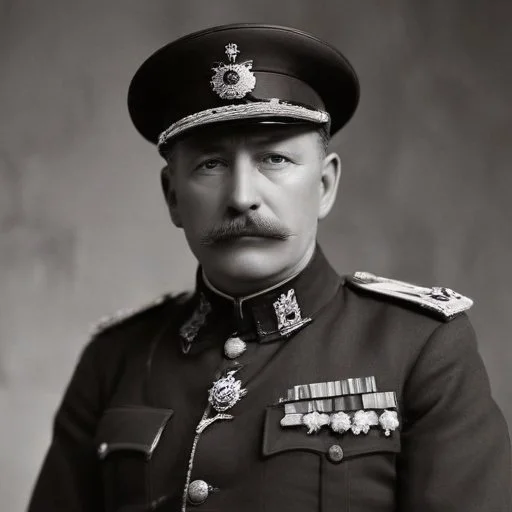
Kaiser Wilhelm II, the former German Emperor, had fled to the Netherlands in 1918, seeking refuge after Germany's defeat in the war. But the Allies were determined to bring him to justice, holding him accountable for his role in the devastating conflict. The Netherlands, however, stood firm in its decision not to extradite him, citing its long-standing tradition of offering asylum to political refugees.
The Netherlands had a long history of providing a safe haven for those fleeing persecution or war. From the 16th-century Protestant refugees fleeing Catholic Europe to the 19th-century Russian revolutionaries, the country had always maintained an open-door policy for those seeking refuge. This tradition was deeply ingrained in the Dutch psyche, and the government was determined to uphold it, even in the face of Allied pressure.
The Allies, led by the United States, Great Britain, and France, were furious at the Netherlands' refusal to surrender the Kaiser. They threatened to impose economic sanctions on the country, which would have devastating consequences for its economy. But the Dutch government held firm, refusing to budge in the face of international pressure.
After months of tense negotiations, the crisis was finally averted when the Allies agreed to drop their demand for extradition. The Netherlands had emerged victorious, its tradition of asylum intact. Kaiser Wilhelm II was allowed to live out the rest of his life in exile, a symbol of the complex and tumultuous aftermath of World War I.
The Netherlands' refusal to surrender the Kaiser had far-reaching consequences. It set a precedent for asylum seekers around the world, cementing the country's reputation as a beacon of hope for those fleeing persecution. It also marked a turning point in international relations, highlighting the need for nations to balance their own interests with their responsibilities to the global community.
The Netherlands' brave stance in the face of international pressure is a testament to the country's unwavering commitment to its values. Today, the Netherlands remains a champion of human rights and asylum, continuing to provide a safe haven for those seeking refuge. The story of the Kaiser's exile serves as a powerful reminder of the importance of compassion, courage, and the unwavering defense of human dignity.
Kaiser Wilhelm II: A Complex Figure
Kaiser Wilhelm II, the former German Emperor, was a complex figure with a tumultuous reign marked by contradictions. On one hand, he was a modernizer who encouraged industrialization and technological advancements. On the other hand, he was an authoritarian who suppressed dissent and advocated for militarism.
His decision to flee to the Netherlands in 1918 was a testament to his pragmatic side, as he sought to avoid accountability for his role in World War I. However, it also revealed his lack of accountability and refusal to take responsibility for his actions.
Despite his controversial legacy, Kaiser Wilhelm II remains an important figure in modern history, offering insights into the complexities of power, politics, and morality.
The Historiographical Significance of the Netherlands' Decision
The Netherlands' refusal to surrender Kaiser Wilhelm II has been the subject of intense historiographical debate. Some historians have viewed it as a heroic act of defiance, while others have seen it as a misguided attempt to undermine the Allied powers.
Recent scholarship has shifted the focus towards the Netherlands' tradition of asylum and its implications for international relations. This nuanced approach has highlighted the complexities of the situation, revealing the multiple motivations and pressures that influenced the Dutch government's decision.
Ultimately, the historiographical significance of this event lies in its ability to illuminate the tensions between national sovereignty, international cooperation, and humanitarian principles.
The Geopolitical Context of the Netherlands' Decision
The Netherlands' refusal to surrender Kaiser Wilhelm II must be seen within the broader geopolitical context of the time. The country was situated in a precarious position, bordered by powerful nations like Germany, France, and Great Britain.
In this environment, the Netherlands had to navigate a delicate balance between maintaining its independence and avoiding conflict. Its decision to grant asylum to Kaiser Wilhelm II was, in part, a calculated move to assert its sovereignty and resist external pressure.
The event highlights the challenges faced by small nations in times of great power politics, and the creative strategies they must employ to protect their interests.

Comparing Germany's and the Netherlands' Approaches to Asylum
The Netherlands' decision to grant asylum to Kaiser Wilhelm II stands in stark contrast to Germany's own approach to asylum during the same period. While the Netherlands was committed to upholding its tradition of asylum, Germany was struggling to come to terms with its role in World War I.
In the aftermath of the war, Germany was forced to confront its own dark past, and its approach to asylum was marred by ambiguity and hesitation. In contrast, the Netherlands' swift and decisive action demonstrated a clear commitment to its values of compassion and humanitarianism.
This comparative analysis highlights the differing priorities and values of nations in the face of crisis, and the long-term implications of these choices for international relations.
The Economic Ramifications of the Netherlands' Decision
The Netherlands' refusal to surrender Kaiser Wilhelm II had significant economic implications for the country. The threat of Allied sanctions loomed large, and the Dutch economy was heavily reliant on trade with its European neighbors.
However, the country's brave stance also earned it a level of international respect and prestige, which in turn attracted foreign investment and boosted its economic growth.
The event serves as a fascinating case study on the complex interplay between economics, politics, and international relations, highlighting the potential consequences of bold diplomatic decisions.