


In the sweltering summer of 1976, New York City was gripped by fear as a mysterious serial killer, later known as the Son of Sam, unleashed a series of brutal attacks that would leave six people dead and seven others injured. The first of these attacks, which would mark the beginning of a year-long reign of terror, occurred on July 29, 1976, when 24-year-old David Berkowitz shot and killed 18-year-old Donna Lauria, and seriously wounded her friend Jody Valenti, outside an apartment building in the Bronx.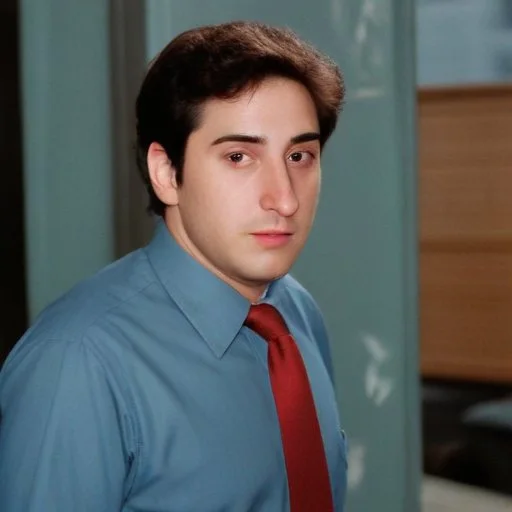
Berkowitz's modus operandi was to target young women with long, dark hair, often in the company of men. He would approach his victims, usually in the evening or at night, and shoot them at close range with his .44 caliber handgun. The seemingly random attacks left investigators baffled, and the city on high alert.
The New York City Police Department (NYPD) launched a massive investigation, but Berkowitz's clever use of cryptic letters and misleading clues kept them at bay. The letters, sent to newspapers and the police, claimed that Berkowitz was driven by a demon and signed off with the ominous phrase, "Son of Sam."
David Berkowitz, a postal worker from Yonkers, was an intelligent but troubled individual with a history of mental health issues. He had a fascination with fire and had been arrested several times for arson. Berkowitz's motive behind the attacks remains unclear, but experts believe it was a twisted desire for attention and notoriety.
Berkowitz was finally caught on August 10, 1977, after a witness reported seeing him near the scene of the final shooting. He was arrested and subsequently confessed to the crimes. Berkowitz was sentenced to 25 years to life in prison, where he remains to this day.
The Son of Sam's reign of terror had a profound impact on New York City, leading to increased security measures and a heightened sense of awareness among citizens. The case also sparked a national discussion on serial killers and the psychology behind their crimes.
In the end, the Son of Sam's brutal attacks will always be remembered as a dark chapter in NYC's history, a chilling reminder of the terror that can strike at any moment.
The Son of Sam's reign of terror had a profound impact on popular culture, inspiring a wave of true crime books, films, and documentaries. The case also influenced music, with songs like "Son of Sam" by The Misfits and "Summer of Sam" by The Go! Team referencing the serial killer.
In addition, the Son of Sam's crimes have been referenced in numerous TV shows, including Law & Order: SVU, Criminal Minds, and The Simpsons. The case has also been the subject of several books, including Son of Sam: The .44 Caliber Killer by Lawrence D. Klausner and The Son of Sam Case: A Psychological Profile by John E. Douglas.
The Son of Sam's crimes have also been the subject of several documentaries, including The Son of Sam by Investigation Discovery and The Real Story of the Son of Sam by the History Channel.
David Berkowitz's troubled past offers a glimpse into the mind of a serial killer. Growing up, Berkowitz was a lonely and awkward child, who was often bullied by his peers. He developed a fascination with fire and was known to start fires in his neighborhood.
Berkowitz's parents, Nathan and Betty, were divorced when he was 14, and he was left to care for himself. He dropped out of high school and later joined the US Army, where he served for three years.
After his military service, Berkowitz worked as a postal worker, a job that gave him the freedom to roam the city and select his victims. His co-workers described him as quiet and withdrawn, but also friendly and courteous.
The Son of Sam's reign of terror had a significant impact on the economy of New York City. As the killings continued, tourists began to stay away, and local businesses suffered.
In addition, the city's police department spent millions of dollars on the investigation, with overtime pay for detectives and patrol officers, as well as forensic analysis and other expenses.
The fear and uncertainty caused by the Son of Sam's crimes also led to an increase in security measures, with many businesses and residents investing in alarm systems, surveillance cameras, and private security guards.

The Son of Sam case has been the subject of much historiographical debate, with many historians and criminologists analyzing the case from different perspectives.
Some have argued that the Son of Sam's crimes were a product of the social and economic turmoil of the 1970s, while others have seen the case as a manifestation of the darker aspects of human nature.
The case has also been the subject of feminist critique, with some arguing that the Son of Sam's targeting of young women was a manifestation of patriarchal attitudes and misogyny.
The Son of Sam's cryptic letters and notes are a fascinating artifact of the case, offering a glimpse into the mind of a serial killer.
The letters, which were sent to newspapers and the police, were filled with bizarre references to demons, astrology, and Satanism.
One of the most famous notes, known as the "Belt letter," was sent to the police in November 1976, and included a drawing of a belt with the words "I will not give up" written above it.