


The Electoral Act of 1893, signed into law by Governor Lord Glasgow, marked a pivotal moment in New Zealand's history, granting women the right to vote and paving the way for a more equal society. This groundbreaking legislation made New Zealand the first self-governing country in the world to grant women's suffrage, a milestone that would inspire women's rights movements globally.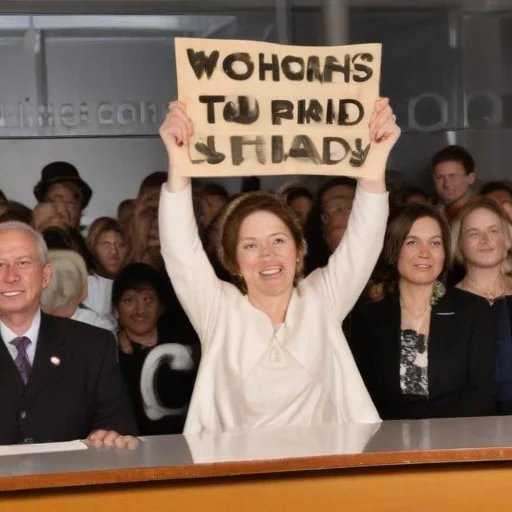
The journey to this momentous occasion was not an easy one. For years, women like Kate Sheppard, a pioneering figure in the women's suffrage movement, fought tirelessly to challenge the status quo. Through petitions, rallies, and passionate advocacy, these women sought to bring attention to the injustices faced by women and to demand their right to participate in the democratic process.
The granting of women's suffrage had far-reaching consequences, empowering women to participate in the democratic process and challenging traditional gender roles. No longer confined to the domestic sphere, women began to engage in public life, taking on leadership roles and advocating for social change.
The Electoral Act of 1893 sent shockwaves around the world, inspiring women's rights movements in countries like the United States, the United Kingdom, and Australia. New Zealand's progressive stance on women's suffrage set a powerful precedent, demonstrating that women's rights were not only morally justifiable but also pragmatically achievable.
Today, the Electoral Act of 1893 remains a testament to the power of determination and perseverance. As we reflect on the struggles and triumphs of the past, we are reminded of the importance of continued advocacy and activism in the fight for gender equality. The women who fought for suffrage over a century ago paved the way for the progress we enjoy today, and their legacy continues to inspire future generations of women and girls.
"Do not think that your single effort will be in vain. Every stroke of the pen, every word spoken, every deed done, will tell in the mighty onrush of the movement."
— Kate Sheppard
As we celebrate this momentous occasion, we honor the women who dared to challenge the status quo, and we recommit ourselves to continuing their work, striving for a world where equality and justice are a reality for all.
Kate Sheppard, a pioneering figure in New Zealand's women's suffrage movement, was born in 1848 in Liverpool, England. She immigrated to New Zealand in 1869, where she became increasingly involved in the fight for women's rights. Sheppard's dedication to the cause was instrumental in the passage of the Electoral Act of 1893, which granted women in New Zealand the right to vote.
Sheppard's leadership and advocacy played a crucial role in mobilizing women across the country. She traveled extensively, giving speeches and gathering support for the women's suffrage movement. Her tireless efforts ultimately led to the presentation of a petition to Parliament, containing over 9,000 signatures, demanding women's suffrage.
Today, Kate Sheppard is remembered as a pioneering figure in New Zealand's history, and her legacy continues to inspire generations of women and girls around the world.

The granting of women's suffrage in 1893 marked a significant cultural shift in New Zealand's society. It challenged traditional gender roles, which had long confined women to the domestic sphere. Women's participation in the democratic process was seen as a radical departure from the norm, and it paved the way for future generations of women to engage in public life.
The women's suffrage movement also had a profound impact on the arts and literature. Women writers, such as Katherine Mansfield, began to explore themes of feminism and social change in their work. The movement also inspired a new wave of women artists, who sought to capture the spirit of the times through their art.
Today, the cultural impact of the women's suffrage movement is still felt, with women playing a vital role in shaping New Zealand's artistic and cultural landscape.
The granting of women's suffrage in 1893 had significant economic implications for New Zealand's society. With women newly empowered to participate in the democratic process, they began to exercise their economic power, too. Women's suffrage led to an increase in women's participation in the workforce, which in turn contributed to the country's economic growth.
Women's suffrage also led to changes in laws and policies, which benefited women economically. For example, the Married Women's Property Act of 1884, which allowed women to own property in their own right, was passed shortly after the Electoral Act.
Today, the economic impact of women's suffrage is still evident, with women playing a vital role in New Zealand's economy.
The women's suffrage movement in New Zealand took place within a broader geopolitical context. The country's proximity to Britain, its colonial ruler, meant that New Zealand's women's suffrage movement was influenced by similar movements in the UK. British suffragettes, such as Emmeline Pankhurst, were instrumental in inspiring and supporting their New Zealand counterparts.
The movement also had implications for New Zealand's relationships with other countries. The granting of women's suffrage in 1893 was seen as a progressive move, which set New Zealand apart from other countries and cemented its reputation as a leader in women's rights.
Today, the geopolitical context of women's suffrage continues to influence New Zealand's relationships with other countries, as it remains a champion of women's rights and gender equality on the global stage.
Historians have long debated the significance of the women's suffrage movement in New Zealand. Some have argued that the movement was a gradual process, which built on earlier campaigns for women's rights. Others have seen it as a more radical departure, which challenged the dominant patriarchal culture of the time.
Recent scholarship has highlighted the importance of understanding the women's suffrage movement within the context of New Zealand's colonial history. Historians have also emphasized the need to recognize the diverse experiences of women within the movement, including those of Māori women and immigrant women.
Today, historians continue to shed new light on the women's suffrage movement, offering fresh perspectives and insights into this pivotal moment in New Zealand's history.