


Khrushchev's election as the first secretary of the Communist Party of the Soviet Union in 1953 marked a significant turning point in the country's history, signaling a shift towards de-Stalinization and reform. This unexpected turn of events would go on to have far-reaching consequences, ultimately paving the way for Khrushchev's dramatic denunciation of Stalin's regime just a few years later.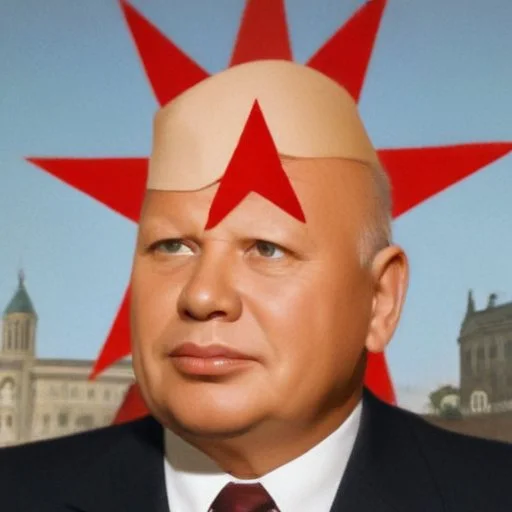
Following Stalin's death in 1953, the Soviet Communist Party was in a state of flux. The dictator's authoritarian rule had crippled the nation, leaving behind a legacy of fear, repression, and economic stagnation. As the Party struggled to come to terms with the loss of its leader, a power vacuum emerged, and a new generation of leaders began to vie for control.
Nikita Khrushchev, a devout Stalinist and former Ukrainian Party boss, emerged as a dark horse contender for the top spot. His election as first secretary came as a surprise to many, given his relatively low profile in the Party hierarchy. However, Khrushchev's reputation as a skilled politician and organizer, combined with his ability to forge alliances and build coalitions, ultimately won over the Party elite.
Khrushchev's election marked the beginning of a new era in Soviet politics, characterized by a significant shift towards reform and de-Stalinization. His leadership style, marked by a more consultative and collective approach, offered a welcome respite from the authoritarianism of the Stalin era.
Khrushchev's reforms had a profound impact on Soviet culture, ushering in a period of relative liberalization. The "Thaw," as it came to be known, saw a surge in creative expression, with writers, artists, and intellectuals enjoying greater freedom of expression.
Khrushchev's reforms were not without controversy, however. Many hardline Stalinists saw his policies as a betrayal of the Party's ideals, and a threat to their own power and influence. This led to a series of power struggles, which ultimately weakened Khrushchev's position and paved the way for his eventual downfall.
"The people had been so conditioned to believing that Stalin was a god that it took them a while to understand that he was just a man, and not a very good man at that."
Khrushchev's election as first secretary marked a turning point in Soviet history, setting in motion a process of reform and de-Stalinization that would shape the country's future for decades to come. His leadership style, marked by a commitment to collective decision-making and a willingness to confront the darker aspects of Soviet history, offered a welcome respite from the authoritarianism of the Stalin era.
The historiography of Khrushchev's election as first secretary is marked by a shift in perspective over the years. Initially, Western historians viewed Khrushchev's rise to power as a moderate alternative to Stalinism, while Soviet historians portrayed him as a loyal Stalinist who ultimately betrayed the regime. In recent years, however, historians have reevaluated Khrushchev's role, highlighting his complex and often contradictory policies.
A closer examination of Khrushchev's speeches and writings reveals a leader who was both committed to reform and haunted by the legacy of Stalin. This ambivalence has led some historians to characterize Khrushchev as a "half-hearted reformer," who was ultimately unable to overcome the entrenched interests of the Soviet bureaucracy.

Nikita Khrushchev's personality and leadership style were shaped by his humble beginnings as a metalworker in Ukraine. His early life was marked by poverty and hardship, which instilled in him a strong work ethic and a commitment to social justice. These values would later inform his policies as Soviet leader, as he sought to improve the lives of ordinary citizens and reduce the power of the Soviet elite.
Khrushchev's relations with his colleagues were often marked by a sense of camaraderie and bonhomie, which earned him the nickname "Khrustalyov" (steelworker). However, this jovial exterior masked a shrewd politician who was willing to do whatever it took to maintain power and implement his vision for the Soviet Union.
The "Thaw" of the 1950s and 1960s had a profound impact on Soviet culture, as writers, artists, and intellectuals began to explore new themes and styles. The relaxation of censorship laws allowed for a flowering of creative expression, as writers like Boris Pasternak and Andrei Voznesensky published works that were previously banned.
The arts also flourished during this period, as artists like Ernst Neizvestny and Oleg Tselkov began to experiment with new forms and styles. The Soviet film industry also experienced a renaissance, as directors like Sergei Eisenstein and Mikhail Romm produced works that were both critically acclaimed and commercially successful.

Khrushchev's election as first secretary marked a significant shift in the balance of power within the Soviet Communist Party. The old guard of Stalinists, led by figures like Vyacheslav Molotov and Georgy Malenkov, were initially wary of Khrushchev's reforms, fearing that they would undermine the Party's authority.
However, Khrushchev was able to outmaneuver his opponents, using his charisma and political skills to build a coalition of supporters within the Party. This coalition, which included figures like Anastas Mikoyan and Leonid Brezhnev, would provide crucial support for Khrushchev's reforms in the years to come.
Khrushchev's economic reforms had a significant impact on the Soviet economy, as he sought to decentralize decision-making and increase investment in consumer goods. The "New Course" of 1953-1958 emphasized the production of consumer goods, such as cars and washing machines, which had previously been neglected in favor of heavy industry.
The results were impressive, as Soviet living standards began to rise and the economy experienced a period of rapid growth. However, the reforms were not without their challenges, and Khrushchev's efforts to decentralize decision-making often led to confusion and inefficiency.