


On September 3, 2017, North Korea detonated its sixth and most powerful nuclear test, codenamed "Perfect Success," at the Punggye-ri nuclear test site in the northeastern part of the country. This test marked a significant milestone in North Korea's nuclear program, with a yield of approximately 250 kilotons, surpassing the atomic bombs dropped on Hiroshima and Nagasaki during World War II.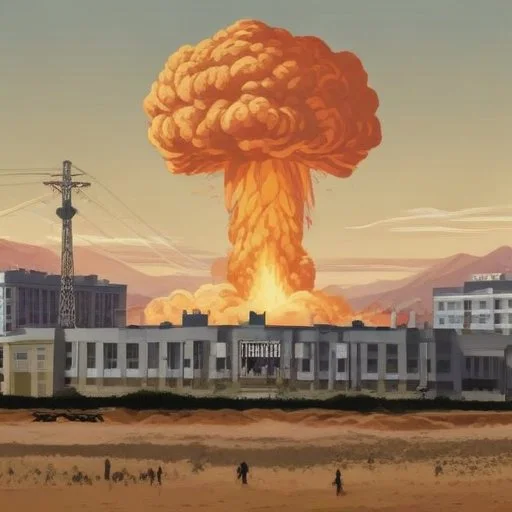
The Democratic People's Republic of Korea (DPRK), commonly known as North Korea, has been pursuing its nuclear program since the 1950s. The country's first nuclear test was conducted in 2006, followed by subsequent tests in 2009, 2013, and 2016. Each test demonstrated North Korea's rapidly advancing nuclear capabilities, raising concerns among the international community regarding regional and global security.
At the helm of North Korea's nuclear program is Supreme Leader Kim Jong-un, who has been instrumental in driving the country's nuclear ambitions. Kim, who took power after the death of his father Kim Jong-il in 2011, has made nuclear weapons development a top priority, often using inflammatory rhetoric to assert North Korea's deterrence against its perceived adversaries.
The days leading up to the September 3 test were marked by heightened tensions between North Korea and the United States, with each side engaging in a war of words. On August 29, North Korea launched a Hwasong-12 intermediate-range ballistic missile over Japan, sparking widespread condemnation. This was followed by a series of cryptic messages from the North Korean regime, hinting at a major provocation.
The test itself was detected by seismographs around the world, including in China, Japan, and South Korea. The resulting 6.3-magnitude earthquake was felt in neighboring countries, prompting concerns about radiation leaks and environmental contamination.
The "Perfect Success" test had significant implications for regional and global security. It demonstrated North Korea's ability to develop a thermonuclear bomb, significantly more powerful than its previous nuclear tests. The test also underscored North Korea's rapid progress in miniaturizing its nuclear warheads, making them deployable on intercontinental ballistic missiles (ICBMs).
The test prompted widespread condemnation from the international community, with the United Nations Security Council imposing tougher sanctions on North Korea in response. The test also triggered a series of military drills and shows of force by the United States and its allies in the region.
In North Korea, the "Perfect Success" test was hailed as a major achievement, with state media extolling the virtues of the country's nuclear program. The test was seen as a symbol of national pride and a demonstration of North Korea's independence from foreign powers.
However, outside North Korea, the test was met with widespread fear and alarm. The test reignited concerns about nuclear proliferation, and the risks of nuclear war in the region. It also sparked debate about the effectiveness of sanctions and diplomatic efforts to curb North Korea's nuclear ambitions.
The "Perfect Success" test has been mired in controversy, with many experts questioning the accuracy of North Korea's claims about the test's yield and nature. Some analysts have suggested that the test may have been exaggerated or faked, while others have raised concerns about the potential environmental and health impacts of the test.
Public perception of the test has been largely negative, with many people expressing fears about the risks of nuclear war and the implications for regional and global security. The test has also sparked debate about the role of diplomacy and dialogue in resolving the North Korean nuclear crisis.
The historiography of North Korea's nuclear program is marked by a lack of transparency and credibility. Many experts question the accuracy of North Korea's claims about its nuclear tests, including the "Perfect Success" test. This lack of transparency has led to a proliferation of conflicting reports and estimates about the test's yield and nature.

Kim Jong-un's leadership style has been characterized as mercurial and unpredictable. His inflammatory rhetoric has contributed to heightened tensions with the international community, particularly the United States. Despite his hardline stance, Kim has also shown a willingness to engage in diplomacy, albeit inconsistently.
Kim's fixation on nuclear weapons development has been driven, in part, by a desire to consolidate power and legitimize his rule. His nuclear ambitions have also been motivated by a perceived need to deter perceived threats from the United States and other adversaries.
The environmental impact of North Korea's nuclear tests, including the "Perfect Success" test, is a pressing concern. The test site at Punggye-ri is located in a seismically active region, and the test has triggered fears of radioactive leaks and contamination. The effects of radioactive fallout on the local ecosystem and human populations are still unknown.
Furthermore, the test has raised concerns about the long-term sustainability of North Korea's nuclear program, given the environmental and health risks associated with nuclear testing.

The "Perfect Success" test marked a significant milestone in North Korea's nuclear weapons development. The test demonstrated the country's ability to miniaturize nuclear warheads, making them deployable on intercontinental ballistic missiles (ICBMs).
The test also showcased North Korea's rapid progress in developing a thermonuclear bomb, significantly more powerful than its previous nuclear tests. This technological leap has major implications for regional and global security.
The "Perfect Success" test must be understood within the context of the broader geopolitical landscape. The test came at a time of heightened tensions between North Korea and the United States, with each side engaging in a war of words.
The test also highlighted the complexities of regional politics, with China, Japan, and South Korea each responding differently to the test. Understanding the test's implications requires a nuanced appreciation of these geopolitical dynamics.