


The Agreed Framework, signed on October 21, 1994, is renowned for being a landmark agreement between North Korea and the United States, marking a pivotal moment in the quest for global nuclear non-proliferation. This groundbreaking deal stipulated that North Korea would dismantle its nuclear weapons program in exchange for economic aid and normalization of relations with the United States.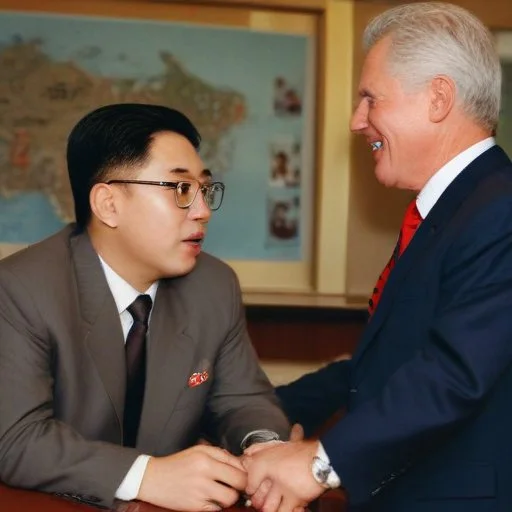
The early 1990s saw North Korea, led by the enigmatic Kim Il-sung, making rapid strides in developing its nuclear program. This development sent shockwaves throughout the international community, prompting the United States to take a proactive stance in mitigating the potential threat. As tensions escalated, the need for a diplomatic solution became increasingly pressing.
Presided over by President Bill Clinton, the United States delegation was led by seasoned diplomat Robert Gallucci. His counterpart, Kang Sok-ju, represented North Korea in the negotiations. These two seasoned diplomats played a crucial role in brokering the deal, navigating the complex web of interests and concerns that defined the era.
The Agreed Framework had far-reaching implications for the region and the world. By agreeing to dismantle its nuclear program, North Korea took a significant step towards normalization with the international community. The deal also paved the way for the United States to provide economic aid, aimed at revitalizing North Korea's struggling economy.
While the Agreed Framework was hailed as a major diplomatic achievement, it was not without its criticisms. Many questioned the wisdom of providing economic aid to a regime with a questionable human rights record. Others doubted North Korea's commitment to dismantling its nuclear program, citing concerns over the lack of transparency and accountability mechanisms.
"The Agreed Framework is a crucial step towards reducing the threat of nuclear proliferation and improving the security of the Korean Peninsula." - President Bill Clinton
The Agreed Framework served as a precursor to further diplomatic engagement between North Korea and the international community. It also underscored the importance of proactive diplomacy in addressing security concerns, setting a precedent for future negotiations in the region.
The Agreed Framework is a testament to the power of diplomacy in resolving even the most intractable conflicts. It demonstrates that, with persistence and determination, even the most unlikely of agreements can be reached, paving the way for a more peaceful and secure world.
The Agreed Framework was forged during a tumultuous period in international relations, marked by the end of the Cold War and the rise of new global powers. The dissolution of the Soviet Union had created a power vacuum, and the United States was keen to assert its dominance in the Asia-Pacific region. In this context, the deal served as a strategic move to contain North Korea's nuclear ambitions and maintain stability in the region.
The geopolitical landscape of the early 1990s was further complicated by the presence of other key players, including China, Japan, and South Korea. The United States had to navigate a delicate balancing act, ensuring that the Agreed Framework did not compromise its relationships with these nations. The successful negotiation of the deal was a testament to the skillful diplomacy of the Clinton administration, which managed to keep these competing interests in check.

Robert Gallucci, the lead US negotiator, was a seasoned diplomat with a deep understanding of the complexities of international relations. His ability to build relationships and find common ground with his North Korean counterpart, Kang Sok-ju, was instrumental in brokering the deal. Gallucci's experience in the US State Department and his knowledge of the Korean Peninsula made him an ideal candidate to lead the negotiations.
Kang Sok-ju, on the other hand, was a seasoned diplomat and strategist who had played a key role in North Korea's foreign policy apparatus. His ability to navigate the intricacies of the North Korean regime and communicate effectively with his US counterparts was crucial in securing the agreement.
The Agreed Framework had significant economic implications for North Korea, which was struggling to recover from the collapse of the Soviet Union. The deal provided for the provision of $4 billion in energy aid, which was designed to help North Korea meet its energy needs and reduce its reliance on nuclear power. This influx of capital was expected to stimulate economic growth and improve the living standards of the North Korean people.
In addition, the deal paved the way for increased trade and investment between North Korea and the international community. The lifting of economic sanctions and the provision of economic aid created a favorable business environment, attracting foreign investors and boosting North Korea's economy.

The Agreed Framework was a landmark achievement in the realm of international diplomacy, demonstrating the power of proactive diplomacy in resolving security concerns. The deal showed that even the most intractable conflicts could be resolved through dialogue and negotiation, serving as a model for future diplomatic engagements.
The agreement also underscored the importance of engagement and dialogue in international relations. By engaging with North Korea, the United States was able to address its security concerns and promote regional stability, highlighting the value of diplomatic engagement in preventing conflict.
The Agreed Framework had a profound impact on social dynamics in North Korea, which was largely isolated from the international community. The deal paved the way for increased cultural exchange and people-to-people diplomacy, helping to bridge the gap between North Korea and the outside world.
The agreement also had significant implications for the human rights situation in North Korea. The provision of economic aid and the lifting of sanctions created conditions conducive to improving the living standards of the North Korean people, potentially leading to increased social and economic freedoms.