


Taipei 101, the skyscraper that took the world by storm, officially opened its doors on December 31, 2004, and in doing so, claimed the coveted title of the world's tallest building. Standing tall at an astonishing 509 meters (1,670 feet), this marvel of modern engineering solidified Taipei's status as a hub of innovation and progress.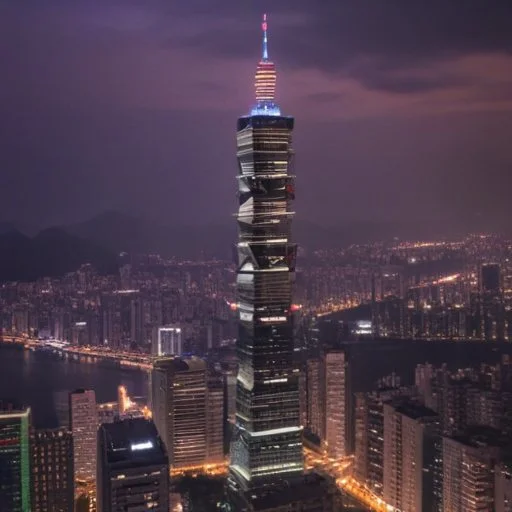
The idea of building a iconic skyscraper in Taipei dates back to the late 1990s, when the Taiwanese government aimed to create a landmark that would showcase the country's economic prowess. The project was undertaken by a team of architects, engineers, and developers, led by the prestigious architecture firm, C.Y. Lee & Partners.
Taipei 101's design was inspired by the Chinese pagoda, with a postmodern twist. The building's exterior is covered in green-tinted glass and blue-gray granite, giving it a shimmering, futuristic appearance. The construction process was a monumental task, taking over five years to complete, with a workforce of over 7,000 laborers.
Taipei 101 has received numerous awards and recognitions, including the 2004 Emporis Skyscraper Award, the 2005 International High-Rise Award, and a place in the Guinness World Records as the world's tallest building from 2004 to 2010.
Taipei 101 has become an iconic symbol of Taipei, attracting millions of tourists and locals alike. The building has also played host to various cultural and social events, including New Year's Eve fireworks displays and charity runs.
I still remember my first visit to Taipei 101, feeling a mix of awe and vertigo as I stepped onto the observation deck. The panoramic views of the city were breathtaking, and I couldn't help but feel a sense of pride in human innovation and ingenuity.
Taipei 101 has set a new standard for skyscraper design and construction, inspiring a new generation of architects and engineers. Its legacy extends beyond the realm of architecture, symbolizing Taipei's emergence as a major player on the global stage.
Taipei 101 is more than just a skyscraper – it's a testament to human ingenuity, creativity, and perseverance. This iconic landmark continues to inspire and awestruck visitors from around the world, solidifying its place as one of the most remarkable architectural achievements of our time.
Taipei 101's construction was not without its challenges. The project faced numerous setbacks, including delays, budget overruns, and a major earthquake in 1999 that forced the team to re-engineer the building's foundation. Despite these obstacles, the team persevered, and the building's completion in 2004 marked a major milestone in Taipei's development.
The building's design was also influenced by Taiwan's cultural heritage. The tower's exterior is adorned with a pattern of concentric circles, reminiscent of ancient Chinese coins. The building's eight sections are also designed to represent the eight trigrams of the I Ching, an ancient Chinese text.
The building's construction was a symbol of Taiwan's emergence as a major economic power. The project was seen as a way to showcase Taiwan's engineering prowess and to attract foreign investment.

Taipei 101 has had a profound impact on Taiwan's cultural identity. The building has become an iconic symbol of the country's economic prowess and its emergence as a major player on the global stage.
The building has also played host to a number of cultural events, including concerts, art exhibitions, and fashion shows. The building's observation deck has become a popular spot for locals and tourists alike, offering breathtaking views of the city.
Taipei 101 has also inspired a new generation of Taiwanese architects and engineers. The building's innovative design and construction have set a new standard for skyscraper development in Taiwan and beyond.
Taipei 101 was not the first building to reach record-breaking heights. The Petronas Twin Towers in Kuala Lumpur, Malaysia, held the title of the world's tallest building from 1998 to 2004. However, Taipei 101's innovative design and construction set it apart from its predecessors.
Unlike earlier record-breakers, Taipei 101 was designed to be not only tall but also functional. The building's unique design allows for maximum floor space and efficiency, making it an attractive option for businesses and residents.
Taipei 101's legacy can be seen in the next generation of skyscrapers, including the Burj Khalifa in Dubai and the Shanghai Tower in China. These buildings have pushed the boundaries of engineering and design even further, solidifying Taipei 101's place as a pioneering achievement in skyscraper development.

Taipei 101's innovative design and construction have had a lasting impact on the field of engineering. The building's use of tuned mass dampers, giant pendulums that offset the building's sway during strong winds and earthquakes, has become a standard feature in modern skyscraper design.
The building's high-speed elevators, which can travel at speeds of up to 60 km/h, have also set a new standard for vertical transportation. The elevators' advanced technology has reduced travel time and increased efficiency, making Taipei 101 a model for future skyscraper development.
Taipei 101's advanced engineering has also paved the way for the development of even taller and more complex structures. The building's innovative design and construction have opened up new possibilities for architects and engineers, enabling them to push the boundaries of what is possible.
Taipei 101 has had a significant impact on Taiwan's economy. The building's completion in 2004 marked a major milestone in Taiwan's development, solidifying the country's position as a major economic power.
The building has attracted a number of major businesses and investors, including financial institutions, technology companies, and manufacturers. The building's occupancy rate has remained high, with many companies eager to take advantage of its state-of-the-art facilities and prime location.
Taipei 101 has also generated significant revenue for the Taiwanese government. The building's observation deck has become a major tourist attraction, with millions of visitors each year. The building's revenue has contributed to Taiwan's economic growth, making it a key driver of the country's development.