


The Kitchen Debate, a pivotal event in modern history, took place on July 24, 1959, at the American National Exhibition in Moscow. This impromptu discussion between U.S. Vice President Richard Nixon and Soviet Premier Nikita Khrushchev became a defining symbol of the Cold War era, showcasing the profound ideological differences between the two superpowers.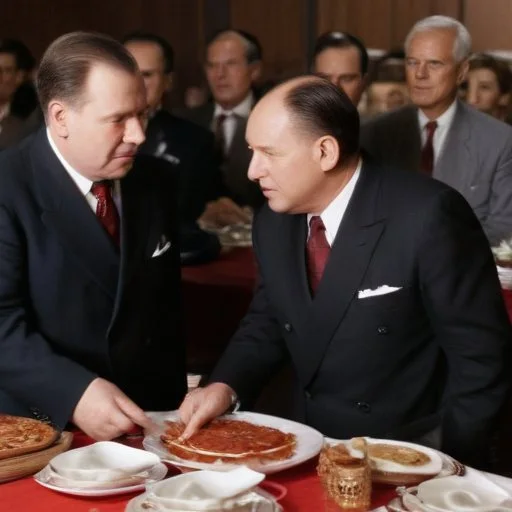
The American National Exhibition was a showcase of American culture, technology, and consumer products, intended to promote U.S. interests and values in the Soviet Union. The event was part of a broader cultural exchange program aimed at easing tensions between the two nations. However, the exhibition also served as a platform for the two leaders to engage in a symbolic battle of ideologies.
The debate took place in a model American kitchen, surrounded by the latest appliances and gadgets. Nixon, proud of American consumerism, touted the virtues of a capitalist system, highlighting the benefits of free enterprise and individual freedom. Khrushchev, meanwhile, championed the Soviet system, emphasizing the achievements of socialism and the collective good. The discussion, though cordial, was laced with underlying hostility, reflecting the deep divisions between the two superpowers.
The Kitchen Debate marked a significant turning point in the Cold War, as it brought attention to the ideological differences between the two superpowers. The event also sparked a wave of public interest in international relations, with both sides using the debate as a propaganda tool to promote their respective systems. The debate further solidified Nixon's reputation as a leading figure in American politics, while Khrushchev's performance cemented his position as a powerful Soviet leader.
The Kitchen Debate had a profound impact on popular culture, symbolizing the struggle between East and West. The event inspired countless articles, editorials, and satirical cartoons, with many Americans viewing it as a triumph of American values over Soviet ideology. The debate also influenced the development of American foreign policy, with the United States seeking to promote its cultural and economic interests abroad.
The Kitchen Debate remains an iconic symbol of the Cold War era, a powerful reminder of the profound ideological differences between the United States and the Soviet Union. The event continues to inspire new generations of scholars, policymakers, and students, serving as a testament to the enduring power of ideas and the importance of international dialogue.
In conclusion, the Kitchen Debate was a pivotal moment in modern history, a symbol of the deep-seated tensions and ideological differences between the two superpowers of the Cold War era. As we reflect on this momentous event, we are reminded of the importance of engagement, dialogue, and mutual understanding in shaping the course of international relations.
Richard Nixon, the 36th Vice President of the United States, was a rising star in American politics when he engaged in the Kitchen Debate with Nikita Khrushchev. Born on January 9, 1913, in Yorba Linda, California, Nixon was a graduate of Whittier College and Duke University Law School. He served in the U.S. Navy during World War II and later became a congressman and senator from California.
Nixon's leadership skills and anti-communist stance earned him the admiration of many Americans, and he was chosen by Dwight D. Eisenhower as his running mate in the 1952 presidential election. As Vice President, Nixon traveled extensively, promoting American interests and values abroad. His performance in the Kitchen Debate cemented his reputation as a strong and capable leader.
The Kitchen Debate took place amidst a complex web of geopolitical tensions and alliances. The United States and the Soviet Union were engaged in a bitter struggle for global influence, with the Cold War raging across the world. The Soviet Union had recently launched Sputnik, the first artificial satellite, and the United States was struggling to catch up in the space race.
In Europe, the Soviet Union had established a network of satellites and client states, while the United States had formed the North Atlantic Treaty Organization (NATO) to counterbalance Soviet power. The Kitchen Debate was a symbol of the struggle for ideological supremacy, with the two superpowers competing for the hearts and minds of the world's population.
The Kitchen Debate was a cultural phenomenon that transcended the boundaries of politics and ideology. The debate was widely covered in the international press, with newspapers and magazines devoting extensive coverage to the event.
The debate also inspired a wave of popular culture, with satirical cartoons, songs, and films poking fun at the two leaders and their ideologies. The debate became a symbol of the struggle between East and West, with the two superpowers competing for cultural supremacy.
The Kitchen Debate had significant economic implications for both the United States and the Soviet Union. The debate highlighted the differences in the two countries' economic systems, with the United States promoting free enterprise and individual freedom, and the Soviet Union championing socialism and collective ownership.
The debate also led to an increase in trade and economic competition between the two nations, with the United States seeking to promote its consumer goods and technology abroad. The debate sparked a wave of economic reforms in the Soviet Union, as the government sought to improve living standards and consumer choice.
The Kitchen Debate was rooted in profound ideological differences between the United States and the Soviet Union. The debate reflected the fundamental disagreement between capitalism and socialism, with the two superpowers representing two distinct worldviews.
The debate also highlighted the tension between individual freedom and collective good, with the United States promoting individualism and the Soviet Union emphasizing the importance of the collective. The debate symbolized the struggle for ideological supremacy, with the two superpowers competing for the hearts and minds of the world's population.