


In the annals of modern Croatian history, few events resonate as deeply as Operation Storm, a daring military campaign that shook the foundations of the Yugoslav Wars and paved the way for Croatia's long-sought independence. Launched on August 4, 1995, this bold offensive saw the Croatian military, fueled by determination and a sense of national pride, reclaim the Krajina region from Serbian occupation, marking a pivotal turning point in the Croatian War of Independence.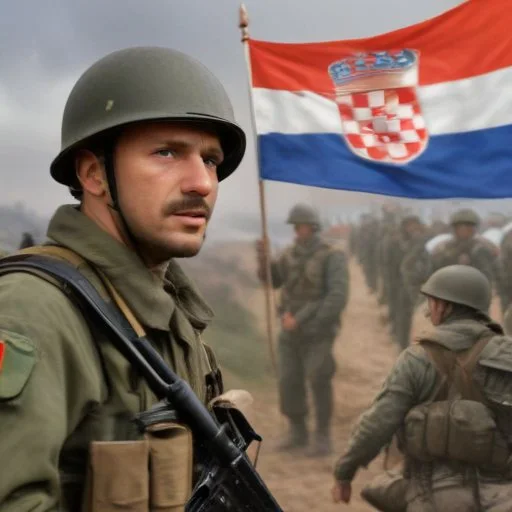
The Krajina region, nestled in western Croatia, had been a hotbed of ethnic tension since the dissolution of Yugoslavia in the early 1990s. As the Yugoslav Wars ravaged the Balkans, the Krajina region became a critical battleground, with Serbian forces seeking to annex the area and Croatian forces fighting to maintain control. The region's complex history, marked by centuries of Ottoman and Austro-Hungarian rule, had created a delicate ethnic balance, which the Yugoslav Wars had dramatically upset.
Operation Storm was masterminded by a triumvirate of Croatian leaders: President Franjo Tuđman, Defense Minister Gojko Šušak, and General Ante Gotovina. Tuđman, a staunch nationalist and founder of the Croatian Democratic Union (HDZ), provided the political backing for the operation. Šušak, a seasoned military strategist, oversaw the planning and execution of the campaign. Gotovina, a decorated war hero, led the Croatian army's Fourth Guards Brigade, which spearheaded the offensive.
Operation Storm's success had far-reaching consequences for Croatia and the wider Balkan region. The campaign's swift and decisive victory marked a turning point in the Croatian War of Independence, cementing Croatia's control over its territory and paving the way for eventual international recognition. The operation also led to the displacement of Serbian civilians, sparking a humanitarian crisis and prompting international intervention.
Operation Storm has become an integral part of Croatian national identity, symbolizing the country's determination to assert its independence and sovereignty. The operation's success has inspired a sense of national pride, with August 5th celebrated as a national holiday. The campaign's impact on Croatian culture is palpable, with numerous books, films, and songs paying tribute to the bravery and sacrifice of the Croatian military.
While Operation Storm is hailed as a heroic victory by many Croatians, its legacy is not without controversy. The campaign's impact on Serbian civilians has sparked debate, with some viewing the operation as a necessary response to aggression and others condemning it as an act of ethnic cleansing. The operation's aftermath, marked by allegations of human rights abuses and war crimes, has sparked international scrutiny and calls for accountability.
"Today, we are not only liberating our land, but also creating a new Croatia, a Croatia of freedom, democracy, and prosperity." - President Franjo Tuđman, August 5, 1995
Operation Storm's success paved the way for a new era of cooperation between Croatia and its neighbors. The operation's aftermath saw Croatia engage in a process of reconciliation and reconstruction, with the country eventually joining the European Union and NATO. The campaign's legacy continues to shape regional politics, with Croatia playing a key role in promoting stability and cooperation in the Balkans.
Operation Storm stands as a testament to Croatia's unwavering commitment to independence and self-determination. This daring campaign, marked by bravery, sacrifice, and strategic brilliance, has etched its place in the annals of Croatian history, serving as a beacon of inspiration for generations to come.
General Ante Gotovina was a Croatian general who played a crucial role in Operation Storm. Born on October 12, 1955, in Tkon, Croatia, Gotovina joined the Croatian National Guard in 1991 and quickly rose through the ranks. He became known for his bravery and tactical genius, earning the respect and admiration of his troops.
Gotovina's leadership during Operation Storm was instrumental in the Croatian military's success. He led the Fourth Guards Brigade, which spearheaded the offensive, and his strategic decisions helped to quickly retake key towns and cities from Serbian forces. Gotovina's heroism during the operation earned him the respect of his international counterparts and cemented his place as a national hero in Croatia.
Operation Storm has had a profound impact on Croatian literature and art, inspiring a wide range of creative works that reflect on the country's struggle for independence. From novels and poems to films and songs, the operation has been commemorated and celebrated in various forms of artistic expression.
One of the most notable examples of Operation Storm's influence on Croatian literature is the novel "The Storm" by Croatian author Ivan Aralica. Published in 1996, the book provides a gripping account of the operation and its aftermath, drawing on Aralica's own experiences as a soldier during the war. The novel has become a classic of modern Croatian literature, offering a powerful and poignant portrayal of the country's struggle for independence.
Operation Storm took place against a complex geopolitical backdrop, with the Yugoslav Wars raging across the Balkans and the international community struggling to respond to the crisis. The operation was seen as a key test of the Croatian government's ability to assert its sovereignty and defend its territory against Serbian aggression.
The operation's success was closely watched by neighboring countries, including Bosnia and Herzegovina, which was also embroiled in a brutal conflict with Serbian forces. The Croatian military's victory helped to shift the balance of power in the region, paving the way for a more robust international response to the Yugoslav Wars.

Operation Storm has been the subject of intense historiographical debate, with scholars and historians offering varying interpretations of the operation's significance and impact. Some have hailed the operation as a heroic triumph, while others have criticized its conduct and consequences.
One of the key debates surrounding Operation Storm concerns its impact on the Croatian War of Independence. Some historians argue that the operation marked a turning point in the conflict, paving the way for Croatia's eventual independence. Others contend that the operation was a brutal and reckless campaign that exacerbated ethnic tensions and contributed to a humanitarian crisis.
Operation Storm had a profound economic impact on Croatia and the wider region. The operation's success helped to restore stability and confidence in the Croatian economy, paving the way for a period of rapid growth and development.
The operation also had significant implications for the region's infrastructure, with the Croatian government investing heavily in rebuilding and reconstruction efforts. The operation's aftermath saw a surge in foreign investment, as international companies took advantage of Croatia's newfound stability and growth potential.