


The world held its collective breath as news spread like wildfire: Osama bin Laden, the mastermind behind the devastating 9/11 attacks, had been killed in a daring operation by United States special forces in Abbottabad, Pakistan. This marked a monumental milestone in the global War on Terror, bringing a sense of closure to the families of the nearly 3,000 innocent lives lost in the 2001 attacks.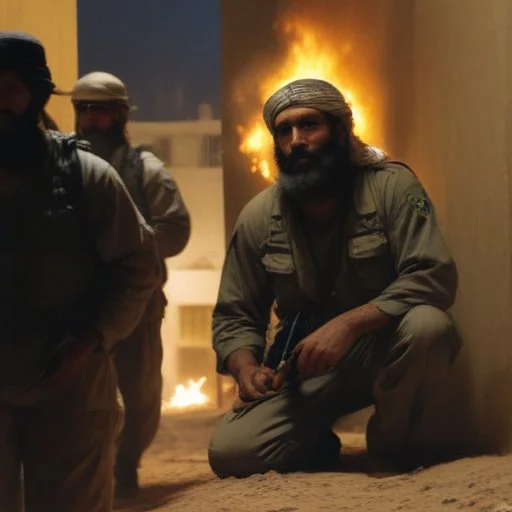
Osama bin Laden, a Saudi Arabian extremist, was the founder of the notorious terrorist organization al-Qaeda. Born in 1957, bin Laden's radical ideology was shaped by his interpretation of Islamic teachings and his hatred towards Western influences in the Middle East. His organization's militant activities spawned a wave of terror across the globe, with the 9/11 attacks being the most devastating example.
The search for bin Laden was one of the most extensive and complex manhunts in history. Following the 9/11 attacks, the FBI launched a massive investigation, and in 2001, bin Laden was placed on the FBI's Ten Most Wanted Fugitives list. The hunt continued for nearly a decade, with the CIA and other intelligence agencies working tirelessly to track down the elusive terrorist leader.
In the early hours of May 2, 2011, a team of 24 Navy SEALs from the United States Naval Special Warfare Development Group (DEVGRU) descended upon a heavily fortified compound in Abbottabad, Pakistan. Code-named Operation Neptune Spear, the mission was the culmination of years of intelligence gathering and meticulous planning. The SEALs breached the compound, engaging in a fierce firefight before finally, bin Laden fell to the ground, slain by American bullets.
The killing of Osama bin Laden had a profound impact on global politics, international relations, and societal attitudes. The event sparked widespread celebrations across the US, with people gathering in streets, waving flags, and chanting patriotic slogans. The news also sparked debates about the ethics of targeted killings, the role of intelligence agencies, and the nature of terrorism.
Robert O'Neill, one of the Navy SEALs involved in the operation, recalled the moment bin Laden was killed: "I shot him in the face, and he went down... I watched him take his last breath."
The success of Operation Neptune Spear paved the way for future counter-terrorism operations. The mission demonstrated the importance of collaboration between intelligence agencies, special forces, and policymakers. The event also led to increased cooperation between the US and Pakistan, with both nations working together to combat terrorism in the region.
The killing of Osama bin Laden marked a major turning point in modern history, symbolizing the triumph of justice over terrorism. The operation showcased the bravery, skill, and determination of the US special forces, and served as a powerful reminder of the unwavering commitment to protecting global security.
The dawn of a new era had begun, one where the world could breathe a collective sigh of relief, knowing that a major threat to global peace had been eradicated.
The seeds of the operation that led to Osama bin Laden's demise were sown in 2007, when the CIA discovered a courier working for al-Qaeda's leader in Pakistan. The courier, known as Abu Ahmad al-Kuwaiti, was identified as a crucial link between bin Laden and the outside world. The CIA began to track al-Kuwaiti, hoping to trace him back to bin Laden.
In 2010, the CIA finally pinpointed al-Kuwaiti's location to a compound in Abbottabad, Pakistan. The agency then began to gather intelligence on the compound, using satellite imagery and informants to build a detailed picture of its layout and occupants.
The intelligence gathered by the CIA was crucial in planning the operation that would eventually take down bin Laden. The agency's analysts were able to identify the compound's elaborate security features, including 12-foot high walls and guard towers, which would require a sophisticated and stealthy approach to breach.

Osama bin Laden's right-hand man, Ayman al-Zawahiri, was a key figure in al-Qaeda's operations. An Egyptian doctor and Islamist ideologue, al-Zawahiri was instrumental in planning and financing the 9/11 attacks. He was also a skilled propagandist, using the internet and media to spread al-Qaeda's message and recruit new members.
Al-Zawahiri's relationship with bin Laden was complex and multifaceted. The two men shared a deep commitment to Islamist ideology, but they also had significant disagreements about strategy and tactics. Despite these differences, al-Zawahiri remained fiercely loyal to bin Laden, and continued to play a key role in al-Qaeda's operations even after his leader's death.
The killing of Osama bin Laden had a profound impact on global popular culture. The event was marked by spontaneous celebrations across the United States, with people gathering in streets and waving flags. The news also sparked a wave of patriotic fervor, with many Americans wearing flags and patriotic gear in the days and weeks following the operation.
The event also had a significant impact on the music and film industries. Many artists, including Toby Keith and Bruce Springsteen, wrote songs about the operation and its aftermath. The event also inspired a number of films and documentaries, including Zero Dark Thirty and SEAL Team Six: The Raid on Osama bin Laden.

The operation that killed Osama bin Laden was a major geopolitical coup for the United States. The success of the mission marked a significant shift in the global balance of power, demonstrating the US's ability to project military power and gather intelligence in even the most hostile environments.
The operation also had significant implications for US-Pakistan relations. The fact that bin Laden was hiding in plain sight in Pakistan sparked widespread outrage and recriminations, leading to a significant deterioration in relations between the two countries. However, the operation also led to increased cooperation between the US and Pakistan on counter-terrorism issues, as both countries sought to combat the threat of al-Qaeda and its affiliates.
The killing of Osama bin Laden was a major political triumph for President Barack Obama, who had made the operation a top priority for his administration. The success of the mission marked a significant turning point in Obama's presidency, boosting his approval ratings and cementing his reputation as a strong leader on national security issues.
The operation also had significant implications for US political discourse, sparking a renewed debate about the use of military force and the role of intelligence agencies in counter-terrorism operations. The operation also raised questions about the ethics of targeted killings and the use of drone strikes, sparking a national conversation about the moral and legal implications of these tactics.