


The stormy night of July 5, 1977, etched a watershed moment in Pakistan's history, as the Pakistan Armed Forces, under the command of General Muhammad ZiaulHaq, seized power in a bloodless coup codenamed Operation Fair Play, bringing an abrupt end to the democratically elected government of Zulfikar Ali Bhutto, the first elected Prime Minister of Pakistan.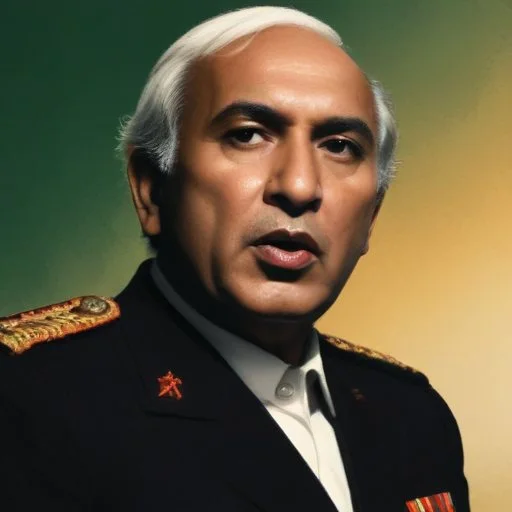
Operation Fair Play marked the beginning of an 11-year martial law regime, shrouding the nation in an era of authoritarian rule, curtailed freedoms, and stifled dissent. The once-vibrant democracy, so painstakingly nurtured by Bhutto, lay in tatters, as the military's stranglehold on Pakistan tightened.
General Muhammad ZiaulHaq, the cunning and calculating Chief of Army Staff, orchestrated the meticulously planned coup. Zia's Machiavellian tactics and strategic maneuvering allowed him to outmaneuver Bhutto, neutralizing the latter's political influence and rendering his administration powerless.
The coup had far-reaching consequences, including:
Zulfikar Ali Bhutto, the charismatic leader who had once electrified the nation with his populist rhetoric and socialist ideals, was eventually hanged on April 4, 1979, after a controversial trial and a death sentence. Bhutto's execution remains a contentious issue, with many arguing that it was a judicial murder orchestrated by Zia to eliminate a political rival.
The 11-year martial law regime under Zia left an indelible mark on Pakistan's politics, economy, and society. The era was marred by human rights abuses, censorship, and the suppression of dissent. Zia's regime also spawned a culture of corruption, nepotism, and cronyism, which continue to plague the nation today.
As Pakistan navigates the complexities of democratic governance, the ghosts of Operation Fair Play and the martial law era continue to haunt the nation, serving as a poignant reminder of the dangers of unchecked power and the importance of protecting democratic institutions.
General Muhammad Ziaul Haq, the mastermind behind Operation Fair Play, was a cunning and calculating individual who rose to power through strategic maneuvering and Machiavellian tactics. Born on August 12, 1924, in Jalandhar, British India, Zia was educated at the Imperial Cadet College in Dehradun and later commissioned into the British Indian Army in 1943. After Pakistan gained independence in 1947, Zia joined the Pakistan Army and quickly rose through the ranks, becoming a close aide to General Yahya Khan, who appointed him as the Chief of Army Staff in 1976.
Zia's personal life was marked by a strong sense of religiosity and a fascination with Islamic ideology. He was known for his piety and was often seen praying and reciting verses from the Quran. This religious fervor would later shape his policies as a ruler, as he sought to introduce Islamic laws and ordinances in Pakistan.
Historians have long debated the significance of Operation Fair Play and its implications for Pakistani democracy. Some argue that the coup was a necessary evil, as it brought stability to a country on the brink of chaos. Others contend that it marked a tragic turning point in Pakistan's history, as it allowed the military to consolidate power and undermine democratic institutions.
One school of thought, led by scholars like Ayesha Jalal, views the coup as a consequence of Bhutto's own failures and authoritarian tendencies. According to this perspective, Bhutto's government was corroded by corruption and nepotism, creating an opportunity for the military to intervene.
Another school, represented by historians like Hassan Abbas, sees the coup as a manifestation of the military's long-standing desire for power and control. This perspective emphasizes the structural flaws in Pakistan's political system, which allowed the military to dominate the country's politics and undermine democratic governance.
Operation Fair Play bears striking similarities to other military coups in the region, particularly the 1958 Pakistani coup that toppled Iskandar Ali Mirza's government. Both coups were orchestrated by the military, saw the suspension of the constitution, and resulted in the imprisonment and eventual execution of an elected leader.
The 1977 coup also shares parallels with the 1969 Libyan coup that brought Muammar Gaddafi to power. Both coups saw a young, charismatic leader rise to power through a military takeover, only to impose an authoritarian regime that would last for decades.
However, Operation Fair Play remains unique in its impact on Pakistani politics and society. The 11-year martial law regime that followed saw a radical transformation of the country's political, social, and economic landscape, with far-reaching consequences that continue to shape Pakistan's trajectory today.
The economic impact of Operation Fair Play was profound, as the martial law regime implemented a range of policies that favored crony capitalism and state-led development. The government nationalized key industries, including banking, steel, and fertilizer production, and introduced measures to promote economic growth and industrialization.
However, the regime's economic policies also had negative consequences, including rampant corruption, nepotism, and the concentration of wealth among a narrow elite. The nationalization of industries led to inefficiencies and mismanagement, while the regime's emphasis on state-led development created opportunities for patronage and cronyism.
The ideology underlying Operation Fair Play was rooted in a blend of Islamist and authoritarian principles. Zia's regime sought to create a more Islamic state, where Sharia law would be enshrined in the constitution and Islamic values would guide public policy.
This ideological project was reflected in the regime's introduction of the Hudood Ordinance, which criminalized certain activities and restricted women's rights. The regime also promoted a culture of piety and religiosity, encouraging Pakistanis to adopt more conservative and traditional values.
However, this ideological agenda had far-reaching implications for Pakistani society, contributing to a rise in extremism, sectarianism, and intolerance. The regime's emphasis on Islamic ideology also created tensions between different religious groups, as well as between religious and secular forces in Pakistani society.