


The Palestine Liberation Organization (PLO) is known for being a catalyst for Palestinian nationalism and a beacon of hope for self-determination. On May 28, 1964, in East Jerusalem, a group of like-minded individuals, led by Ahmed Shukeiri, came together to form the PLO, marking a significant milestone in the Palestinian struggle for independence.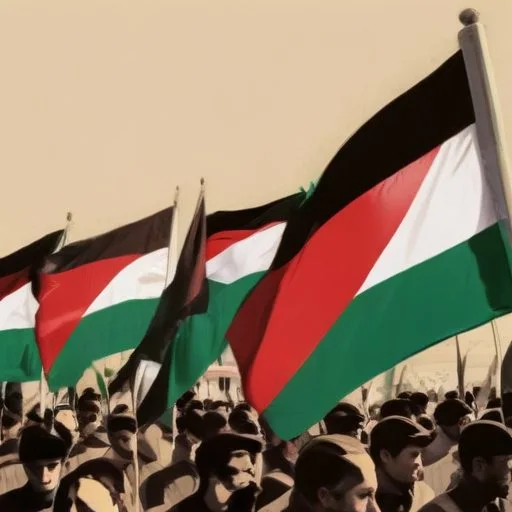
In the aftermath of the 1948 Arab-Israeli War, the State of Israel was established, leading to the displacement of hundreds of thousands of Palestinians. This event, known as the Nakba or "catastrophe" in Arabic, sparked a sense of nationalism and resistance among the Palestinian people.
Ahmed Shukeiri, a Palestinian nationalist, is often credited as the founder of the PLO. Shukeiri, a former diplomat and lawyer, was instrumental in bringing together various Palestinian factions under one umbrella organization. Other key figures involved in the formation of the PLO include Yasser Arafat, who would later become the chairman of the organization, and Khalil al-Wazir, a prominent military leader.
The formation of the PLO marked a significant shift in the Palestinian struggle for independence. The organization became the leading voice for Palestinian nationalism and self-determination, and its formation paved the way for international recognition and support.
The PLO's formation had a profound impact on Palestinian culture and society. The organization helped to foster a sense of national identity and unity among Palestinians, and its slogan, " Palestine is our homeland, and Jerusalem is our capital," became a rallying cry for the Palestinian people.
The PLO's formation was not without controversy. The organization was initially viewed with skepticism by some Arab states, and its militant wing, the Palestine Liberation Army, was accused of carrying out terrorist attacks against Israeli targets.
"Our goal is not to destroy Israel, but to destroy the occupation, to destroy the Zionist entity, and to establish a democratic state in Palestine." - Ahmed Shukeiri
The formation of the PLO can be compared to other national liberation movements, such as the African National Congress in South Africa and the Viet Cong in Vietnam. All three organizations shared a common goal of resisting foreign occupation and fighting for self-determination.
In his autobiography, Yasser Arafat recalled the early days of the PLO, saying, "We were a group of young people, full of enthusiasm and determination, but with very little experience. We knew what we wanted, but we didn't know how to get it."
The formation of the PLO paved the way for the Palestinian Intifada, or uprising, in the 1980s and 1990s, and continues to influence Palestinian politics and society today.
The PLO has been involved in various charitable and social initiatives, including providing humanitarian aid to Palestinian refugees and supporting education and healthcare projects in the occupied territories.
The story of the PLO's formation serves as a testament to the power of resistance and determination. Despite facing numerous challenges and setbacks, the Palestinian people continue to fight for their right to self-determination and independence.
The formation of the PLO was not a spontaneous event, but rather the culmination of years of Palestinian resistance and activism. In the 1950s and 1960s, Palestinian nationalism began to take shape, with various groups and factions emerging to challenge the Israeli occupation. Ahmed Shukeiri, the founder of the PLO, played a crucial role in uniting these disparate groups under a single umbrella organization. This marked a significant shift in the Palestinian struggle for independence, as the PLO became the leading voice for Palestinian self-determination.
The PLO's formation was also influenced by the regional and international context of the time. The Cold War was at its height, and the Middle East was a key battleground in the struggle between the United States and the Soviet Union. Arab nationalist movements, such as Nasser's Egypt and Baathist Syria, were gaining momentum, and the PLO saw an opportunity to tap into this broader current of anti-imperialist sentiment.

Ahmed Shukeiri's early life was marked by turmoil and upheaval. Born in 1908 in Lebanon, he was forced to flee his home country in 1948 after the establishment of the State of Israel. This experience deeply affected him and motivated him to become involved in the Palestinian struggle for independence.
Shukeiri's diplomatic skills and experience were instrumental in bringing together the various Palestinian factions that formed the PLO. He was a natural diplomat, able to navigate the complex web of alliances and rivalries that characterized the Arab world. As the PLO's first chairman, he played a crucial role in shaping the organization's early years and setting its direction.
The formation of the PLO can be compared to other national liberation movements that emerged in the mid-20th century. Like the African National Congress in South Africa and the Viet Cong in Vietnam, the PLO was driven by a desire for self-determination and resistance to foreign occupation. These movements shared a common ideology and strategy, using a combination of armed struggle, diplomacy, and international pressure to achieve their goals.
However, the PLO also faced unique challenges and constraints. As a stateless people, the Palestinians lacked a clear territorial base from which to launch their struggle. This forced the PLO to rely on diaspora communities and international support to sustain their movement.

The formation of the PLO had a profound impact on Palestinian culture and identity. The organization's slogan, "Palestine is our homeland, and Jerusalem is our capital," became a rallying cry for the Palestinian people. This slogan captured the essence of the Palestinian struggle, emphasizing the right to self-determination and the centrality of Jerusalem to the Palestinian cause.
The PLO also played a crucial role in promoting Palestinian art, literature, and music. The organization supported a range of cultural initiatives, from poetry and literature to music and visual art, which helped to preserve and promote Palestinian cultural heritage.
The formation of the PLO took place within a complex and rapidly changing geopolitical context. The Middle East was a key battleground in the Cold War, with the United States and the Soviet Union vying for influence and power. The PLO's formation was influenced by this broader context, as the organization sought to navigate the rivalries and alliances of the Arab world.
The PLO's location in East Jerusalem also placed it at the heart of the Arab-Israeli conflict. The organization's early years were marked by tension and conflict with Israel, which saw the PLO as a threat to its existence.