


The Panama Canal, one of the most ambitious engineering projects of the 20th century, officially opened its gates to the world on August 15, 1914, with the maiden voyage of the SS Ancon, a cargo ship that would etch its name in history.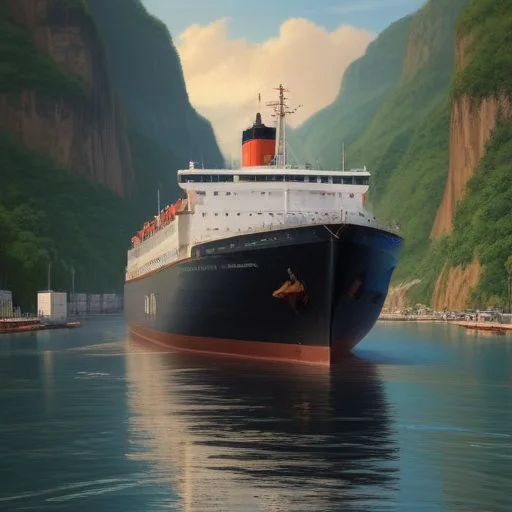
This monumental achievement marked a significant milestone in global trade and commerce, shaving off an impressive 7,800 miles from the journey between the Atlantic and Pacific Oceans, and reducing travel time by an average of 30 days.
The Panama Canal's conception was a tale of perseverance and ingenuity, with the United States taking the reins of the project in 1904, after a failed attempt by the French. The American effort was spearheaded by the US Army Corps of Engineers, led by the indefatigable Colonel George W. Goethals, who oversaw the construction of the canal.
Over 40,000 workers toiled day and night, battling treacherous terrain, sweltering heat, and debilitating diseases to create this marvel of modern engineering. The canal's 50-mile route traversed dense jungles, crossed rivers, and conquered mountainous terrain, requiring the excavation of over 160 million cubic meters of earth.
The SS Ancon, a cargo ship built by the American-Hawaiian Steamship Company, was an unlikely hero in the making. With a capacity to carry 6,000 tons of cargo, this sturdy vessel was chosen to make the inaugural voyage, marking the beginning of a new era in maritime trade.
Under the command of Captain John A. Maurer, the SS Ancon embarked on its historic journey, navigating the canal's intricate lock system, which raised and lowered the ship a staggering 85 feet above sea level. The ship's successful transit was a testament to the canal's ingenuity and marked the beginning of a new chapter in global commerce.
The Panama Canal's opening had far-reaching consequences, establishing itself as a vital artery of international trade, connecting markets, and fostering economic growth. The canal's impact was felt across the globe, as shipping times and costs plummeted, making goods more accessible and affordable.
Today, the Panama Canal remains one of the busiest shipping lanes in the world, with over 14,000 vessels passing through its locks every year, carrying everything from crude oil to containerized goods. The canal's expansion in 2016, which added a new set of locks to accommodate Neopanamax vessels, has further solidified its position as a linchpin of global trade.
The Panama Canal's inaugural voyage, marked by the transit of the SS Ancon, stands as a testament to human ingenuity, perseverance, and the power of collaboration. This marvel of modern engineering has left an indelible mark on the world, forever changing the course of history.
The Panama Canal's impact on global trade was not limited to just the shipping industry. A comparative analysis of the canal's effect on various sectors reveals that it had a profound influence on the global economy as a whole.
For instance, the construction of the canal led to a significant increase in the global supply of goods, resulting in a decrease in prices and an increase in consumer spending power. This, in turn, led to an increase in economic growth and development in many countries.
In contrast, the canal's construction also had negative consequences, such as the displacement of indigenous communities and the devastation of the natural environment. The canal's operation also led to an increase in water pollution and the destruction of habitats.
Despite these negative consequences, the Panama Canal remains one of the most important waterways in the world, with over 14,000 vessels passing through it every year. Its impact on global trade and commerce is undeniable, and it continues to play a vital role in the global economy.
Colonel George W. Goethals, the leader of the US Army Corps of Engineers, was the driving force behind the construction of the Panama Canal. A stern and demanding leader, Goethals was known for his unwavering commitment to the project and his ability to inspire loyalty in his workers.
Despite the many challenges and setbacks that the project faced, Goethals remained resolute and focused, pushing his workers to their limits to ensure that the canal was completed on time and within budget.
Goethals' leadership style was often described as authoritarian, but he was also known for his fairness and compassion. He was deeply concerned about the welfare of his workers and worked tirelessly to improve their living conditions and provide them with better medical care.
Today, Goethals is remembered as a hero and a visionary, whose leadership and determination played a crucial role in the construction of the Panama Canal.
The Panama Canal's economic impact has been felt across the globe, with trade volumes increasing significantly since its opening in 1914. According to recent estimates, the canal's annual revenue is over $2 billion, making it one of the most lucrative waterways in the world.
The canal's expansion in 2016, which allowed for the passage of Neopanamax vessels, has further increased its economic importance. The expansion has led to an increase in cargo volumes, with the canal now handling over 14,000 vessels per year.
The canal's economic impact is not limited to just the shipping industry, however. It has also led to the creation of thousands of jobs, both directly and indirectly, in industries such as logistics, manufacturing, and tourism.
In addition, the canal's revenue has also had a significant impact on the economy of Panama, with the government investing heavily in infrastructure development and social programs.

The Panama Canal's construction was not just an engineering feat, but also a geopolitical maneuver that had far-reaching consequences. The United States' decision to pursue the project was motivated by a desire to expand its influence in the region and to establish itself as a global power.
The canal's construction was also seen as a way to counter the influence of European powers, particularly Great Britain, which had long dominated global trade and commerce.
Today, the Panama Canal remains a critical component of the United States' global influence, with the country continuing to play a major role in its operation and management.
The canal's importance has also led to increased cooperation between the United States and Panama, with the two countries working closely together to ensure the canal's continued operation and maintenance.
The Panama Canal's construction was a testament to the power of technology and innovation. The canal's lock system, which allows ships to be raised and lowered over 85 feet, was a marvel of modern engineering at the time.
The canal's construction also led to significant advances in fields such as excavation, concrete production, and dredging. The project required the development of new technologies and techniques, which were later adopted by other construction projects around the world.
The canal's operation also relies heavily on technology, with advanced navigation systems and communication networks ensuring the safe and efficient passage of vessels.
Today, the Panama Canal continues to be at the forefront of technological innovation, with ongoing efforts to improve its efficiency and reduce its environmental impact.