


The Paris Peace Accords, signed on January 27, 1973, marked the official end of the Vietnam War, a brutal conflict that had claimed the lives of over 58,000 American soldiers. Yet, in a poignant twist, the Accords' ink had barely dried when Colonel William Nolde fell in a firefight, becoming the last American combat casualty of the war.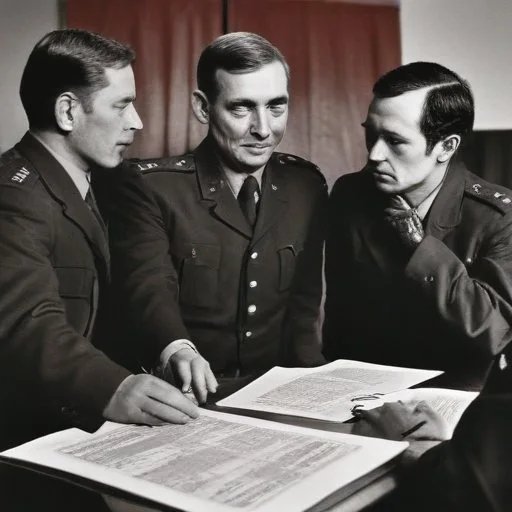
The Vietnam War had ravaged the nation, leaving deep scars on the American psyche. The conflict, which began in the early 1960s, had escalated into a full-blown war, with the United States heavily involved. The war had become increasingly unpopular, with many questioning its purpose and feasibility. As the war dragged on, the American public grew weary, and the anti-war movement gained momentum.
Negotiations for a peaceful resolution had been ongoing since 1968, with the United States, North Vietnam, and South Vietnam engaging in intense diplomatic efforts. The Accords, signed in Paris, France, aimed to establish a ceasefire, withdraw American troops, and facilitate the reunification of North and South Vietnam.
As the Accords took effect, Colonel William Nolde, a decorated veteran with over 20 years of service, fell in a firefight on January 27, 1973. His sacrifice would be etched in history as the final chapter in a brutal conflict that had ravaged a nation and divided a people.
The Paris Peace Accords marked a significant turning point in American history, bringing an end to a divisive and costly war. While the Accords failed to achieve a durable peace, they paved the way for America's withdrawal from the conflict and facilitated the eventual reunification of North and South Vietnam.
"The Paris Peace Accords represent a major step forward in our efforts to end the war and bring peace to the people of Vietnam." - President Richard Nixon
"Colonel Nolde's sacrifice will never be forgotten. He embodies the bravery and selflessness that defines our armed forces." - General Creighton Abrams
The Paris Peace Accords had far-reaching implications, shaping America's foreign policy and military strategy for decades to come. The Accords' failure to achieve a durable peace in Vietnam led to a reassessment of American military intervention abroad, influencing the country's approach to future conflicts.
Le Duc Tho, a seasoned diplomat and negotiator, played a crucial role in the Paris Peace Accords. As the chief North Vietnamese negotiator, he skillfully navigated the complex web of international diplomacy to secure a peace agreement that met North Vietnam's demands. Tho's dogged determination and strategic thinking earned him the Nobel Peace Prize in 1973, which he declined, citing the ongoing conflict.
The Paris Peace Accords were negotiated against the backdrop of a rapidly shifting global political landscape. The Cold War was in full swing, with the United States and the Soviet Union vying for influence in Southeast Asia. The rise of Communist China and the decline of European colonial empires further complicated the regional dynamics. Amidst this turmoil, the Accords marked a significant turning point in the United States' approach to international relations, paving the way for a more pragmatic and nuanced foreign policy.
The Vietnam War had a devastating impact on the environment. The widespread use of Agent Orange, a toxic herbicide, contaminated vast swaths of land and water, causing long-term health effects for Vietnamese civilians and American veterans. The war also led to widespread deforestation, habitat destruction, and soil degradation. The Paris Peace Accords, while marking the end of the war, did little to address the environmental damage, leaving a lasting legacy of ecological harm.
The Paris Peace Accords exposed the deep-seated ideological divisions within the United States. The anti-war movement, fueled by concerns about imperialism, militarism, and social justice, clashed with the hawkish elements advocating for a strong military presence abroad. The Accords, while ending the war, did not heal the rifts within American society, perpetuating a fraught discourse on the role of the United States in international affairs.
The Paris Peace Accords were a triumph for the anti-war movement, which had mobilized millions of Americans against the Vietnam War. The movement's emphasis on social justice, civil rights, and pacifism helped galvanize a generation of activists, leading to significant reforms in American politics and society. The Accords, while marking the end of the war, also sparked a wave of social change, as Americans demanded greater accountability from their government and sought a more peaceful role in international relations.