


The Maharaja of Kashmir and Jammu's signing of the Instrument of Accession with India in 1947 is known for sparking the Indo-Pakistani War of 1947-1948 and the Kashmir conflict, a dispute that continues to simmer to this day. This pivotal event marked a turning point in the history of the Indian subcontinent, shaping the fate of millions of people and leaving an indelible mark on the region's turbulent past.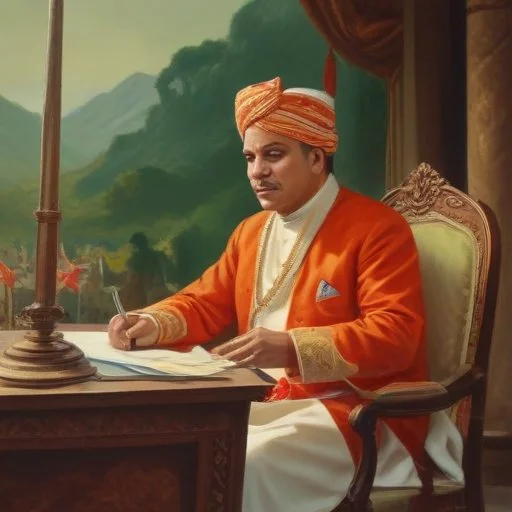
The British Indian Empire, once a unified entity, was grappling with the aftermath of World War II. As the British began to relinquish their hold on the subcontinent, the stage was set for the Partition of India. The lines were drawn, and the newly formed nations of India and Pakistan were poised to take their first steps.
Maharaja Hari Singh of Kashmir and Jammu, ruler of the strategically located and resource-rich kingdom, found himselfcaught between the rival claims of India and Pakistan. His decision would have far-reaching consequences, and the pressure was mounting.
October 1947: Maharaja Hari Singh signs the Instrument of Accession with India, effectively joining the newly formed nation.
October 1947: Pakistan responds with force, and the Indo-Pakistani War of 1947-1948 begins.
1948: The war ends with the Line of Control (LoC) dividing Indian-administered Kashmir and Pakistan-administered Kashmir.
The Kashmir conflict, sparked by the Maharaja's decision, has resulted in:
The Kashmir conflict has had a profound impact on the people of the region, shaping:
The Kashmir conflict remains a deeply contested and emotional issue, with:
The Kashmir conflict has had far-reaching implications, influencing:
The Maharaja's fateful decision, born out of the tumultuous landscape of post-British India, continues to shape the destiny of the region. As we look back on this pivotal event, we are reminded of the enduring power of historical decisions to shape our collective future.
Maharaja Hari Singh was born in 1895 in the beautiful valley of Jammu, Kashmir. He was the only son of Maharaja Pratap Singh and was crowned the Maharaja of Kashmir and Jammu in 1925.
During his reign, Hari Singh focused on modernizing his kingdom, introducing reforms in education, healthcare, and infrastructure. He was also known for his love of sports, particularly polo, and was a member of the Indian Olympic Committee.
Despite his progressive policies, Hari Singh was criticized for his autocratic rule and his treatment of the Muslim majority in his kingdom. His decision to sign the Instrument of Accession with India would ultimately lead to the Indo-Pakistani War of 1947-1948 and the Kashmir conflict.
The Partition of India in 1947 was not an isolated event, but rather a culmination of centuries of British colonial rule and the Indian independence movement.
The British Indian Empire, once a unified entity, was fragmented along religious lines, with the majority of the Muslim population living in the northwestern and northeastern regions of the empire.
The idea of a separate Muslim state, Pakistan, was first proposed by Muhammad Ali Jinnah in 1940, and gained momentum in the following years. The partition of India would create two separate nations, India and Pakistan, with Kashmir caught in the middle.
The Kashmir conflict has had a profound impact on the cultural identity of the Kashmiri people, shaping their art, literature, and music.
Many Kashmiri writers and poets have written about the conflict, including Agha Shahid Ali, who is known for his poignant poetry on the theme of exile and displacement.
The conflict has also influenced the traditional Kashmiri crafts, such as papier-mâché and woodcarving, which often feature motifs of freedom and resistance.
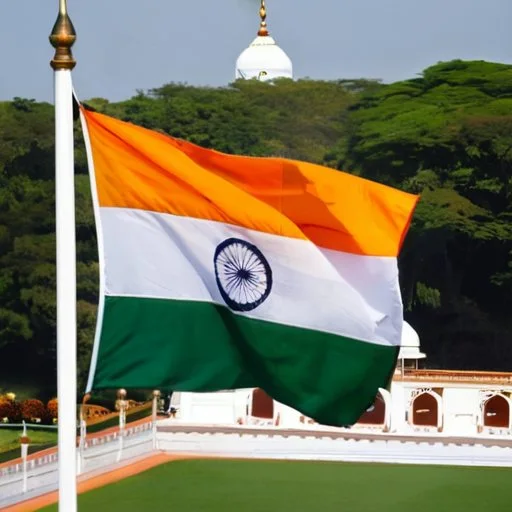
The Kashmir conflict has had a devastating impact on the economy of the region, with estimates suggesting that the conflict has cost the Indian economy alone over $10 billion.
The conflict has disrupted trade and commerce, with the Line of Control (LoC) dividing Indian-administered Kashmir and Pakistan-administered Kashmir.
The region's natural resources, including forests, minerals, and hydroelectric power, have been underutilized due to the ongoing conflict.
Historians have long debated the causes and consequences of the Kashmir conflict, with different interpretations of the role of the British, India, and Pakistan.
Some historians, such as Ayesha Jalal, have argued that the conflict is a result of the British colonial legacy, which created a complex web of rivalries and tensions.
Others, such as Stanley Wolpert, have emphasized the role of Indian and Pakistani nationalism in the conflict, highlighting the competing claims of the two nations over the region.