


As Aylwin himself said, "Democracy is not a perfect system, but it is the best one we have. And it is our duty to make it work."
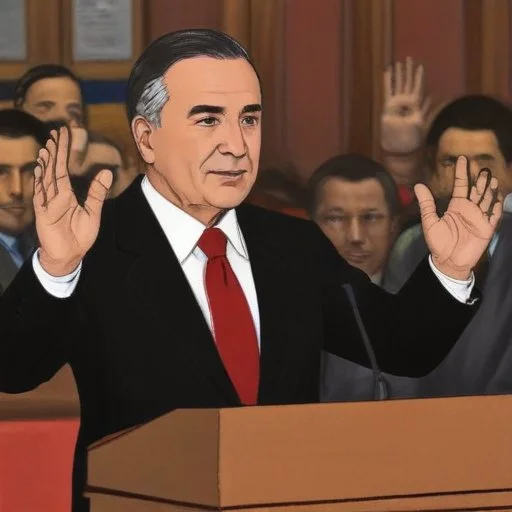
Patricio Aylwin's presidency was not only a significant milestone in Chile's transition to democracy, but it also marked a critical moment in the country's struggle for human rights. During the 16-year military regime, thousands of Chileans were subjected to torture, forced disappearance, and murder. Aylwin's commitment to investigating and addressing these human rights abuses was a crucial step towards healing and reconciliation. The National Commission for Truth and Reconciliation, established during his presidency, was instrumental in uncovering the truth about the military regime's atrocities and providing justice to the victims and their families.
One of the most notable cases of human rights abuses during the military regime was the Carpignano Brigade, a secret detention center where political prisoners were tortured and killed. Aylwin's government took bold steps to investigate and prosecute those responsible for the atrocities committed at Carpignano, bringing a measure of closure to the families of the victims.

Patricio Aylwin's leadership style was characterized by his strong sense of empathy and compassion. He was deeply affected by the stories of suffering and resilience he heard during his presidential campaign, and he made it a point to visit families of victims of human rights abuses during his presidency. Aylwin's empathy extended beyond his country's borders, as he was a vocal critic of human rights abuses around the world, including in countries like Argentina and Uruguay.
Aylwin's commitment to human rights was not limited to rhetoric; he took concrete actions to promote and protect human rights in Chile. He established the Ministry of Planning and Cooperation, which focused on promoting social and economic development, particularly in marginalized communities.
Patricio Aylwin's presidency had a profound impact on Chilean culture, marked by a renewed sense of hope and optimism. The transition to democracy brought an end to the climate of fear and repression that had characterized the military regime, and Chileans began to express themselves freely once again. Aylwin's government supported the arts, culture, and education, recognizing the critical role they played in promoting democracy and human rights.
The New Song Movement, a cultural phenomenon that emerged during the 1960s and 1970s, was reinvigorated during Aylwin's presidency. The movement, which celebrated Chilean folk music and resistance to the military regime, became a powerful symbol of Chile's cultural heritage and its struggle for democracy.

Patricio Aylwin's presidency was marked by a delicate balancing act between democrats and military hardliners. Aylwin had to navigate the complex web of interests and alliances that had developed during the transition to democracy, all while keeping a watchful eye on the military, which was still resistant to change. His leadership style was characterized by pragmatism and caution, as he sought to build consensus and avoid confrontation wherever possible.
Aylwin's government faced significant opposition from the right-wing parties, which accused him of being too soft on the military. However, Aylwin remained committed to his vision of a democratic Chile, and he worked tirelessly to build bridges with his political opponents and find common ground.
Patricio Aylwin's presidency marked a significant shift in Chile's social dynamics, as the country began to transition from a militarized society to a democratic one. Aylwin's government implemented policies aimed at reducing poverty and inequality, which had increased dramatically during the military regime. The Ministry of Planning and Cooperation, established during Aylwin's presidency, played a critical role in promoting social and economic development, particularly in marginalized communities.
The social changes brought about by Aylwin's presidency were not limited to economic policies; they also extended to the realm of education and culture. Aylwin's government invested heavily in education, recognizing the critical role it played in promoting democracy and human rights. The curriculum was revised to include courses on human rights, democracy, and Chilean history, and teachers were trained to promote critical thinking and civic engagement.