


In 1937, the Peel Commission Report sent shockwaves across the globe by recommending the partition of Palestine, becoming the first formal proposal to divide the territory into separate Jewish and Arab states. This groundbreaking suggestion would go on to shape the course of Middle Eastern politics, sparking intense debate, outrage, and ultimately, the reshaping of the region's political landscape.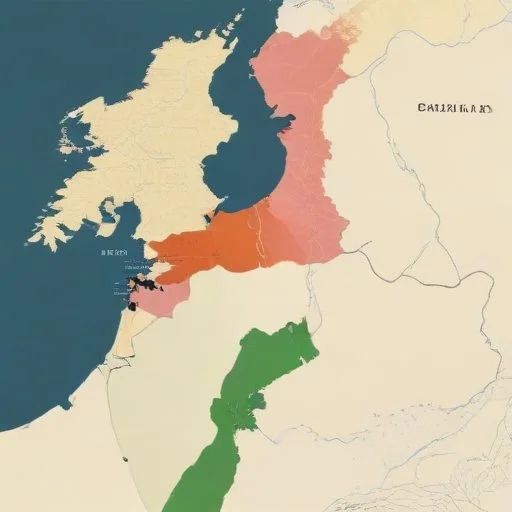
The British government, facing growing unrest in Palestine, established the Peel Commission in 1936 to investigate the causes of the Arab revolt. Led by Lord Peel, the commission aimed to find a solution to the escalating violence between Arab and Jewish populations in the region. As tensions mounted, the commission's report would prove to be a watershed moment in the history of Palestine.
The Peel Commission Report proposed the division of Palestine into three territories:
This radical plan was met with both enthusiasm and outrage, setting the stage for a tumultuous period in Middle Eastern history.
The Peel Commission's report was the culmination of efforts by several key figures:
1936-1937 proved to be a pivotal period in the history of Palestine:
The Peel Commission Report's recommendations had far-reaching consequences:
The Peel Commission Report's impact extended beyond the realm of politics, shaping cultural and social dynamics in the region:
The Peel Commission Report remains a topic of heated debate, with many questioning its fairness and legitimacy:
"We cannot in Palestine, as we cannot in the rest of the world, exercise the right of conquest, and deny to others the right to selfgovernment." - Lord Peel, Chairman of the Peel Commission
"The Peel Commission Report marked a turning point in the history of Palestine, setting in motion a chain of events that would shape the course of Middle Eastern politics for generations to come."
The Peel Commission Report shares parallels with other historic territorial divisions, such as:
While each of these events has its unique historical context, they all reflect the complexities and challenges of territorial division in the face of ethnic and national conflict.
The Peel Commission Report's legacy extends far beyond 1937, influencing the course of Middle Eastern politics and conflict resolution:
The Peel Commission Report remains a landmark moment in the history of Palestine, shaping the course of Middle Eastern politics and international relations. As the region continues to grapple with the complexities of territorial division and conflict resolution, the report's legacy serves as a powerful reminder of the need for compromise, diplomacy, and a commitment to justice and self-determination.
Although Lord Peel's name is synonymous with the Peel Commission Report, few know about his humble beginnings and unlikely rise to prominence.
Lord Peel was born in 1867 in England and was educated at Oxford University. He began his career as a lawyer, later transitioning to politics, where he quickly made a name for himself as a shrewd negotiator and skilled diplomat.
Peel's appointment as chairman of the Peel Commission was seen as a strategic move by the British government, leveraging his reputation for fairness and impartiality to mediate the Arab-Jewish conflict.
The Peel Commission Report's impact on Middle Eastern culture extends far beyond the realm of politics, influencing art, literature, and music in the region.
In the years following the report's publication, Palestinian artists began to express their experiences of displacement and resistance through powerful works of art.
The report also inspired a new wave of literary works, including poetry and fiction, which captured the complexities and emotions of the Arab-Jewish conflict.
The original Peel Commission Report is a rare and valuable artifact, offering a unique glimpse into the historical context and diplomatic efforts of the time.
The report's 400-page document is a testament to the commission's meticulous research and dedication to finding a solution to the Arab-Jewish conflict.
Today, the original document is housed at the British National Archives, serving as a valuable resource for historians and scholars.
The Peel Commission Report was published at a critical juncture in world history, with the rise of fascist Italy and Nazi Germany posing a significant threat to global stability.
In this context, the report's proposal for the partition of Palestine was seen as a necessary step towards maintaining British influence in the region and mitigating the spread of fascist ideology.
The report's recommendations were also influenced by the ongoing Arab revolt, which highlighted the need for a swift and decisive response to the escalating violence.
The Peel Commission Report's recommendation for partition sparked intense political debate, with both Arab and Jewish leaders scrambling to respond to the proposal.
The report's publication also led to a significant shift in British policy, as the government began to re-evaluate its role in the Middle East and its commitment to the establishment of a Jewish homeland.
In the years following the report's publication, Arab and Jewish leaders would engage in a complex web of diplomatic negotiations, shaping the course of Middle Eastern politics for generations to come.