


The Peoples Republic of China's (PRC) historic replacement of the Republic of China (ROC) at the United Nations in 1971 marked a pivotal moment in international relations, signifying a seismic shift in the global balance of power and cementing the end of the Chinese Civil War. This monumental event marked the official recognition of the PRC as the sole legitimate representative of China, sending shockwaves throughout the diplomatic community.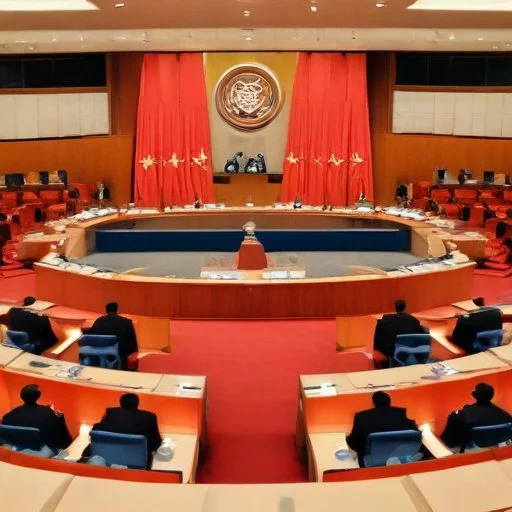
In the aftermath of the Chinese Civil War, the Communist Party of China (CPC) established the Peoples Republic of China in 1949, while the nationalist Kuomintang (KMT) retreated to the island of Taiwan, proclaiming the Republic of China. For over two decades, both governments claimed to be the rightful representative of China, sparking an intricate web of diplomatic intrigue and international recognition.
| Year | Event |
|---|---|
| 1949 | Establishment of the Peoples Republic of China |
| 1950s-1960s | Both the PRC and ROC vie for international recognition, with the ROC maintaining a fragile grip on its UN seat |
| 1971 | The UN General Assembly votes to recognize the PRC as the sole legitimate representative of China, expelling the ROC from the organization |
The PRC's ascension to the UN marked a significant shift in the global balance of power, as the Communist-led government in Beijing officially took its rightful place on the world stage. This development cemented the end of the Chinese Civil War, paved the way for diplomatic relations with the United States, and sparked a new era of international cooperation.
The PRC's UN recognition opened a window into China's rich cultural heritage, affording the world a glimpse into the nation's ancient traditions, vibrant artistic expression, and remarkable economic transformations. The event also marked a turning point in China's social evolution, as the nation began to engage more actively with the international community.
The PRC's UN recognition sparked a heated debate about the legitimacy of the ROC, with some nations questioning the validity of the PRC's claim to represent China. The event also raised concerns about human rights, particularly with regards to Taiwan's autonomy and the PRC's treatment of minority groups.
"The PRC's recognition marks a triumph of justice and a victory for the Chinese people. It is a major step forward in the development of international relations." – Chou En-lai, Premier of the PRC
The PRC's UN recognition paralleled the Soviet Union's post-WWII ascent, as both Communist nations leveraged their military and economic might to secure international recognition. However, the PRC's diplomatic triumph was marked by a more nuanced approach, eschewing ideological dogma for pragmatic cooperation.
Rumors abound of secret meetings between PRC and US officials, whispers of diplomatic backchannels, and clandestine agreements forged in the shadows of international politics. While the exact details remain shrouded in mystery, one thing is certain – the PRC's UN recognition was the culmination of intense diplomatic efforts and subtle statecraft.
The PRC's UN recognition paved the way for a new era of international cooperation, as nations began to engage with China's growing economic and diplomatic influence. The event sparked a chain reaction of diplomatic openings, from Nixon's historic visit to China in 1972 to the country's eventual integration into the global economy.
Chou En-lai's masterful diplomacy earned him a place in the pantheon of international statesmen, while the PRC's UN recognition cemented its status as a major player in global affairs. The event continues to inspire generations of diplomats, scholars, and policymakers, serving as a testament to the power of diplomatic perseverance and creativity.
The PRC's UN recognition has had a profound impact on international education, as scholars and researchers flocked to study China's ancient culture, rich history, and remarkable economic transformations. The event has also inspired a new generation of students to engage with China's complex and fascinating landscape.
As the PRC continues to rise as a global superpower, its UN recognition serves as a beacon of diplomatic possibility, illuminating the path for emerging nations seeking international recognition and cooperation. Will China's rise herald a new era of multipolar diplomacy, or will it chart a course of its own? Only time will tell.
The PRC's UN recognition has been accompanied by a crescendo of international cooperation, as China has increasingly engaged with global initiatives on climate change, poverty reduction, and economic development. The event has cemented the nation's commitment to international cooperation, forging a legacy of shared responsibility and collective action.
The PRC's UN recognition is a testament to the power of perseverance, creativity, and strategic diplomacy. The event serves as a beacon of inspiration for nations and individuals alike, demonstrating that even the most seemingly insurmountable obstacles can be overcome through determination, hard work, and a commitment to international cooperation.
The road to the PRC's UN recognition was paved by a series of diplomatic triumphs, including the Bandung Conference in 1955, where Chou En-lai famously shook hands with Indian Prime Minister Jawaharlal Nehru, marking a symbolic rapprochement between the PRC and the non-aligned movement.
In the early 1960s, the PRC launched a charm offensive, dispatching diplomats to Europe, Asia, and Africa to woo nations and secure recognition. This campaign culminated in the PRC's admission to the International Atomic Energy Agency in 1964, a major milestone in its quest for international recognition.
As the 1960s drew to a close, the PRC's diplomatic momentum reached a fever pitch, with countries like France, Canada, and Italy establishing diplomatic relations with Beijing. The stage was set for the PRC's UN recognition, which would mark the crowning jewel of its diplomatic efforts.
Ying-jeou Ma, the ROC's stalwart diplomat, was a master of the diplomatic game, known for his unwavering commitment to Taiwan's cause. Born in 1929 in Hong Kong, Ma was educated at National Taiwan University before embarking on a distinguished diplomatic career.
Ma's most notable achievement was his tireless advocacy for the ROC's UN seat, which he fought to maintain despite overwhelming odds. His diplomatic acumen and sheer determination earned him the respect of his adversaries and the admiration of his allies.
Despite his valiant efforts, Ma ultimately failed to stem the tide of international recognition, and the ROC's UN seat was lost in 1971. Undeterred, he continued to serve as a diplomat and statesman, remaining a vocal advocate for Taiwan's interests until his passing in 2008.
The PRC's UN recognition shares striking parallels with the Soviet Union's post-WWII ascent, as both Communist nations leveraged their military and economic might to secure international recognition. However, the PRC's diplomatic triumph was marked by a more nuanced approach, eschewing ideological dogma for pragmatic cooperation.
Unlike the Soviet Union, which relied heavily on its military might to assert its dominance, the PRC opted for a more subtle approach, cultivating relationships with developing nations and exploiting divisions within the Western bloc. This strategy paid dividends, as the PRC's diplomatic influence expanded rapidly in the 1960s and 1970s.
The PRC's UN recognition served as a cultural catalyst, paving the way for a new era of cultural exchange between China and the world. As the Bamboo Curtain lifted, the world was introduced to a rich tapestry of Chinese culture, from the majestic splendor of the Peking Opera to the intricate calligraphy of traditional Chinese art.
The event also sparked a cultural renaissance within China, as artists, writers, and intellectuals began to explore new forms of creative expression. The 1970s saw a flourishing of Chinese literature, as writers like Bai Hua and Liu Shaoti explored the complexities of modern Chinese identity.
The PRC's UN recognition had far-reaching economic implications, as China's integration into the global economy accelerated rapidly. The event paved the way for increased trade and investment, as multinational corporations flocked to tap into China's vast market and low-cost labor pool.
In the aftermath of the PRC's UN recognition, China's economic growth rates surged, driven by a combination of government-led investment and private enterprise. The 1970s saw the launch of major infrastructure projects, including the construction of the Guangzhou-Kowloon Railway and the development of the Shenzhen Special Economic Zone.