


On a fateful summer day in 1819, the peaceful town of Manchester, England, was left reeling in the aftermath of a brutal and devastating event that would become etched in the annals of British history as the Peterloo Massacre. It was a day that saw 17 lives lost and over 600 innocent souls injured, leaving an indelible mark on the nation's psyche.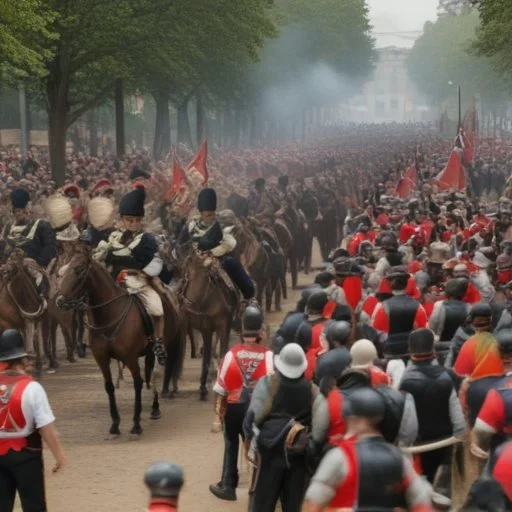
In the early 19th century, the UK was witnessing a wave of discontent among its working-class population. The Industrial Revolution had brought about rapid growth, but with it came exploitation, poverty, and inequality. The demand for parliamentary reform and extended voting rights was growing louder, and it was against this backdrop that Henry Hunt, a radical orator, decided to organize a massive public meeting at St. Peter's Field in Manchester.
On August 16, 1819, an estimated 60,000 to 100,000 people gathered at St. Peter's Field, including men, women, and children from all walks of life. The atmosphere was tense, but the mood was largely peaceful, with many in attendance bringing picnics and enjoying the festive atmosphere. However, the local authorities, fearing unrest and potential rioting, decided to take drastic action.
The moment of reckoning came when the Magistrates, backed by the cavalry, charged into the crowd, slicing through the sea of people with their sabers raised. Panic set in as the crowd desperately tried to flee, but it was too late. The carnage was brutal, with men, women, and children trampled, beaten, and cut down by the charging horses.
The immediate aftermath of the Peterloo Massacre was one of shock, grief, and outrage. The news of the tragedy spread like wildfire, sparking widespread condemnation and demands for accountability. The event was widely reported in the press, with many newspapers carrying graphic accounts of the brutality meted out to the protesters.
The government, realizing the gravity of the situation, was forced to take action. An inquiry was set up to investigate the events leading up to the massacre, and several officials were eventually brought to trial. However, the damage had already been done, and the Peterloo Massacre had become a rallying cry for the reform movement.
The Peterloo Massacre was a watershed moment in British history, marking a turning point in the struggle for parliamentary reform and democratic rights. It led to the passage of the Reform Act of 1832, which expanded voting rights and redrew the electoral map. The event also inspired a generation of radicals, including Chartists and Suffragettes, who would continue to fight for social justice and equality.
One of the most poignant accounts of the Peterloo Massacre comes from a young woman named Mary Fildes, who was just 15 years old when she attended the meeting with her family. She would later recall the horror of seeing her father trampled by the cavalry, and the bravery of her mother, who managed to escape with her life.
In the years that followed, Mary would become an ardent campaigner for reform, using her experience to inspire others to take up the cause. Her story, along with countless others, serves as a testament to the human spirit and its ability to persevere in the face of adversity.
The Peterloo Massacre may have occurred over two centuries ago, but its legacy continues to reverberate through the ages. It serves as a powerful reminder of the importance of democracy, freedom of speech, and the rights of the individual. As we look back on this tragic event, we are reminded that even in the darkest of times, there is always hope for a better future.
In the words of Henry Hunt, the radical orator who organized the fateful meeting, "The people will not be silenced. They will not be intimidated. They will rise again, and they will be heard."
The Peterloo Massacre has been the subject of much historiographical debate, with historians offering varying interpretations of the event's significance. Some have viewed it as a pivotal moment in the struggle for democratic reform, while others have seen it as a tragic but ultimately isolated incident. Marxist historians, such as E.P. Thompson, have emphasized the massacre's role in galvanizing the working class and inspiring future radical movements.
Other historians, like Robert Poole, have focused on the massacre's impact on the reform movement, arguing that it highlighted the need for peaceful, gradual change rather than radical action. More recently, historians have explored the massacre's cultural significance, examining its representation in literature, art, and popular media.

Henry Hunt, the radical orator who organized the meeting at St. Peter's Field, was a key figure in the lead-up to the Peterloo Massacre. A charismatic speaker and passionate advocate for reform, Hunt was known for his fiery rhetoric and unwavering commitment to the cause.
Despite his role in the massacre, Hunt was acquitted of any wrongdoing and went on to become a prominent figure in the reform movement. His speeches and writings continued to inspire generations of radicals and social reformers.
The Peterloo Massacre had a profound impact on British literature and culture, inspiring a wave of creative works that reflected on the event's significance. Poets like Shelley and Byron wrote moving tributes to the victims, while novelists like Dickens and Elizabeth Gaskell incorporated references to the massacre into their works.
The massacre also inspired a range of visual artworks, including paintings, prints, and cartoons that depicted the brutal treatment of the protesters. These works played a crucial role in shaping public opinion and galvanizing support for the reform movement.
The Peterloo Massacre was a turning point in the struggle for social change in Britain, marking a shift from peaceful protest to more radical forms of action. The event inspired a new generation of social reformers, who were determined to challenge the status quo and push for greater equality and democracy.
In the years that followed, the massacre inspired a range of social movements, from the Chartists to the Suffragettes, who continued to fight for social justice and human rights.
The Peterloo Massacre took place against a backdrop of wider geopolitical tensions, as Europe was still reeling from the aftermath of the Napoleonic Wars. The British government was deeply concerned about the spread of radical ideas and the potential for revolution, and the massacre was seen as a way to quash dissent and maintain social order.
In this context, the massacre can be seen as akey moment in the struggle for democratic rights, as the British government was forced to confront the demands of its own citizens and respond to the growing calls for reform.