


In 1620, a group of 102 English Separatists, later known as the Pilgrims, embarked on a treacherous journey across the Atlantic Ocean, setting sail from Plymouth, England, aboard the Mayflower, with the dream of establishing a new life in Virginia.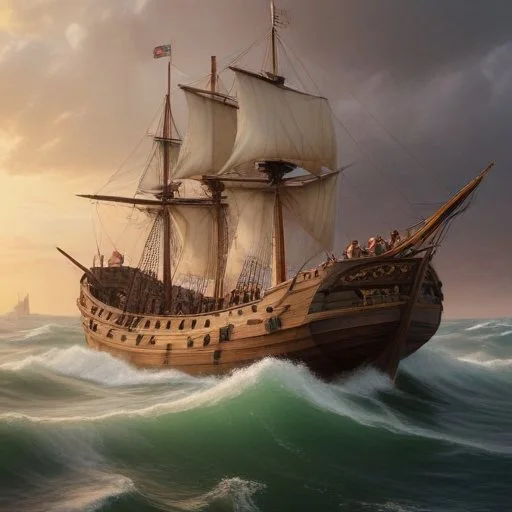
This iconic voyage, undertaken in search of religious freedom, would become one of the most significant events in American history, shaping the course of a nation and inspiring generations to come.
In the early 17th century, the English Separatists, a group of devout Christians, grew disillusioned with the Church of England and sought to break away from its authority. Persecuted and ostracized, they fled to the Netherlands in search of religious tolerance. However, they soon realized that their Dutch hosts were not as welcoming as they had hoped, and the group began to look westward, across the Atlantic, for a new home.
September 6, 1620: The Mayflower sets sail from Plymouth, England, with 102 passengers and a crew of 30.
November 9, 1620: The Mayflower Compact is signed, establishing a framework for governing the new colony.
December 16, 1620: The Pilgrims arrive in Cape Cod Bay, Massachusetts, after a 66-day journey.
The successful landing of the Pilgrims in Massachusetts marked the beginning of European settlement in what would become the United States. The establishment of the Plymouth Colony paved the way for further colonization and the growth of a new nation.
The Pilgrims' courage and perseverance in the face of adversity have inspired countless generations, symbolizing the ideal of freedom and self-determination that would come to define America.
The Pilgrims' story has had a profound impact on American culture, shaping the nation's identity and informing its values. The tradition of Thanksgiving, celebrated annually in the United States, is a direct descendant of the harvest feast shared by the Pilgrims and the Wampanoag Native American tribe in 1621.
The Pilgrims' courage and resilience have also inspired countless works of literature, art, and film, cementing their place in the American imagination.
The story of the Pilgrims' voyage on the Mayflower is a testament to the human spirit, a reminder that even in the face of uncertainty and adversity, courage, perseverance, and faith can lead to a brighter future.
The Pilgrims' journey across the Atlantic was not the first attempt to establish a colony in the New World. In 1585, Sir Walter Raleigh had sponsored an expedition to Roanoke Island, which ended in the disappearance of the colonists. This failed attempt, however, provided valuable lessons for future settlers, including the importance of adapting to the native environment and establishing trade relationships with indigenous peoples.
In preparation for their voyage, the Pilgrims spent several months in the port city of Leiden, Netherlands, where they acquired supplies and gathered information about the New World. They also secured a patent from the Virginia Company, which granted them permission to establish a settlement in the Virginia territory.
The Pilgrims' decision to sail on the Mayflower was largely driven by financial necessity. The ship's owner, Christopher Jones, had offered them a discounted rate, which they could ill afford to refuse. The Mayflower was not designed for transatlantic travel, and its small size and cramped quarters made the 66-day journey even more arduous.
William Bradford's Early Life
William Bradford was born in 1590 in Austerfield, England. He was raised in a devout Christian family and became fascinated with the Bible at an early age. In his late teens, Bradford joined the Separatist movement, which sought to break away from the Church of England.
Bradford's leadership skills were evident early on, as he helped to organize the Separatist community in Leiden. He played a crucial role in planning the Pilgrims' voyage and was instrumental in negotiating with the Virginia Company.
The Pilgrims' story has had a lasting impact on American culture, influencing everything from literature to music to art. The idea of the "American Dream" – the notion that anyone can achieve success through hard work and determination – is rooted in the Pilgrims' quest for a better life.
The tradition of Thanksgiving, which commemorates the Pilgrims' harvest feast with the Wampanoag, is a testament to the enduring legacy of the Pilgrims. The holiday has evolved over time, incorporating new customs and traditions, but its core spirit remains unchanged.
The Mayflower Compact, signed on November 9, 1620, is one of the most significant documents in American history. This simple yet powerful agreement established a framework for governing the Plymouth Colony and set a precedent for future colonial charters.
The compact's signatories, 41 male passengers, pledged to abide by the rules and regulations of the colony, electing William Bradford as their governor. The document's significance lies in its recognition of the colonists' right to self-governance, a principle that would shape American politics for centuries to come.
The Pilgrims' decision to settle in Plymouth, Massachusetts, was influenced by a complex web of geopolitical factors. The English monarchy, seeking to expand its territories, had granted charters to various colonization companies, including the Virginia Company.
The Dutch, who controlled much of the New World, posed a significant threat to English colonization efforts. The Pilgrims' arrival in Plymouth helped to establish a strategic foothold for the English, paving the way for future expansion.