


The Pushkin Airport plane crash is an infamous aviation disaster that claimed the lives of 50 people, including 16 high-ranking officers of the Pacific Fleet, on a fateful winter day in Russia. This catastrophic event sent shockwaves through the Soviet military hierarchy, leaving a lasting impact on the nation's naval forces.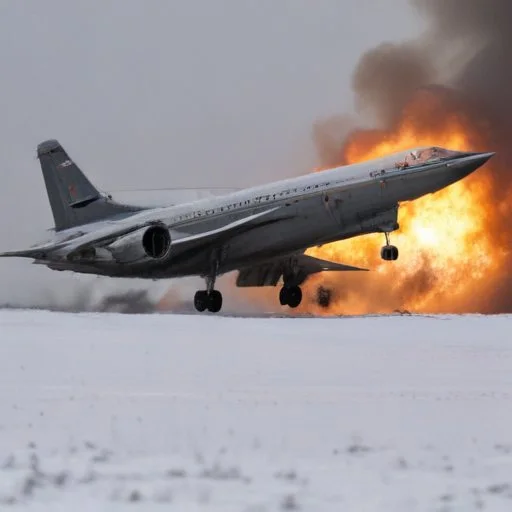
The Soviet Union was in the midst of a major military expansion during the Cold War era, with a significant focus on strengthening its naval capabilities. The Pacific Fleet, in particular, played a crucial role in the Soviet Union's strategic plans to counter the United States and its allies in the Pacific. This background of military build-up and strategic importance sets the stage for the devastating events that unfolded on that winter day.
The ill-fated flight was operated by the Soviet Navy using a Tupolev Tu-104B aircraft, a stalwart of Soviet aviation. The plane was on a routine mission, carrying 50 passengers, including the 16 high-ranking officers of the Pacific Fleet, when disaster struck during takeoff at Pushkin Airport. The aircraft crashed, engulfing the plane in flames, and claiming the lives of everyone on board.
The incident sent shockwaves through the Soviet military hierarchy, prompting an immediate investigation into the cause of the crash. The investigation revealed a combination of factors, including pilot error and technical malfunctions, contributed to the tragedy. The findings led to a major overhaul of the Soviet Navy's aviation safety protocols, ensuring that such a disaster would never happen again.
The loss of 16 high-ranking officers of the Pacific Fleet was a significant blow to the Soviet Navy's command structure. The incident led to a major shake-up in the naval hierarchy, with senior officers being held accountable for the lapse in safety protocols. The tragedy also led to a renewed focus on officer training and safety procedures, ensuring that the Soviet Navy emerged stronger and more resilient in the aftermath of the disaster.
The Pushkin Airport plane crash serves as a poignant reminder of the importance of safety protocols in aviation. The incident led to a major overhaul of safety procedures in the Soviet Navy, saving countless lives in the years to come. The tragedy also highlights the importance of accountability in the face of disaster, ensuring that those responsible are held accountable for their actions.
The Pushkin Airport plane crash is a sobering reminder of the importance of safety and accountability in aviation. The incident's legacy continues to shape the safety protocols of military and civilian aviation authorities, ensuring that such disasters are never forgotten.
The Pacific Fleet played a crucial role in the Soviet Union's strategic plans to counter the United States and its allies in the Pacific. The fleet's presence was meant to project Soviet power and influence in the region, and its expansion was seen as a necessary step to counterbalance the US Navy's presence. The Soviet Navy's Pacific ambitions were driven by a desire to secure sea lanes, protect Soviet shipping, and provide a deterrent to potential adversaries.
The Pacific Fleet's importance was further underscored by the Soviet Union's need to protect its eastern borders and maintain access to the Pacific Ocean. The fleet's expansion was also seen as a way to demonstrate Soviet military power and showcase the country's technological prowess.

Admiral Vladimir Tributs was one of the most distinguished officers of the Soviet Pacific Fleet. With a career spanning over three decades, Tributs had risen through the ranks to become one of the most respected and experienced naval commanders in the Soviet Union.
Tributs was known for his exceptional leadership skills, his ability to inspire loyalty among his subordinates, and his unwavering commitment to the Soviet Navy. His death in the Pushkin Airport crash was a devastating blow to the naval hierarchy, and his legacy continues to be celebrated to this day.
The Tupolev Tu-104B was a stalwart of Soviet aviation, known for its reliability and versatility. However, the aircraft's design had a fatal flaw: its tendency to experience pilot-induced oscillations during takeoff, which could lead to a loss of control.
The investigation into the Pushkin Airport crash revealed that the pilot's error, combined with the Tu-104B's design flaw, had contributed to the tragedy. The incident led to a major overhaul of the Soviet Navy's aviation safety protocols, including the implementation of new pilot training programs and regular maintenance checks.

The Pushkin Airport crash had significant economic implications for the Soviet Navy and the Soviet Union as a whole. The loss of 16 high-ranking officers and over 30 other personnel resulted in a significant drain on the naval hierarchy, leading to a temporary disruption in naval operations.
The incident also led to a significant increase in expenditure on aviation safety measures, including the implementation of new safety protocols, pilot training programs, and regular maintenance checks. The economic impact of the tragedy was felt for years to come, but ultimately contributed to a safer and more resilient naval force.
The Pushkin Airport crash occurred during a period of heightened tensions between the Soviet Union and the United States. The incident took place just a few years after the Cuban Missile Crisis, and the Soviet Navy's Pacific Fleet was seen as a crucial element in the Soviet Union's strategic plans to counter the US and its allies.
The tragedy was seen as a significant blow to Soviet prestige and morale, and it contributed to a period of soul-searching within the Soviet military hierarchy. The incident also led to a renewed focus on military cooperation and diplomacy, as the Soviet Union sought to rebuild its reputation and strengthen its relations with other nations.