


The Birmingham Campaign, a pivotal moment in the American Civil Rights Movement, is etched in history as a gruesome display of police brutality against peaceful protesters, sparking international outrage and galvanizing public opinion.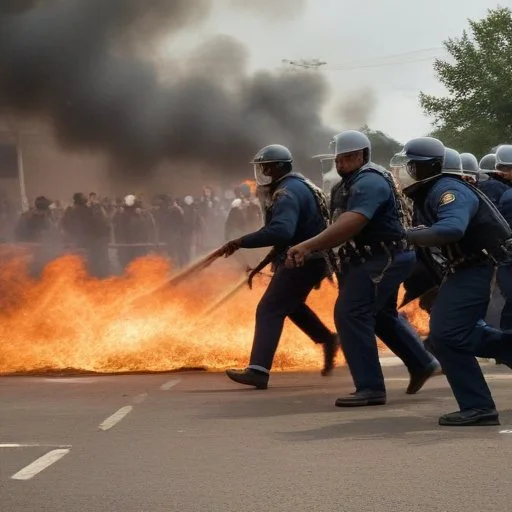
On April 12, 1963, Commissioner Bull Connor's police force unleashed unprecedented violence against demonstrators, including women and children, who were fighting for their civil rights. The disturbing images of police dogs, fire hoses, and billy clubs being used to disperse the crowds were transmitted worldwide, exposing the brutal reality of racial segregation in the South.

In the early 1960s, Birmingham, Alabama was a segregated city, with African Americans facing discrimination in every aspect of life. The Southern Christian Leadership Conference (SCLC), led by Dr. Martin Luther King Jr., decided to launch a nonviolent direct-action campaign to end segregation in Birmingham.
The Birmingham Campaign was led by a trio of influential figures:
The Birmingham Campaign unfolded over several months, marked by key events that shaped its outcome:
The Birmingham Campaign marked a turning point in the Civil Rights Movement:
"The ultimate measure of a man is not where he stands in moments of comfort and convenience, but where he stands at times of challenge and controversy." – Dr. Martin Luther King Jr.
The Birmingham Campaign had a profound impact on American society and culture:
The Birmingham Campaign serves as a poignant reminder of the power of nonviolent resistance and the importance of standing against injustice, inspiring generations to continue fighting for human rights and social equality.
Rev. Fred Shuttlesworth, a local Baptist minister, was a key strategist and organizer of the Birmingham Campaign. Born in 1922, Shuttlesworth grew up in a segregated society, but his experiences only strengthened his resolve to fight for equality. Early Life and Activism Shuttlesworth's early life was marked by poverty and hardship, but he was driven to succeed. He attended Selma University and later earned his Bachelor's degree from Alabama State University. After becoming a minister, Shuttlesworth became involved in the Civil Rights Movement, participating in the Montgomery Bus Boycott and later co-founding the Alabama Christian Movement for Human Rights. Shuttlesworth's courage in the face of danger was unwavering. He survived several attempts on his life, including a bombing of his home in 1956.The Unyielding Spirit of Rev. Fred Shuttlesworth
The Birmingham Campaign's influence extended far beyond the city's streets, leaving an indelible mark on American culture. Musical Tributes The campaign inspired a wave of musical tributes, including Joan Baez's haunting ballad "Birmingham Sunday" and the album "Freedom Songs from the Hungry Generation" by various artists. The Birmingham Campaign's emphasis on nonviolent resistance also influenced social movements worldwide, including the Anti-Apartheid Movement in South Africa.The Birmingham Campaign's Lasting Cultural Impact
The Birmingham Campaign highlighted the significant economic costs of segregation, which had long plagued the city. Boycotts and Economic Pressure The campaign's strategic use of boycotts and economic pressure forced businesses to recognize the financial benefits of desegregation. The economic boycott, led by Dr. King, resulted in significant losses for downtown merchants, ultimately leading to their support for desegregation. The economic impact of the campaign was felt beyond Birmingham, as it paved the way for the passage of the Civil Rights Act of 1964, which outlawed discrimination based on race, color, religion, sex, or national origin.The Economic Costs of Segregation
While the Birmingham Campaign was marked by conflict and violence, behind-the-scenes political maneuvering played a crucial role in achieving desegregation. The Role of Local Politics Local politicians, such as Mayor Albert Boutwell, played a key role in negotiating desegregation. Despite initial resistance, Boutwell eventually recognized the need for change, and his efforts helped to pave the way for the desegregation of public facilities. The campaign's success was also influenced by the growing political pressure from Washington, D.C., as the Kennedy Administration increasingly supported the Civil Rights Movement.Negotiating Desegregation: The Political Maneuvering Behind the Scenes
The Birmingham Campaign was a pivotal moment in the Civil Rights Movement, but it was also part of a larger social change dynamic. The Power of Nonviolent Resistance The campaign's emphasis on nonviolent resistance helped to galvanize public opinion and shift the narrative of the Civil Rights Movement. The use of nonviolent tactics, such as sit-ins and boycotts, proved effective in challenging segregation and inspiring social change. The Birmingham Campaign's success was built on the foundation of grassroots activism, which had been growing in strength and numbers since the Montgomery Bus Boycott.The Social Change Dynamics of the Birmingham Campaign