


In a grandiose ceremony, Pope Benedict VIII bestowed the imperial crown upon Henry of Bavaria, solidifying his reign as King of Germany and Italy, and cementing his position as Holy Roman Emperor. This pivotal moment in history marked a powerful alliance between the Catholic Church and the German monarchy, shaping the course of European politics and religion for centuries to come.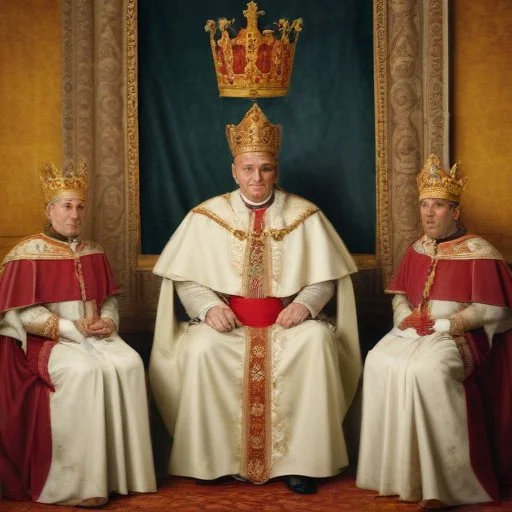
The early 11th century was a tumultuous time for Europe, with various factions vying for power and influence. The Catholic Church, under the leadership of Pope Benedict VIII, sought to strengthen its ties with the German monarchy, recognizing the potential for mutual benefit and cooperation.
At the heart of this historic event were two prominent figures: Pope Benedict VIII and Henry of Bavaria, King of Germany and Italy.
The coronation ceremony took place on February 14, 1014, in Rome, Italy. The event was the culmination of months of diplomatic efforts between the Pope and Henry, who had been negotiating the terms of their alliance.
The coronation of Henry as Holy Roman Emperor had far-reaching consequences, including:
The coronation of Henry as Holy Roman Emperor had a profound impact on European culture and society, influencing the development of art, architecture, and literature.
The event also marked a shift in the balance of power, as the German monarchy and the Catholic Church consolidated their positions, paving the way for a new era of cooperation and competition.
The coronation ceremony was not without controversy, with some critics accusing the Pope and Henry of leveraging their power and influence to further their own interests.
Despite these criticisms, the event was widely celebrated, with many seeing it as a symbol of unity and cooperation between the Church and the German monarchy.
The coronation of Henry as Holy Roman Emperor left an indelible mark on European history, shaping the course of politics, religion, and culture for centuries to come.
Today, the event is remembered as a testament to the power of cooperation and diplomacy, a shining example of the potential for great achievements when leaders put aside their differences and work towards a common goal.
One of the key figures involved in the coronation of Henry as Holy Roman Emperor was Pope Benedict VIII, a shrewd and cunning leader who played a crucial role in shaping the course of European politics and religion.
Born in Rome around 970 AD, Benedict VIII was known for his intelligence, charisma, and strategic thinking, skills that served him well in his rise to power within the Catholic Church.
As Pope, Benedict VIII implemented a series of reforms aimed at combating corruption and promoting a more pious and just society, earning him the respect and admiration of his contemporaries.
The coronation of Henry as Holy Roman Emperor had a profound impact on European culture and society, shaping the development of art, architecture, and literature for centuries to come.
The event marked a shift towards a more elaborate and ornate style of architecture, as seen in the construction of grand cathedrals and palaces throughout Europe.
In the realm of literature, the coronation inspired a wave of poetic and literary works, including the epic poem The Song of Roland, which celebrated the heroism and chivalry of the medieval era.
The coronation of Henry as Holy Roman Emperor was a masterstroke of political strategy, cementing the alliance between the Catholic Church and the German monarchy and securing their respective positions of power.
The event marked a significant shift in the balance of power, as the Church and the German monarchy consolidated their influence and exerted greater control over European politics and religion.
In the years that followed, the Church and the German monarchy worked together to promote a more stable and prosperous Europe, fostering an era of relative peace and cooperation.

The coronation of Henry as Holy Roman Emperor took place against a backdrop of tumultuous times, with various factions vying for power and influence across Europe.
The event was shaped by the complex web of alliances and rivalries that defined the medieval era, as the Catholic Church, the German monarchy, and other powerful entities jockeyed for position and influence.
In this context, the coronation of Henry as Holy Roman Emperor represented a significant gamble, as the Church and the German monarchy sought to strengthen their positions and secure their respective futures.
Historians have long debated the significance of the coronation of Henry as Holy Roman Emperor, with some viewing it as a pivotal moment in the development of European politics and religion, and others seeing it as a largely symbolic gesture.
Despite these differing perspectives, most historians agree that the event marked an important turning point in the relationship between the Catholic Church and the German monarchy, shaping the course of European history for centuries to come.
In recent years, historians have also reexamined the role of Pope Benedict VIII in the coronation, highlighting his cunning and strategic thinking as key factors in the event's success.