


In a groundbreaking moment, Pope Francis and Patriarch Kirill of the Russian Orthodox Church put aside nearly a millennium of separation, meeting in Havana, Cuba, to sign a historic Ecumenical Declaration. This extraordinary encounter marked the first time leaders of the two Churches had met since the Great Schism of 1054, bridging the divide between East and West.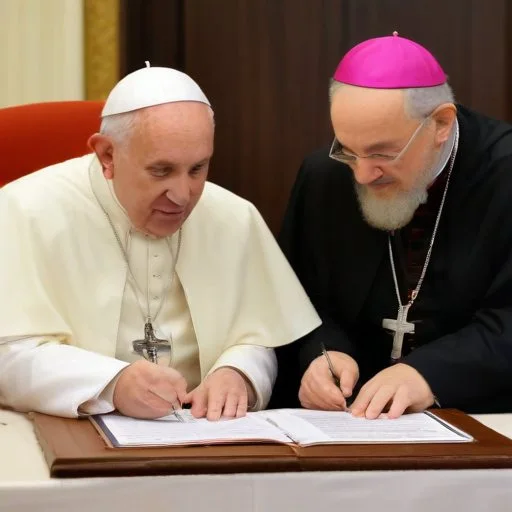
The path to this meeting was paved by years of diplomatic efforts between the two Churches. In 2014, Pope Francis and Russian Orthodox Church official Metropolitan Hilarion of Volokolamsk met in Jerusalem, marking the first high-level encounter between the two Churches in nearly 1,000 years.
The Declaration, signed on February 12, 2016, affirms the shared values and commitment of the Catholic and Russian Orthodox Churches to promote Christian unity, social justice, and moral principles. The document urges cooperation in addressing global challenges, such as poverty, war, and environmental degradation.
Patriarch Kirill, the leader of the Russian Orthodox Church, has played a crucial role in promoting Orthodox-Catholic dialogue. As a theological scholar and diplomat, he has worked tirelessly to bridge the divide between East and West.
The Havana meeting and Declaration have far-reaching implications for Christian unity, interfaith dialogue, and global cooperation. The encounter has inspired hopes for greater understanding and collaboration between the two Churches, paving the way for future joint initiatives and agreements.
"We are not competitors, but brothers."
- Pope Francis, during the meeting in Havana
"We have taken an important step towards Christian unity, and we have shown that our Churches can work together."
- Patriarch Kirill, following the signing of the Declaration
During the meeting, Pope Francis and Patriarch Kirill shared a moment of humor when they exchanged gifts. The Pope presented the Patriarch with a replica of the reliquary of St. Nicholas, while the Patriarch gave the Pope an icon of the Mother of God.
The Havana meeting has opened new avenues for cooperation and dialogue between the Catholic and Russian Orthodox Churches. As the two Churches continue to work together, the world can expect greater collaboration on issues of common concern, including environmental protection, human rights, and social justice.
The historic meeting in Havana serves as a powerful reminder of the importance of unity, dialogue, and cooperation in achieving common goals. As Pope Francis and Patriarch Kirill have shown, even the most unlikely of encounters can lead to profound and lasting change.
The signing of the Ecumenical Declaration in Havana marks a significant milestone in the journey towards greater Christian unity and cooperation. As we look to the future, we are inspired by the words of Pope Francis and Patriarch Kirill, who have shown us that even the most enduring of divisions can be bridged through dialogue, respect, and a commitment to the common good.
Historians have long debated the significance of the Great Schism of 1054, with some viewing it as a gradual process rather than a singular event. However, the rupture between the Eastern and Western Christian traditions had far-reaching consequences, including the Crusades and the rise of nationalism. Against this complex backdrop, the Havana meeting between Pope Francis and Patriarch Kirill represents a remarkable turning point in the history of Christian unity.
In recent years, historians have reevaluated the role of the Ecumenical Patriarch of Constantinople, who played a crucial mediating role in the events leading up to the Schism. This new understanding has paved the way for greater rapprochement between the Catholic and Orthodox Churches, as seen in the Havana Declaration.
Further research is needed to fully appreciate the historical context of the Havana meeting, including the role of diplomacy and the impact of globalization on religious affairs. Nevertheless, the encounter between Pope Francis and Patriarch Kirill serves as a powerful reminder of the importance of interfaith dialogue in promoting peace and understanding.

Patriarch Kirill's rise to prominence within the Russian Orthodox Church was marked by his tireless efforts to promote Orthodox-Catholic dialogue. As a theological scholar and diplomat, he has worked closely with Catholic leaders, including Pope John Paul II and Pope Benedict XVI, to bridge the divide between East and West.
Throughout his career, Patriarch Kirill has been guided by a deep commitment to Christian unity and a willingness to engage in constructive dialogue. This approach has earned him the respect of Catholic leaders, who view him as a key partner in promoting interfaith understanding.
Beyond his ecclesiastical role, Patriarch Kirill is a complex figure, known for his erudite scholarship and his experience as a Soviet-era dissident. His unique background has equipped him to navigate the complexities of international diplomacy, making him an invaluable partner in the pursuit of Christian unity.
The Havana meeting between Pope Francis and Patriarch Kirill has had a profound impact on cultural exchange between East and West. The encounter has inspired a new wave of artistic collaborations, including concerts, exhibitions, and festivals celebrating the shared cultural heritage of Orthodox and Catholic Christianity.
In Russia, the meeting has sparked a renewed interest in Orthodox-Catholic relations, with many Russians seeing the encounter as a symbol of national pride and cultural renewal. Meanwhile, in Cuba, the meeting has helped to strengthen ties between the Catholic Church and the Cuban government, paving the way for greater cultural exchange and cooperation.
The cultural significance of the Havana meeting extends far beyond the realm of religion, representing a powerful symbol of international cooperation and mutual respect. As such, it has inspired a new generation of artists, scholars, and cultural leaders to explore the rich cultural heritage of Orthodox and Catholic Christianity.

The Havana meeting between Pope Francis and Patriarch Kirill has highlighted the urgent need for environmental action, with both leaders emphasizing the importance of protecting the natural world. The Ecumenical Declaration signed during the meeting includes a strong commitment to promoting sustainable development and reducing carbon emissions.
In the aftermath of the meeting, the Catholic Church and the Russian Orthodox Church have launched a series of joint initiatives aimed at reducing their environmental footprint. These initiatives include the development of renewable energy sources, the promotion of eco-friendly practices, and the creation of green spaces in urban areas.
The environmental impact of the Havana meeting extends far beyond the realm of religious institutions, serving as a powerful model for international cooperation on environmental issues. As the world grapples with the challenges of climate change, the meeting between Pope Francis and Patriarch Kirill offers a beacon of hope for a more sustainable future.
The Havana meeting between Pope Francis and Patriarch Kirill took place against the backdrop of a rapidly shifting global landscape, marked by rising tensions between East and West. Against this complex geopolitical context, the encounter represents a significant breakthrough in relations between Russia and the West.
The meeting has helped to ease tensions between Russia and the Vatican, paving the way for greater cooperation on issues such as security, trade, and human rights. Meanwhile, the Ecumenical Declaration signed during the meeting has sent a powerful signal to governments around the world, emphasizing the importance of promoting peace, justice, and human dignity.
In the aftermath of the meeting, the Russian Orthodox Church has emerged as a key player in international diplomacy, with Patriarch Kirill serving as a respected voice on issues such as Middle East peace and European security. As the world navigates the complexities of globalization, the Havana meeting offers a powerful model for international cooperation and dialogue.