


In 1981, Pope John Paul II made a pivotal decision that would have far-reaching consequences for the Catholic Church, appointing Joseph Cardinal Ratzinger as the Prefect of the Congregation for the Doctrine of the Faith. This powerful position solidified Ratzinger's role as the Church's guardian of orthodoxy, tasked with safeguarding its moral and theological teachings.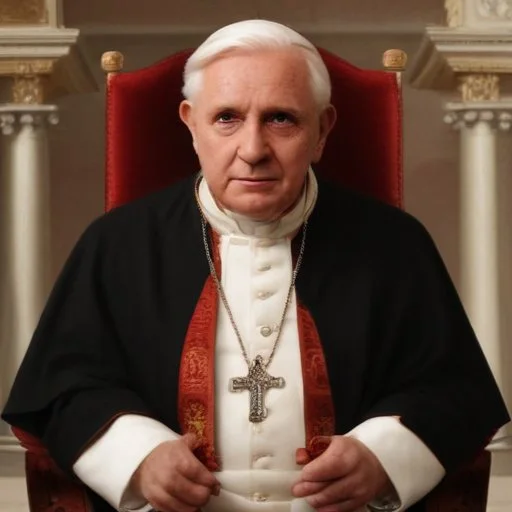
Ratzinger's appointment marked a significant shift in the Church's approach to moral doctrine. As the Church's chief watchdog, he was responsible for interpreting and enforcing Catholic teachings on issues such as abortion, contraception, and euthanasia. His unwavering commitment to traditional Catholic values earned him both admiration and criticism from within and outside the Church.
Joseph Ratzinger's path to this influential role was paved by his illustrious academic career. As a renowned theologian, he had already made a name for himself as a brilliant scholar and thinker. His expertise in dogmatic theology and patristics had earned him a reputation as a champion of Catholic orthodoxy.
Ratzinger's intellectual formation was deeply rooted in the teachings of St. Augustine and Thomas Aquinas. His doctoral thesis, "The People and the House of God in St. Augustine's Doctrine of the Church," demonstrated his profound understanding of patristic thought. This intellectual foundation would later shape his approach to moral theology and inform his decisions as Prefect.
As Prefect, Ratzinger oversaw the Congregation's investigations into suspected heresy and doctrinal error. His tenure was marked by a series of high-profile confrontations with dissident theologians and bishops. Critics accused him of being overly rigid and authoritarian, while supporters praised his unwavering commitment to upholding Catholic orthodoxy.
"The truth is not determined by a majority vote."
— Cardinal Joseph Ratzinger
Ratzinger's appointment as Prefect ultimately paved the way for his ascension to the papacy. In 2005, following the death of Pope John Paul II, he was elected as Pope Benedict XVI, becoming the 265th Pope in Catholic history. As Pope, he continued to shape the Church's moral compass, leaving an indelible mark on Catholic theology and doctrine.
Ratzinger's appointment as Prefect and his subsequent papacy have had lasting impacts on the Catholic Church. His unwavering commitment to traditional Catholic values has inspired a new generation of theologians and bishops. While critics argue that his approach has been overly rigid, supporters see him as a champion of orthodoxy in an era of moral relativism.
As we reflect on this pivotal moment in Catholic history, we are reminded that the Church's moral compass is shaped by the individuals who guide it. Joseph Cardinal Ratzinger's appointment as Prefect of the Congregation for the Doctrine of the Faith was a defining moment in his journey to the papacy, and its consequences continue to reverberate throughout the Catholic world.
Joseph Ratzinger's early life was marked by a strong Catholic upbringing in his native Germany. Born on April 16, 1927, in Marktl, Bavaria, he was the third and youngest child of Joseph and Maria Ratzinger. His father, a police officer, was a devout Catholic who instilled in his son a deep respect for the faith.
Ratzinger's childhood was shaped by the tumultuous years of World War II, during which he was conscripted into the German army. However, he was not enthusiastic about the Nazi regime and eventually deserted, an experience that would later influence his theological views on the relationship between the Church and the state.

The historiographical significance of Joseph Ratzinger's appointment as Prefect of the Congregation for the Doctrine of the Faith lies in its representation of a broader shift in Catholicism towards a more conservative and traditionalist approach. This move marked a departure from the progressive spirit of the Second Vatican Council, which had emphasized ecumenism and dialogue with the modern world.
Ratzinger's appointment was seen by many as a deliberate attempt to reassert the Church's authority and orthodoxy in the face of perceived threats from liberal theology and secularism. This view is supported by Ratzinger's own writings, which emphasized the importance of preserving the Church's traditional teachings and practices.
The cultural impact of Ratzinger's appointment was significant, particularly in the realm of Catholic education. As Prefect, he oversaw the development of new catechetical programs and materials that emphasized the importance of traditional Catholic teachings and values.
Furthermore, Ratzinger's influence can be seen in the emergence of a new generation of Catholic intellectuals and writers, such as George Weigel and Robert Royal, who have contributed to a renewed focus on Catholic orthodoxy and traditionalism in Catholic thought.

Ratzinger's academic background and theological expertise had a profound impact on Catholic education. As a scholar of dogmatic theology and patristics, he emphasized the importance of intellectual rigor and orthodoxy in Catholic education.
His influence can be seen in the development of new Catholic universities and institutions, such as the Pontifical John Paul II Institute for Studies on Marriage and Family, which emphasized the study of Catholic theology and philosophy within a traditionalist framework.
Ratzinger's philosophical and ideological impact on Catholicism was profound, particularly in his defense of Catholic orthodoxy against the challenges of modernity and secularism. His emphasis on the importance of objective truth and moral absolutes resonated with many Catholics who felt threatened by the rise of relativism and moral permissiveness.
Furthermore, Ratzinger's critiques of liberalism and modernity, as articulated in his works such as Truth and Tolerance, have influenced a range of Catholic thinkers and scholars, from philosophers like Alasdair MacIntyre to theologians like Hans Urs von Balthasar.