


In a landmark declaration, Pope Paul VI promulgated Nostra Aetate on October 28, 1965, officially recognizing the legitimacy of non-Christian faiths and marking a seismic shift in Catholic theology. This groundbreaking document bridged a centuries-old divide between Catholicism and other religions, paving the way for interfaith dialogue, cooperation, and a deeper understanding of the spiritual world.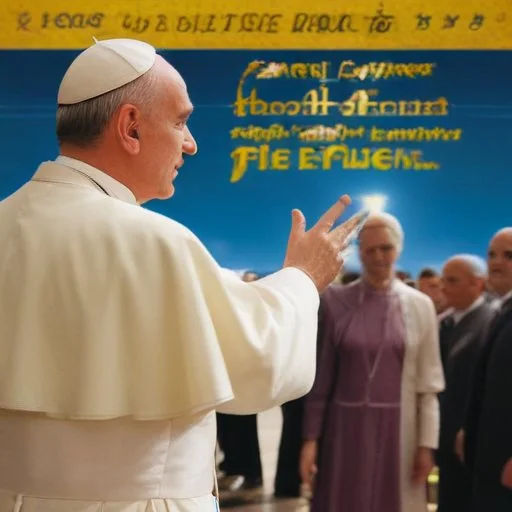
For centuries, the Catholic Church had viewed non-Christian faiths with suspicion and hostility, often condemning them as heretical and pagan. This stance was reinforced by the Church's earlier declarations, such as the 15th-century Bull of Excommunication, which branded non-Christians as "infidels" and "enemies of the faith." However, the winds of change were blowing, and the Second Vatican Council (Vatican II) was tasked with re-evaluating the Church's stance on non-Christian religions.
The drafting of Nostra Aetate was a collaborative effort involving several prominent figures within the Catholic Church. Pope Paul VI, the principal architect of the declaration, played a crucial role in shaping its content and tone. Other notable contributors included Cardinal Bea, a German Jesuit and theologian, and Malachi Martin, an Irish Jesuit and expert on non-Christian religions.
Nostra Aetate's significance cannot be overstated. The declaration:
Nostra Aetate's impact extended beyond the Catholic Church, influencing the broader cultural and social landscape. The declaration:
"In our time, when day by day mankind is being drawn closer together, and the ties between different peoples are becoming stronger, the Church examines more deeply the mystery of Christ and of the Church, and seeks to understand better the relation which the Church has with the non-Christian world." - Pope Paul VI, Nostra Aetate (1965)
Nostra Aetate's legacy continues to shape the Catholic Church's approach to non-Christian religions, inspiring a deeper understanding and greater cooperation between different faith communities. As we reflect on this historic declaration, we are reminded of the power of dialogue, cooperation, and mutual respect in building a more harmonious and united world.
As a key drafter of Nostra Aetate, Cardinal Bea played a pivotal role in shaping the document's tone and content. A German Jesuit and theologian, Bea was known for his ecumenical spirit and commitment to interfaith dialogue. His expertise in biblical studies and his experience working with non-Christian religions made him an invaluable asset to the Vatican II reforms.
Bea's influence extended beyond Nostra Aetate, as he continued to promote interfaith understanding throughout his career. He was a vocal advocate for Christian-Jewish reconciliation, and his efforts helped to pave the way for future dialogues between different faith communities.

In the aftermath of Nostra Aetate, the Catholic Church's relationship with non-Christian religions underwent a profound shift. The declaration's emphasis on mutual respect and understanding helped to foster a more inclusive and tolerant atmosphere, which in turn paved the way for greater cultural exchange and cooperation.
Nostra Aetate also inspired a new wave of artistic and literary works that explored the intersection of faith and culture. From novels that delved into the complexities of interfaith relationships to films that celebrated the beauty of non-Christian traditions, the declaration's Impact on the cultural landscape was profound.
The seeds of Nostra Aetate were sown long before its official promulgation in 1965. The Second Vatican Council, convened by Pope John XXIII in 1962, was tasked with reforming the Catholic Church and re-evaluating its stance on non-Christian religions.
The drafting process was marked by intense debates and heated discussions, as Church leaders grappled with the complexities of interfaith dialogue. Despite these challenges, the Council's guiding spirit of openness and ecumenism paved the way for the eventual adoption of Nostra Aetate.
The impact of Nostra Aetate extended far beyond the confines of the Catholic Church, contributing to a broader shift in societal attitudes towards non-Christian religions. As the declaration helped to break down centuries-old barriers, it facilitated a more open and inclusive approach to interfaith dialogue.
This, in turn, paved the way for greater cooperation and understanding between different faith communities. Nostra Aetate's influence can be seen in the proliferation of interfaith initiatives and organizations that have emerged in the decades since its promulgation.
Nostra Aetate was rooted in a profound philosophical shift, one that emphasized the shared human experience and the inherent value of all faith traditions. This perspective, grounded in the principles of Vatican II, helped to create a new theological framework that recognized the legitimacy of non-Christian religions.
The declaration's emphasis on mutual respect and understanding was rooted in a deeper understanding of the nature of faith and the human condition. By acknowledging the spiritual value of non-Christian traditions, Nostra Aetate helped to lay the groundwork for a more inclusive and nuanced approach to theology.