


Vasco da Gama's arrival in Kozhikode, India, on May 20, 1498, marked a pivotal moment in history, as it connected Europe to Asia by sea, revolutionizing global trade and commerce. This remarkable feat, achieved after years of navigating treacherous seas and overcoming countless obstacles, secured a lucrative spice trade route and opened doors to cultural exchange, forever changing the course of history.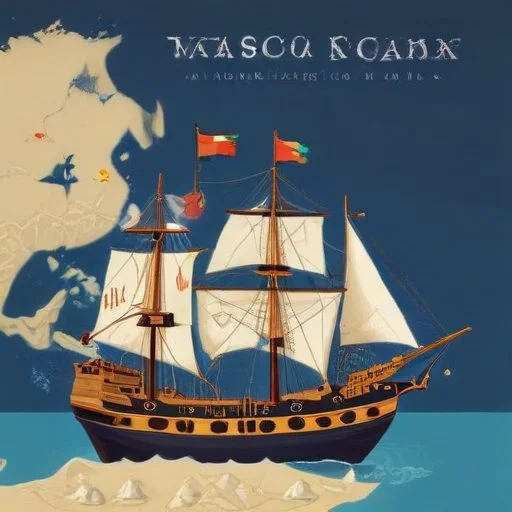
In the 15th century, the traditional overland trade route between Europe and Asia, known as the Silk Road, was controlled by the Ottoman Empire, making it difficult and expensive for European merchants to access the rich spices and textiles of the East. The Portuguese, driven by a desire for wealth and power, sought to find a new trade route that would give them a competitive edge.
In July 1497, Vasco da Gama set sail from Lisbon, Portugal, with a fleet of four ships and a crew of approximately 170 men. The journey was long and arduous, with the crew facing treacherous seas, mutinies, and scurvy. After nine months at sea, da Gama's fleet finally reached the coast of East Africa, where they rested and replenished their supplies.
On May 20, 1498, da Gama's fleet sailed into the bustling port of Kozhikode, India, which was then a major trading center in the kingdom of Zamorin. The locals, initially wary of the foreigners, eventually welcomed da Gama and his crew, fascinated by their strange clothing and exotic goods.
Da Gama's successful voyage to India marked the beginning of a new era of maritime trade and cultural exchange between Europe and Asia. The Portuguese established a series of trading posts and colonies along the Indian coast, which enabled them to dominate the spice trade and reap enormous profits.
Vasco da Gama's discovery of the sea route to India not only changed the course of history but also left a lasting impact on the world. The cultural exchange and trade that ensued shaped the modern world, influencing the development of civilizations and nations.
As da Gama himself said, "The discovery of the sea route to India opened the gates of a new world, and a new era of human history began."
Vasco da Gama's discovery of the sea route to India was a groundbreaking feat that marked the beginning of a new era of global trade, cultural exchange, and exploration. His legacy continues to inspire and fascinate people to this day, reminding us of the power of human ingenuity and determination.
The journey of Vasco da Gama was not without its challenges. The Portuguese explorer had to navigate through the treacherous Cape of Good Hope, avoiding the Ottoman Empire's trade routes. He also had to deal with mutinies and scurvy among his crew, which threatened to derail the expedition.
Despite these obstacles, da Gama persevered, driven by his determination to reach Asia by sea. He used his knowledge of astronomy and navigation to chart a course that would take him around Africa and into the Indian Ocean.
The success of da Gama's voyage was a testament to his bravery, skill, and leadership. He was able to overcome the challenges of the journey and achieve his goal, paving the way for future explorers and traders. His legacy continued to inspire generations of sailors, merchants, and adventurers.
Vasco da Gama was a complex and multifaceted individual, driven by a combination of motivations. On the one hand, he was a patriot who wanted to serve his country and bring glory to Portugal.
On the other hand, he was also a mercantilist who was attracted by the promise of wealth and power that came with the discovery of a new trade route. He was willing to take risks and face challenges in order to achieve his goals.
Da Gama's personality was marked by a strong sense of determination and perseverance. He was able to inspire loyalty and confidence in his crew, even in the face of extreme adversity.
The discovery of the sea route to India by Vasco da Gama marked a significant shift in the balance of power in the world. The Portuguese, who had previously been relegated to the periphery of international trade, suddenly found themselves at the center of a new global economy.
In contrast, the Ottoman Empire, which had previously controlled the overland trade route between Europe and Asia, saw its power and influence begin to wane.
The implications of this shift were far-reaching, leading to a period of intense competition and rivalry between European powers as they sought to establish their own trade routes and colonies in Asia.
The arrival of Vasco da Gama in India marked the beginning of a new era of cultural exchange between Europe and Asia. The Portuguese brought with them their language, customs, and cultural practices, which had a profound impact on Indian society.
In return, the Indians introduced the Portuguese to their own rich cultural heritage, including their art, literature, and music.
This exchange of ideas and cultures had a lasting impact on the development of both Europe and Asia, shaping the course of history in ways that are still felt today.
The discovery of the sea route to India by Vasco da Gama had a significant impact on the economy of Portugal and Europe as a whole. The Portuguese were able to establish a monopoly on the spice trade, which brought them enormous wealth and power.
The influx of Asian spices and textiles also had a profound impact on European cuisine and fashion, leading to a period of rapid economic growth and cultural transformation.
The establishment of a direct trade route between Europe and Asia also led to the development of new industries and technologies, as merchants and traders sought to take advantage of the new opportunities presented by this route.