


Pedro Álvares Cabral was a skilled navigator and explorer, but he was also a product of his time. Born in 1467, he was raised in a Portugal that was expanding its maritime empire. Cabral was influenced by the likes of Vasco da Gama and Bartolomeu Dias, who had pioneered the route to India. His own journey was meant to follow in their footsteps, but fate had other plans.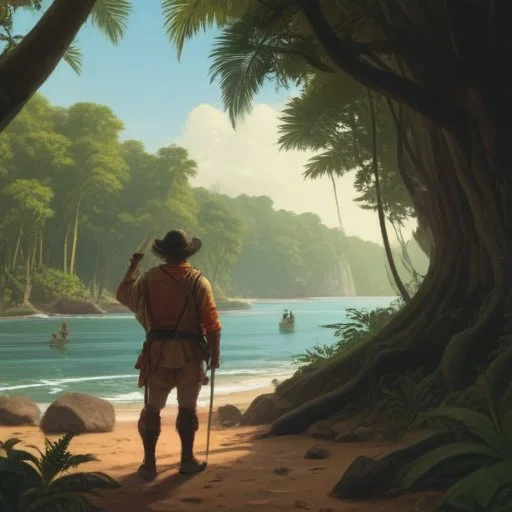
The discovery of Brazil had far-reaching consequences for the indigenous populations, who were suddenly faced with the arrival of European colonizers. The Portuguese brought with them new diseases, technologies, and cultural practices that would forever change the fabric of Brazilian society. The discovery also marked the beginning of a period of colonization, as European powers began to vie for control of the New World.
The discovery of Brazil is often compared to Christopher Columbus's voyage to the Americas in 1492. While both expeditions were driven by a desire to reach Asia, they had different outcomes. Columbus's journey led to the colonization of the Caribbean, while Cabral's discovery opened up the South American continent to European exploration. Both events marked the beginning of a new era in world history, but they also had devastating consequences for the indigenous populations.
"The sea, the great unifier, is man's only hope. Now, as never before, the old phrase has a literal meaning: we are all in the same boat." - Jacques Cousteau
The discovery of Brazil had a profound impact on the course of history. It marked the beginning of a period of colonization, as European powers began to vie for control of the New World. The discovery also led to the transfer of plants, animals, and cultures between the Old and New Worlds, shaping the modern world as we know it.
Cabral's journey is a testament to the power of human exploration and discovery. Despite facing numerous challenges, he persevered and stumbled upon a hidden gem. His discovery is a reminder that even the most unexpected events can have far-reaching consequences and that the greatest achievements often arise from chance encounters.

This visual timeline marks the key milestones in Cabral's journey, from his departure from Lisbon to his return to Portugal.
The discovery of Brazil had a profound impact on the indigenous populations that inhabited the land for thousands of years. The arrival of the Portuguese brought about a clash of cultures, with the Europeans introducing their own customs, languages, and beliefs. The indigenous populations, who were initially friendly towards the Portuguese, were eventually displaced, enslaved, and exposed to new diseases that decimated their populations.
The cultural significance of Brazil's indigenous populations cannot be overstated. They possessed a deep understanding of the Amazon rainforest and its resources, which they passed down through generations. The Portuguese colonization of Brazil led to the loss of this cultural heritage, as many indigenous communities were forced to adapt to European customs and practices.
The Legacy of Brazil's Indigenous PopulationsToday, Brazil is home to over 900,000 indigenous people, who continue to fight for their rights and cultural preservation. The Brazilian government has established several programs aimed at protecting indigenous lands and promoting their cultural heritage. Despite these efforts, the legacy of Brazil's indigenous populations remains a contentious issue, with many calling for greater recognition and compensation for the historical injustices perpetrated against them.

Pedro Álvares Cabral, the Portuguese explorer who stumbled upon Brazil, was a man of contrasts. On one hand, he was a skilled navigator and leader who had the respect of his crew. On the other hand, he was a product of his time, driven by a desire for wealth and power.
Despite his accomplishments, Cabral's life was marked by controversy. He was involved in several disputes with his crew and was known for his harsh treatment of the indigenous populations. His legacy is therefore complex, with some hailing him as a hero and others condemning his actions as brutal and exploitative.
Cabral's Personal LifeLittle is known about Cabral's personal life, but it is believed that he was born into a noble family in Portugal. He was married and had several children, but few details about his family life are available.
Cabral's voyage to Brazil took place during a time of great geopolitical change. The Portuguese were expanding their maritime empire, and the Spanish were competing with them for control of the New World. The Treaty of Tordesillas, signed in 1494, had divided the New World between the two powers, with the Portuguese controlling the eastern portion and the Spanish controlling the western portion.
The discovery of Brazil was therefore a strategic move for the Portuguese, as it provided them with a foothold in the New World and access to the rich resources of the Amazon rainforest. The Portuguese colonization of Brazil was a deliberate attempt to outmaneuver the Spanish and establish a dominant position in the region.
The discovery of Brazil by Cabral had a profound environmental impact. The Portuguese colonization of the region led to the destruction of the Amazon rainforest, as large areas were cleared for agriculture and urbanization. The introduction of European diseases, such as smallpox and influenza, decimated the indigenous populations, who had no immunity to these diseases.
The exploitation of Brazil's natural resources, including its rich biodiversity, has continued to have devastating environmental consequences. The Amazon rainforest, once a pristine and untouched ecosystem, is now threatened by deforestation, pollution, and climate change.
Historians have long debated the significance of Cabral's discovery of Brazil. Some have seen it as a heroic act of exploration, while others have viewed it as a brutal act of colonization.
Many historians have challenged the dominant narrative of Cabral's discovery, arguing that it was not a chance encounter, but rather a deliberate attempt to establish a Portuguese presence in the New World. Others have questioned the notion that Cabral was the first European to reach Brazil, citing evidence of earlier visits by other explorers.
The Legacy of Cabral's DiscoveryDespite these debates, Cabral's discovery of Brazil remains a significant event in world history, marking the beginning of a new era of exploration and colonization. However, it also serves as a reminder of the complex and often fraught nature of historical narratives.