


The Tehran Headquarters Massacre, one of the deadliest terrorist attacks in Iranian history, occurred on June 28, 1981, when a powerful bomb ripped through the Islamic Republican Party's Tehran headquarters, claiming the lives of 73 high-ranking officials, including Chief Justice Ayatollah Mohammad Beheshti. This catastrophic event sent shockwaves throughout the nation, dealing a crushing blow to the fledgling Islamic regime still reeling from the 1979 revolution.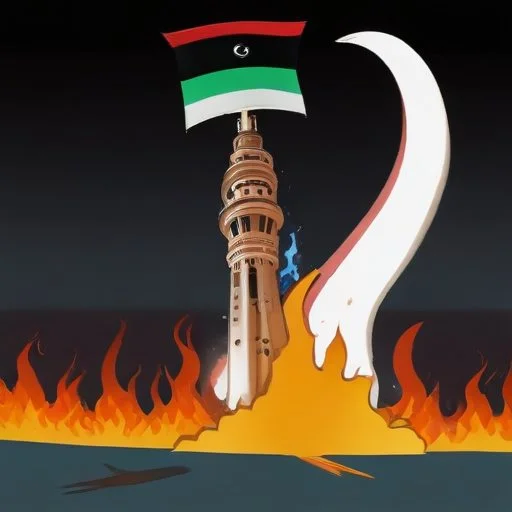
Following the 1979 Iranian Revolution, the Islamic Republican Party (IRP) emerged as the dominant political force in Iran. However, the country was still grappling with the aftermath of the revolution, and political tensions were running high. The IRP, which was founded by Ayatollah Khomeini, was seen as a symbol of the new Islamic regime, and its headquarters in Tehran served as a hub for political activity.
The bombing occurred during a high-level meeting of IRP officials, including Chief Justice Ayatollah Mohammad Beheshti, who was a close ally of Ayatollah Khomeini. The explosion was so powerful that it ripped through the building, causing widespread destruction and instant death. The blast was heard and felt throughout the city, sending a wave of panic and chaos through the streets of Tehran.
The bombing was met with widespread outrage and grief, with thousands of Iranians attending the funerals of the victims. The Iranian government immediately launched an investigation into the attack, with fingers pointing to the Mujahedin-e Khalq (MEK), an exile group opposed to the Islamic government, as the prime suspects. Although no one claimed responsibility for the attack, the MEK was widely seen as the main culprit.
The Tehran Headquarters Massacre had far-reaching consequences for Iran and the region. The attack marked a turning point in the country's political landscape, as the IRP began to consolidate its power and crack down on opposition groups. The bombing also raised the stakes in an already volatile region, further destabilizing the fragile Middle Eastern balance of power.
The Tehran Headquarters Massacre remains one of the most significant and controversial events in modern Iranian history. The attack serves as a poignant reminder of the ongoing struggle for power and influence in the Middle East, and the devastating consequences of political violence.
In the words of Ayatollah Khomeini, "The blood of our martyrs will not be in vain. We will continue to fight for the Islamic revolution, no matter the cost."
The Tehran Headquarters Massacre marked a significant shift in the political landscape of Iran, as the Islamic Republican Party (IRP) began to consolidate its power and clamp down on opposition groups. The attack also led to a radicalization of the MEK, which became increasingly violent in its opposition to the regime. This, in turn, sparked a cycle of violence and retaliation that would characterize the Iranian political scene for years to come.
The massacre also had significant implications for Iran's foreign policy, as the regime became increasingly isolated and paranoid in the aftermath of the attack. The bombing was seen as a major challenge to the regime's authority, and the government responded by cracking down on dissent and imposing strict controls on the media and civil society.

Ayatollah Mohammad Beheshti, one of the highest-ranking officials killed in the Tehran Headquarters Massacre, was a close ally of Ayatollah Khomeini and a key figure in the Islamic Republican Party. A charismatic leader and skilled politician, Beheshti played a crucial role in shaping the ideology and strategy of the IRP.
Beheshti's death was a devastating blow to the regime, as he was seen as a unifying figure who could bring together the various factions within the IRP. His loss was deeply mourned by the Iranian people, and his funeral procession was attended by thousands of mourners.
In the years leading up to the Tehran Headquarters Massacre, the Islamic Republican Party was beset by internal power struggles and ideological debates. The party was divided between pragmatists who sought to engage with the West and hardliners who advocated for a more radical and isolationist approach.
The massacre marked a turning point in these internal struggles, as the hardliners gained the upper hand and pushed for a more authoritarian and repressive approach. This, in turn, led to a crackdown on dissent and a further radicalization of the MEK.

The Tehran Headquarters Massacre took place against the backdrop of a rapidly changing geopolitical landscape. The Iranian Revolution had sent shockwaves throughout the Middle East, and the region was increasingly polarized between revolutionary Iran and its conservative Arab neighbors.
The bombing was seen as a major challenge to the regional status quo, and it sparked a wave of alarm and concern throughout the Middle East. The incident also raised the stakes in the Cold War, as the United States and the Soviet Union sought to exploit the chaos and instability in the region.
The Tehran Headquarters Massacre had a profound impact on Iranian culture and society. The attack was seen as a traumatic event that shook the nation to its core, and it sparked a wave of grief and outrage throughout the country.
The massacre also had significant cultural repercussions, as it led to a further entrenchment of conservative values and a clampdown on dissenting voices. The regime became increasingly intolerant of opposition and dissent, and the country's cultural and artistic scene was stifled as a result.