


The year 1882 marked a seminal moment in the world of opera as Richard Wagner's magnum opus, Parsifal, debuted at the Bayreuth Festival in Germany, thereby realizing King Ludwig II of Bavaria's long-held desire to experience the composer's vision in its entirety. This inaugural performance not only showcased Wagner's innovative fusion of music, drama, and theatricality but also cemented Bayreuth's reputation as a hub for artistic excellence.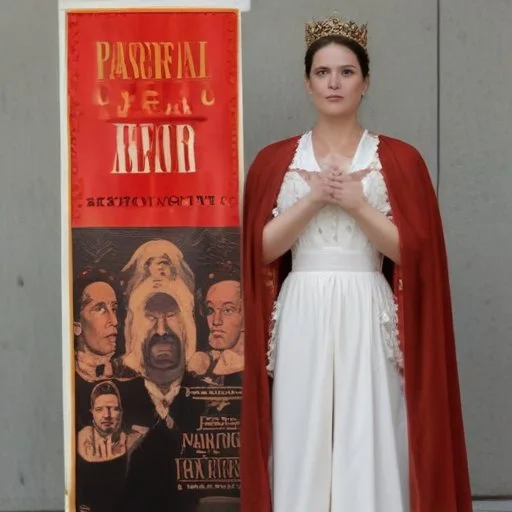
As the 19th century drew to a close, the art form of opera was undergoing a transformation, with composers seeking to break free from the shackles of traditional opera seria. Against this backdrop, Wagner's vision for a "total work of art" (Gesamtkunstwerk) gained traction, with Parsifal serving as the crowning jewel in this endeavour. The opera's narrative, inspired by medieval legend, was specifically crafted to showcase the synthesis of artistic mediums that Wagner envisioned.
Wagner's creative genius was ably supported by a coterie of talented individuals, including Hermann Levi, the Jewish-German conductor who led the orchestra on the premiere night, and Paul von Joukowsky, the set designer responsible for conjuring the opera's medieval landscape. The cast, comprising some of the finest vocal talents of the era, was spearheaded by the inimitable Amalie Materna as Kundry, the seductress who plays a pivotal role in Parsifal's journey.
The premiere of Parsifal sent shockwaves throughout the artistic community, with its innovative staging, orchestration, and thematic depth redefining the boundaries of opera as an art form. The work's influence can be discerned in the oeuvres of subsequent composers, including Gustav Mahler and Richard Strauss, while its dramatic intensity paved the way for the development of modernist opera.
Parsifal's medieval narrative, replete with themes of chivalry, honor, and redemption, tapped into the cultural zeitgeist of the era, resonating with audiences drawn to the mystique of the Knights of the Holy Grail. The opera's exploration of the human condition, with its emphasis on compassion, forgiveness, and the struggle between good and evil, continues to captivate audiences to this day.
The premiere of Parsifal was not without controversy, with critics and audiences alike grappling with the work's unprecedented complexity and length. The opera's depiction of Kundry, a female character embodying both seductive and redemptive qualities, sparked heated debate, with some detractors accusing Wagner of promoting anti-Semitic stereotypes.
Parsifal's premiere marked a watershed moment in the evolution of opera as a visual art form, with the Bayreuth Festspielhaus serving as a laboratory for innovative staging and set design. The opera's iconic scenes, including the transformation music and the climactic Good Friday Spell, have become ingrained in the popular imagination, influencing the development of opera and film alike.
Amalie Materna, the Austrian soprano who brought Kundry to life on the premiere night of Parsifal, was a vocal powerhouse of her era. With a career spanning over three decades, Materna was known for her versatility, having performed a wide range of roles in operas by Mozart, Weber, and Wagner.
Her portrayal of Kundry, a character embodying both seductive and redemptive qualities, was widely praised by critics and audiences alike. Materna's powerful vocals and intense stage presence brought depth and nuance to the role, cementing her status as one of the leading sopranos of her time.
Parsifal's medieval narrative, replete with themes of chivalry, honor, and redemption, continues to resonate with audiences today. The opera's exploration of the human condition, with its emphasis on compassion, forgiveness, and the struggle between good and evil, has made it a timeless classic.
From its influence on subsequent composers like Gustav Mahler and Richard Strauss to its dramatic intensity paving the way for modernist opera, Parsifal's impact on the cultural landscape has been profound. The opera's iconic scenes, including the transformation music and the climactic Good Friday Spell, have become ingrained in popular culture, influencing the development of opera, film, and beyond.
The original score of Parsifal, housed at the Bayreuth Archives, provides a fascinating glimpse into Richard Wagner's creative process. The manuscript, written in Wagner's own hand, reveals the composer's meticulous attention to detail and his innovative approach to orchestration.
The score is littered with annotations, corrections, and notes, offering a unique insight into the challenges and triumphs of Wagner's compositional journey. As a historical artifact, the original score of Parsifal is a testament to the enduring power of art to transcend time and inspire generations to come.

Parsifal's premiere marked a turning point in the evolution of opera, as Richard Wagner's innovative fusion of music, drama, and theatricality pushed the boundaries of the art form. The opera's emphasis on dramatic intensity, orchestral complexity, and thematic depth raised the bar for composers and librettists alike.
In comparison to Verdi's La Traviata, a contemporary opera, Parsifal's avant-garde approach to opera stands in stark contrast. While Verdi's work is characterized by its lyrical melodies and traditional opera seria structure, Parsifal's bold experimentations with harmony, rhythm, and vocal writing heralded a new era in opera.
The year 1882, during which Parsifal premiered at the Bayreuth Festival, was a tumultuous time in European politics. The Franco-Prussian War had recently ended, and the German Empire was asserting its dominance on the continent.
Against this backdrop, King Ludwig II of Bavaria's patronage of Richard Wagner and the Bayreuth Festival can be seen as a deliberate attempt to promote Germanic culture and values. Parsifal, an opera deeply rooted in Germanic mythology and ideals, became a symbol of this cultural and nationalist agenda.