


The Whitewater land deal, a controversy that marred the presidency of Bill Clinton, led to the conviction of his former business partners, Jim and Susan McDougal, as well as Arkansas Governor Jim Guy Tucker, on charges of fraud. This high-profile scandal sent shockwaves through the Clinton administration, sparking intense media scrutiny and public skepticism.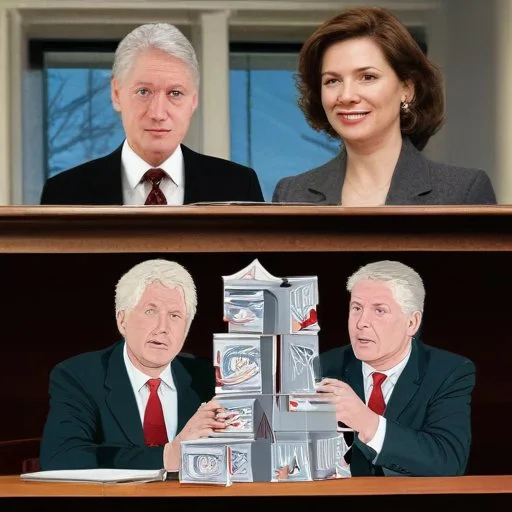
The McDougals, who were involved in the Whitewater Development Corporation, a real estate venture, were found guilty of fraudulent activities, including cooking the books to secure illegal loans. Governor Tucker, who was also implicated in the scandal, was convicted of misusing his office to further the illegal dealings.
The conviction of the McDougals and Governor Tucker sent a strong message that those in positions of power would be held accountable for their actions. The scandal also had significant implications for the Clinton administration, damaging the president's reputation and sparking calls for greater transparency in government.
The Whitewater scandal fueled public skepticism about the Clintons' involvement in the land deal and raised questions about their judgment. The controversy also sparked intense media scrutiny, with many outlets calling for greater accountability from those in power.
In her memoir, Hillary Clinton wrote about the stress and uncertainty that the scandal caused, saying, "It was a painful and difficult time for our family."
The Whitewater scandal led to calls for greater transparency in government and sparked reforms aimed at preventing similar abuses of power. The controversy also had significant implications for the Clintons' political future, with some citing it as a factor in the 2000 presidential election.
The conviction of the McDougals and Governor Tucker serves as a reminder that those in positions of power must be held accountable for their actions. The scandal also highlights the importance of transparency and accountability in government, crucial lessons for leaders and citizens alike.
The Whitewater scandal had significant economic implications for the state of Arkansas and the Clinton administration. The fraudulent activities of the McDougals and Governor Tucker led to a loss of public trust in the government and the banking sector, resulting in a decline in investments and economic growth in the region. Furthermore, the scandal led to increased regulatory scrutiny, which imposed additional costs on businesses and financial institutions.
The scandal also had a ripple effect on the US economy as a whole, as it contributed to a decline in consumer confidence and an increase in skepticism about the integrity of the financial system.

The Whitewater scandal was a major political embarrassment for the Clinton administration, which was already facing intense scrutiny over the president's personal life and his policies. The scandal led to calls for greater accountability and transparency in government, with many Republicans seizing on the issue to attack the president's credibility.
The scandal also exposed the complex web of relationships between politicians, business leaders, and regulators in Arkansas, highlighting the need for greater oversight and reform. Furthermore, the scandal had significant implications for the 1996 presidential election, with many voters citing it as a factor in their decision at the polls.
Susan McDougal was a key figure in the Whitewater scandal, and her actions sparked much of the controversy. A close friend of the Clintons, McDougal was deeply involved in the Whitewater Development Corporation and played a central role in the fraudulent activities that led to the scandal.
McDougal's personal life was also subject to intense scrutiny, with many questioning her judgment and integrity. Despite her conviction, McDougal maintained her innocence, and her case remains one of the most intriguing and controversial aspects of the Whitewater scandal.

The Resolution Trust Corporation's (RTC) 1995 report on the Whitewater Development Corporation provided crucial evidence of the fraudulent activities that led to the scandal. The report detailed a complex web of illegal transactions and deceit, including the use of fraudulent financial statements to secure illegal loans.
The report's findings were devastating for the Clintons and their associates, and it marked a turning point in the investigation. The RTC report remains a key document in understanding the scope and complexity of the Whitewater scandal.
Historical context is crucial in understanding the significance of the Whitewater scandal. The 1980s and 1990s were marked by a series of high-profile corruption scandals involving politicians and business leaders, and the Whitewater scandal was part of this broader trend.
However, the Whitewater scandal stands out due to its proximity to the presidency and the involvement of high-ranking officials. The scandal marked a turning point in the public's perception of politics and politicians, and it contributed to a growing sense of distrust and disillusionment with the political elite.