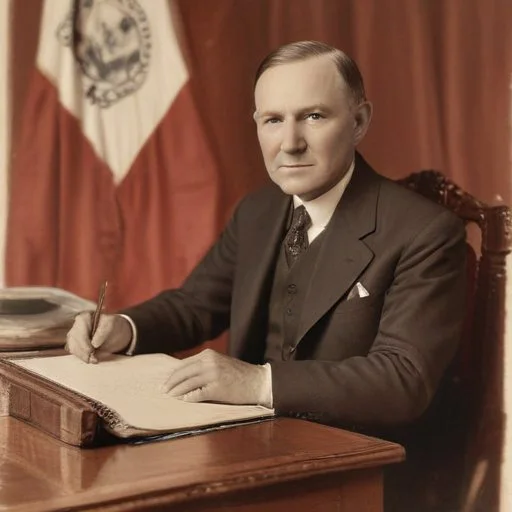
U.S. President Calvin Coolidge grants Native Americans citizenship
President Calvin Coolidge's pen strokes changed the course of history as he signed the Indian Citizenship Act, extending citizenship to all Native Americans born within the territorial limits of the United States. This monumental move marked a significant shift in the government's stance towards indigenous peoples, acknowledging their rights and identities as American citizens. Prior to this, Native Americans were considered "wards of the state" rather than citizens, a status that restricted their freedom and autonomy. By granting citizenship, the U.S. government took a crucial step towards recognizing the inherent rights and dignity of Native American communities.
The Unwavering Stroke of Justice: Calvin Coolidge's Indian Citizenship Act
A Legacy of Inclusion
On June 2, 1924, U.S. President
Calvin Coolidge's pen strokes etched a profound mark on the nation's conscience, as he signed the Indian Citizenship Act into law. This watershed moment granted citizenship to all Native Americans born within the territorial limits of the United States, forever altering the trajectory of indigenous rights and recognition.
Historical Grounding
The Indian Citizenship Act was a culmination of decades-long efforts to rectify the injustices faced by Native American communities. Prior to this landmark legislation, Native Americans were considered "wards of the state," bereft of fundamental rights and autonomy. The US government's paternalistic approach had long relegated indigenous peoples to the periphery of society, denying them the privileges and protections afforded to their non-Native counterparts.
The Unyielding Advocates
The Indian Citizenship Act would not have been possible without the tireless efforts of several key figures. Among them was Rep. Homer P. Snyder of New York, who introduced the bill in Congress. Snyder's dedication to the cause was echoed by organizations like the American Indian Defense Association, which had been vocal in their demands for Native American rights.
A Timeline of Triumph
- 1879: The Dawes Act grants citizenship to Native Americans who abandon their tribal affiliations and adopt "civilized" customs.
- 1919: The Congress passes the Citizenship Act, which allows Native Americans to petition for citizenship, but only if they meet certain criteria.
- 1924: President Calvin Coolidge signs the Indian Citizenship Act into law, granting citizenship to all Native Americans born within the territorial limits of the United States.
A New Era of Recognition
The Indian Citizenship Act marked a significant shift in the US government's stance towards Native Americans. By granting citizenship, the government implicitly acknowledged the inherent rights and dignity of indigenous peoples. This legislation not only recognized Native Americans as citizens but also paved the way for future generations to assert their rights and exercise their newfound autonomy.
A Cultural Awakening
The Indian Citizenship Act had far-reaching cultural implications, as Native Americans began to assert their identities and challenge the status quo. The 1920s and 1930s witnessed a resurgence of indigenous cultural expression, with Native American artists, writers, and activists emerging as prominent voices. This cultural renaissance was fueled, in part, by the sense of empowerment and validation that came with citizenship.
Controversies and Challenges
The Indian Citizenship Act was not without its controversies. Some Native American communities felt that citizenship would lead to further assimilation and erasure of their cultural identities. Additionally, the act did not address the ongoing issues of land dispossession, poverty, and marginalization that continued to afflict Native American communities.
Legacy of the Act
Despite these challenges, the Indian Citizenship Act remains a testament to the power of collective action and the unwavering pursuit of justice. Today, Native American communities continue to draw strength from this landmark legislation, as they strive to protect their rights, preserve their cultural heritage, and forge a brighter future.
The time has come when the Indian shall have an equal chance to live his own life and have his own opportunity to make his own way in the world, the same as the white man.
– Rep. Homer P. Snyder
Full Character Review
Rep. Homer P. Snyder: The Unwavering Advocate
As a congressman from New York, Rep. Homer P. Snyder was instrumental in introducing the Indian Citizenship Act to Congress. His dedication to the cause of Native American rights was unwavering, and his efforts ultimately led to the landmark legislation.
Snyder's commitment to justice was deeply rooted in his Christian faith and his belief in the inherent dignity of all human beings. He worked tirelessly to raise awareness about the plight of Native Americans, and his advocacy helped to build a broad coalition of support for the Indian Citizenship Act.
Snyder's legacy extends beyond the Indian Citizenship Act, as he continued to champion Native American rights throughout his career.

Geopolitical Dynamics Review
The Geopolitical Context of the Indian Citizenship Act
The Indian Citizenship Act of 1924 was enacted during a period of significant global upheaval. The aftermath of World War I had led to a redrawing of national borders, and the rise of nationalist movements around the world was challenging traditional notions of citizenship and identity.
In this context, the Indian Citizenship Act can be seen as part of a broader trend towards recognizing the rights of indigenous peoples and promoting greater autonomy for marginalized groups.
The Act's passage was also influenced by the growing international spotlight on the treatment of Native Americans, as the League of Nations and other global organizations began to focus on issues of human rights and social justice.
Cultural Influence Analysis
Cultural Renaissance: The Artistic Response to the Indian Citizenship Act
The Indian Citizenship Act of 1924 had a profound impact on Native American cultural expression, as artists, writers, and musicians began to explore new themes and modes of creative expression.
The 1920s and 1930s saw a flourishing of Native American art, as artists like T.C. Cannon and Fritz Scholder began to challenge traditional representations of Native American identity and experience.
This cultural renaissance was fueled, in part, by the sense of empowerment and validation that came with citizenship, as Native American artists began to assert their identities and challenge the status quo.

Thorough Political Analysis
Political Maneuvering: The Passage of the Indian Citizenship Act
The Indian Citizenship Act of 1924 was the result of a complex political process, involving negotiations between different factions and interest groups.
President Calvin Coolidge's support for the Act was crucial, as he used his executive powers to negotiate with Congress and ensure the bill's passage.
The Act's passage was also influenced by the growing prominence of Native American lobbying groups, which had become increasingly effective in advocating for their rights and interests.
Historiographical Review
Historiographical Perspectives: Reinterpreting the Indian Citizenship Act
Historians and scholars have reinterpreted the Indian Citizenship Act of 1924 in various ways, offering new insights into its significance and impact.
Some have seen the Act as a key moment in the development of Native American identity, as Native Americans began to assert their rights and challenge traditional notions of citizenship and belonging.
Others have argued that the Act was a flawed and incomplete measure, which failed to address the deeper structural issues facing Native American communities.


