


Eisenhower's concerns were not unfounded. In the aftermath of World War II, the United States had become the world's preeminent military power, and the defense industry had grown exponentially. The Cold War and the rise of the Soviet Union had created an atmosphere of fear and paranoia, fueling a costly arms race that would drain the nation's coffers and divert resources from essential public services.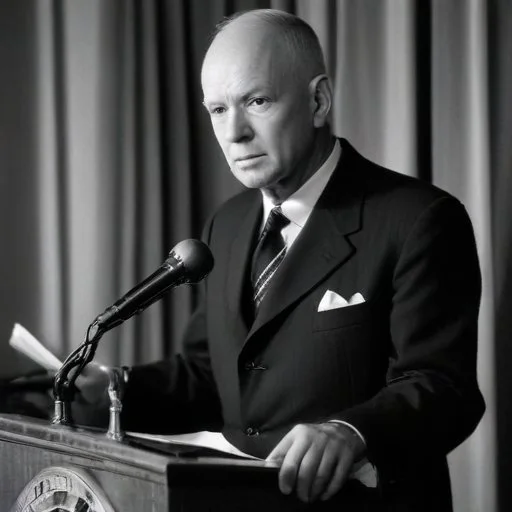
Throughout his speech, Eisenhower's trademark candor and humility shone through. He acknowledged the complexity of the issue, admitting that he, too, had contributed to the growth of the military-industrial complex during his presidency. This acknowledgment added weight to his words, as he spoke not as a prophet, but as a seasoned leader who had learned from his mistakes.
As the United States continues to grapple with the consequences of its military interventions and the expanding national debt, Eisenhower's farewell address serves as a timely reminder of the importance of prudence, accountability, and fiscal responsibility. His cautionary tale remains a beacon of wisdom, guiding policymakers and citizens alike towards a more balanced and sustainable approach to national security.
Dwight D. Eisenhower, the 34th President of the United States, was a decorated war general and statesman who rose to prominence during World War II. Born on October 14, 1890, in Denison, Texas, Eisenhower graduated from the United States Military Academy at West Point in 1915. He served in various military capacities, including as the Supreme Commander of the Allied Forces in Europe during World War II. After the war, he became the Chief of Staff of the United States Army and later served as the President of Columbia University. Eisenhower's military and political career spanned over three decades, earning him numerous awards and accolades, including the Distinguished Service Medal and the Legion of Merit.
Eisenhower's leadership style was marked by his ability to build coalitions and consensus, which earned him the respect and admiration of his peers. He was known for his integrity, humility, and strong sense of duty, which guided his decision-making throughout his career. As President, Eisenhower prioritized modernizing the military, balancing the budget, and promoting international cooperation.

Historians have interpreted Eisenhower's farewell address through various lenses, revealing the complexity of his message and its relevance to contemporary debates. Some have seen the address as a testament to Eisenhower's commitment to fiscal responsibility and limited government intervention in the economy.
Others have viewed the address as a warning against the dangers of militarism and the corrupting influence of power. Still, others have interpreted the address as a reflection of Eisenhower's own grappling with the weight of responsibility and the consequences of his decisions.
The geopolitical context of the early 1960s was marked by the heightening tensions of the Cold War and the rise of the Soviet Union as a superpower. The United States had emerged from World War II as a dominant military power, but the Soviet Union's rapid industrialization and military buildup had posed a significant challenge to American global influence.
In this context, Eisenhower's farewell address was a call to arms, urging the American people to remain vigilant and committed to the principles of democracy and freedom. His warnings about the military-industrial complex were particularly relevant, as the United States was on the cusp of a major military buildup in response to the perceived Soviet threat.

The economic impact of the military-industrial complex was a central theme of Eisenhower's farewell address. He warned that the complex would lead to a "disproportionate allocation of national resources" and would undermine the nation's fiscal health.
Indeed, the post-war period saw a significant increase in military spending, which had a profound impact on the national economy. The defense industry grew exponentially, and the federal budget became increasingly militarized. This led to a diversion of resources away from essential public services and toward military contractors and defense manufacturers.
Eisenhower's farewell address can be compared to other significant speeches in American history, such as Lincoln's Gettysburg Address and Franklin D. Roosevelt's Four Freedoms speech. Like these speeches, Eisenhower's address was a call to action, urging the American people to remain committed to the principles of democracy and freedom.
However, Eisenhower's address was unique in its focus on the dangers of militarism and the corrupting influence of power. His warnings about the military-industrial complex were particularly prescient, as the United States would go on to experience a major military buildup in the decades following his speech.