


On December 26, 1941, President Franklin D. Roosevelt signed a bill that would forever change the face of American holidays, establishing the fourth Thursday in November as Thanksgiving Day in the United States. This bold move brought an end to the controversy surrounding the holiday's date, which had been ongoing since the country's founding.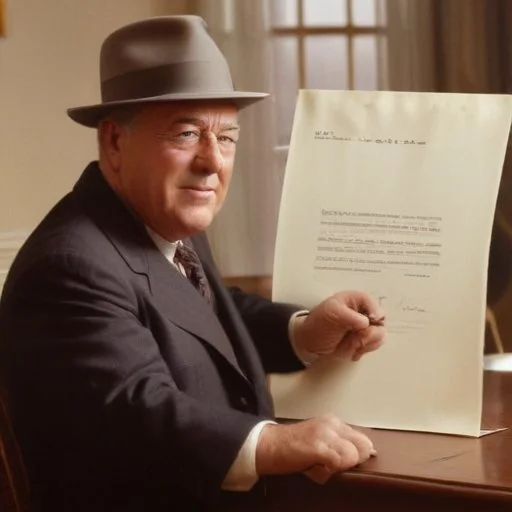
Before Roosevelt's bill, Thanksgiving Day was celebrated on the last Thursday in November, but this was not always the case. The first Thanksgiving took place in 1621, when the Pilgrims and the Wampanoag Native American tribe came together to share a harvest feast. However, it wasn't until 1863 that Abraham Lincoln declared Thanksgiving a national holiday, to be celebrated on the last Thursday in November.
In the early 20th century, a debate emerged over the holiday's date. Some argued that having Thanksgiving on the last Thursday in November would result in a shorter holiday shopping season, negatively impacting businesses. Others believed that the holiday should be moved to the fourth Thursday in November, creating a longer break between Thanksgiving and Christmas. This debate continued until Roosevelt's bill finally put the issue to rest.
President Roosevelt, also known as FDR, was the driving force behind the bill. His vision for a unified and stable Thanksgiving celebration was instrumental in bringing an end to the controversy.
Frederic A. Delano, a member of the Federal Reserve Board, played a crucial role in the passage of the bill. His persistent lobbying efforts helped to sway public opinion and ultimately contributed to the bill's success.
The bill had a profound impact on American culture, solidifying Thanksgiving Day as a beloved national tradition. The move also boosted the economy, as the longer holiday shopping season brought increased revenue for businesses.
Thanksgiving Day has become an integral part of American identity, symbolizing gratitude, family, and community. The holiday has inspired countless traditions, from turkey dinners to football games, and has become a beacon of hope and togetherness during times of turmoil.
While the bill was widely supported, some critics argued that the change would disrupt traditional celebrations and cause confusion. However, public opinion ultimately swayed in favor of the bill, and the new date became an instant success.
"It is a good thing to give thanks unto the Lord." – Abraham Lincoln
"Thanksgiving is a time to come together, to share in the spirit of gratitude and love." – Franklin D. Roosevelt
The establishment of Thanksgiving Day on the fourth Thursday in November paved the way for future holidays and celebrations, solidifying the importance of national traditions in American culture.
Franklin D. Roosevelt's bill has left an indelible mark on American history, cementing Thanksgiving Day as a cherished national tradition. As we continue to celebrate this beloved holiday, we honor the visionaries who brought stability and joy to our nation.
The earliest recorded Thanksgiving celebrations in the American colonies date back to 1607 in Jamestown, Virginia, where British settlers held a harvest feast to celebrate their survival.
In 1623, the Pilgrims held a second Thanksgiving, which was initially a sad occasion due to a severe drought that had affected their crops. However, the Wampanoag tribe helped them adapt to the new environment, and a successful harvest eventually led to a joint celebration.
These early celebrations were far from the modern-day Thanksgiving we know today, with no turkey, pumpkin pie, or football games in sight. Instead, they were simple harvest feasts, often featuring venison, corn, and squash.
Abraham Lincoln's Unwavering Commitment
Abraham Lincoln's 1863 proclamation, which declared Thanksgiving a national holiday, was a testament to his commitment to uniting the country during the tumultuous Civil War era.
Lincoln's leadership played a pivotal role in shaping the American identity, and his decision to establish Thanksgiving as a national holiday was a deliberate attempt to bring the nation together.
His commitment to the holiday was further evidenced by his 1864 proclamation, which reiterated the importance of giving thanks and praise to Almighty God.
The cultural significance of Thanksgiving extends far beyond its historical roots. Today, the holiday is a symbol of community, gratitude, and togetherness, transcending cultural and socioeconomic boundaries.
From the traditional turkey dinner to the Macy's Thanksgiving Day Parade, the holiday has evolved into a spectacle that brings people together.
Thanksgiving has also inspired countless artistic works, from Norman Rockwell's iconic illustrations to musical compositions like "Over the River and Through the Woods."
The holiday's cultural impact is a testament to its enduring power to unite and inspire Americans.

The economic impact of Thanksgiving is immense, with the holiday generating billions of dollars in revenue for the retail and tourism industries.
In recent years, the holiday shopping season, which begins on Thanksgiving Day, has seen a significant increase in online sales, with many retailers offering massive discounts and promotions.
The travel industry also benefits greatly from the holiday, with millions of Americans embarking on domestic and international trips to spend time with loved ones.
The economic benefits of Thanksgiving are undeniable, making it a crucial period for businesses to boost their sales and revenue.
Political Symbolism and the Power of Unity
Thanksgiving has consistently been used as a political tool, with leaders leveraging the holiday's symbolic significance to promote national unity and patriotism.
From Abraham Lincoln's 1863 proclamation to Franklin D. Roosevelt's 1941 bill, Thanksgiving has been employed to bring the country together during times of turmoil and crisis.
The holiday's political significance extends to its timing, with the fourth Thursday in November strategically chosen to coincide with the midpoint between elections and the start of the new year.