


On June 22, 1944, President Franklin D. Roosevelt signed the Servicemen's Readjustment Act, fondly known as the G.I. Bill, into law, marking a significant turning point in American history. This landmark legislation revolutionized the lives of millions of returning veterans, providing them with unprecedented benefits and opportunities to rebuild their lives and contribute to the nation's prosperity.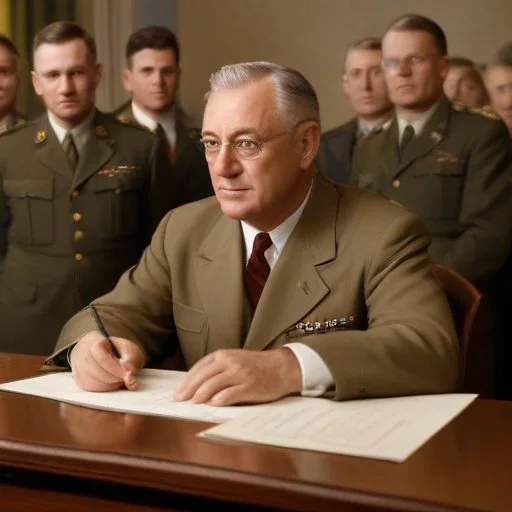
In the midst of World War II, the G.I. Bill was a beacon of hope for the men and women who had fought bravely on foreign soil. The bill's primary objective was to provide a comprehensive package of benefits, including education and home loan guarantees, to ease the transition of veterans back into civilian life. This radical departure from previous treatment of veterans was a testament to the nation's gratitude for their sacrifices.
The G.I. Bill was the brainchild of the American Legion, a veteran's organization that advocated for the rights of returning service members. The bill's chief sponsor, Congressman John Rankin of Mississippi, worked tirelessly to push the legislation through Congress. Roosevelt's endorsement and signature cemented the bill's passage, making it a cornerstone of his administration's domestic policy.
The G.I. Bill's impact was profound, enabling millions of veterans to pursue higher education, secure home ownership, and start businesses. This influx of educated and skilled workers transformed the American workforce, fueling the nation's post-war economic boom. The bill's benefits also extended to the families of veterans, providing a sense of security and stability in the aftermath of war.
The G.I. Bill played a significant role in shaping American culture and society. The increased access to education and job training helped to promote social mobility, bridging the gap between the working class and the growing middle class. The bill's emphasis on home ownership also contributed to the growth of suburbanization, as veterans and their families moved out of cities and into newly developed neighborhoods.
The G.I. Bill has been hailed as one of the most significant pieces of legislation in American history, with its influence still felt today. The bill's success paved the way for future veterans' benefits, including the Post-9/11 GI Bill. The G.I. Bill's legacy serves as a testament to the nation's enduring gratitude towards its veterans, ensuring that their sacrifices are never forgotten.
"The G.I. Bill is a magnificent tribute to the men and women who have served our country so valiantly...It is a vote of confidence in the future of America." - President Franklin D. Roosevelt
The G.I. Bill's roots can be traced back to the end of World War I, when veterans returned home to find limited job opportunities and sparse government support. The experience led to the formation of the American Legion, which advocated for veterans' rights and benefits. The Legion's efforts culminated in the enactment of the Adjusted Compensation Act of 1924, which provided a one-time payment to World War I veterans.
In the years leading up to World War II, the Legion continued to push for more comprehensive benefits, citing the need for a systematic approach to supporting veterans. The Servicemen's Readjustment Act of 1944 was the culmination of these efforts, building upon the lessons learned from previous conflicts.
The G.I. Bill's legislative journey was marked by bipartisanship and a sense of urgency, as lawmakers recognized the need to support the men and women fighting overseas. The bill's passage was a testament to the nation's commitment to its veterans, setting a precedent for future generations.
Francis Stephens, a World War II veteran, was among the first to take advantage of the G.I. Bill's education benefits. Enrolling in a vocational training program, Stephens honed his skills as an electrician and went on to start his own business.
"The G.I. Bill gave me a sense of purpose," Stephens recalled in a 1955 interview. "It allowed me to build a life for myself and my family, and I'll always be grateful for that."
Stephens' story reflects the transformative impact of the G.I. Bill on individual lives, as millions of veterans pursued new opportunities and career paths.The G.I. Bill played a significant role in shaping American culture, particularly in the realm of higher education. The influx of veterans on college campuses helped to democratize education, challenging traditional notions of academic elitism.
The veterans' presence also contributed to a shift in the nation's cultural identity, as the G.I. generation brought new perspectives and values to the forefront. This, in turn, paved the way for the social and cultural movements of the 1960s and beyond.

The G.I. Bill's economic impact was profound, with the Veterans Administration guaranteeing over 2.4 million home loans and 49,000 small business loans between 1944 and 1956. This injection of capital helped to fuel the post-war economic boom, driving growth and job creation.
The bill's economic legacy can be seen in the rise of suburbanization, as veterans and their families moved out of cities and into newly developed neighborhoods. This, in turn, spurred the growth of new industries, such as construction and consumer goods.), {PA