


In the aftermath of the American Revolution, the United States found itself deep in debt. To raise revenue, Secretary of the Treasury Alexander Hamilton proposed an excise tax on whiskey, which was met with fierce resistance from farmers in western Pennsylvania. These pioneers, who had fought against British rule, saw this tax as an infringement on their liberty and a threat to their livelihood.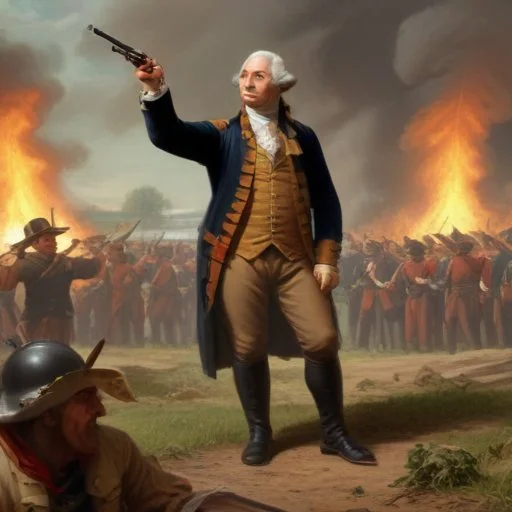
The Whiskey Rebellion marked a significant turning point in the early history of the United States. It demonstrated the federal government's authority and established the principle that federal laws must be obeyed. The rebellion also led to the development of a stronger federal judiciary and the creation of a more effective system of law enforcement.
The Whiskey Rebellion was not just a tax protest; it was also a cultural and social uprising. The farmers of western Pennsylvania saw themselves as independent frontiersmen, resistant to the authority of the federal government. The rebellion was a manifestation of the anti-authoritarian spirit of the American frontier.
The Whiskey Rebellion was widely covered in the press, with many newspapers expressing sympathy for the rebels. However, the government's decisive action in suppressing the rebellion was seen as a necessary step in establishing order and maintaining the stability of the young nation.
The Whiskey Rebellion set an important precedent for the federal government's authority in the face of local resistance. It demonstrated that the government would not tolerate lawlessness and that federal laws would be enforced, even in the face of violent opposition. This precedent has been cited in numerous instances of civil unrest and protests throughout American history.
The Whiskey Rebellion was a pivotal moment in American history, testing the federal government's authority and establishing the principle that federal laws must be obeyed. It was a complex and multifaceted event, driven by cultural, social, and economic factors. As we look back on this event, we are reminded of the ongoing struggle between individual liberty and government authority that has shaped the course of American history.
The Whiskey Rebellion was more than just a tax protest; it was a cultural phenomenon that reflected the values and ideals of the American frontier. The rebellion was fueled by a desire for independence and self-governance, which was deeply ingrained in the American psyche. The whiskey tax was seen as a symbol of federal overreach, and the rebels' defiance was a manifestation of their commitment to individual liberty and local control.
The rebellion also highlighted the cultural differences between the East Coast and the frontier regions. The East Coast was more urbanized and industrialized, while the frontier regions were more rural and agrarian. These cultural differences led to conflicting values and interests, which ultimately contributed to the rebellion.

Alexander Hamilton, the Secretary of the Treasury, was the driving force behind the whiskey tax. Hamilton, a strong proponent of federal power, believed that a strong central government was necessary to ensure the stability and prosperity of the young nation. He saw the whiskey tax as a means to generate revenue and assert federal authority over the states.
Hamilton's vision of a strong federal government was shaped by his experiences during the American Revolution. He was a strong advocate for a national bank and a robust system of tariffs and taxes. Hamilton's policies were often at odds with those of Thomas Jefferson, who advocated for states' rights and limited federal power.
The Whiskey Rebellion had significant economic consequences for the young nation. The rebellion disrupted the whiskey trade, which was a significant source of revenue for many farmers in western Pennsylvania. The tax on whiskey also led to a decline in whiskey production, which had a ripple effect on the entire economy.
The rebellion also led to an increase in military spending, as the federal government deployed troops to quell the uprising. This increased spending put a strain on the federal budget and led to a rise in national debt.

The Whiskey Rebellion had significant implications for the balance of power between the federal government and the states. The rebellion marked a turning point in the development of federal authority, as the government demonstrated its ability to enforce federal laws and maintain order.
The rebellion also highlighted the tension between federal power and states' rights. The rebels' defiance of federal authority was seen as a challenge to the government's legitimacy, and the government's response set a precedent for future conflicts over federal power.
The Whiskey Rebellion was not an isolated event, but rather the culmination of a series of events and policies that created tensions between the federal government and the states. The whiskey tax was part of a broader program of tariffs and taxes implemented by the federal government to raise revenue and pay off its debts.
The tax on whiskey was particularly unpopular in western Pennsylvania, where farmers saw it as an unfair burden on their livelihoods. The tax was also seen as a symbol of federal overreach, and the rebels' defiance was fueled by a sense of injustice and mistrust of the government.