


In a groundbreaking move, U.S. President Lyndon B. Johnson nominated Solicitor General Thurgood Marshall to become the first African American justice on the U.S. Supreme Court, marking a significant milestone in the fight for racial equality and justice.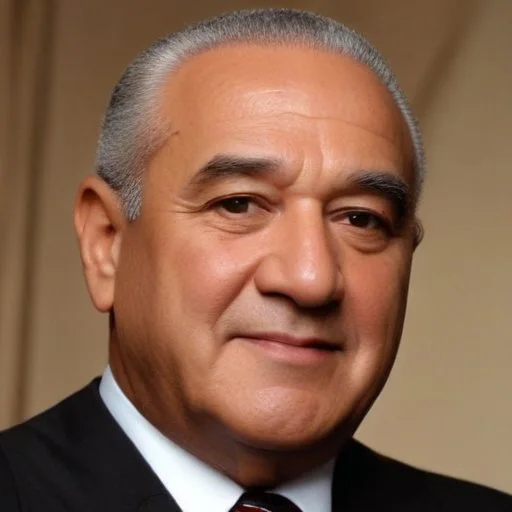
Thurgood Marshall, a renowned civil rights lawyer, had already made a name for himself in the legal world with his victories in landmark cases such as Brown v. Board of Education, which paved the way for the desegregation of public schools.
Marshall's nomination was a culmination of his tireless efforts to bring about social change through the law. As the first African American to serve as Solicitor General, he had already made history, but this nomination took his achievements to new heights.
President Johnson's nomination of Marshall was a deliberate move to promote diversity and inclusion on the Supreme Court. Johnson, a strong advocate for civil rights, saw this nomination as an opportunity to leave a lasting legacy in the fight for racial equality.
Johnson chose Marshall for his exceptional legal mind, his commitment to justice, and his ability to bring people together. Marshall's nomination was a testament to Johnson's commitment to creating a more inclusive and diverse Supreme Court.
Marshall's nomination and subsequent confirmation sent shockwaves across the nation, inspiring a new generation of African Americans to pursue careers in law and politics. His presence on the Supreme Court marked a significant shift in the nation's approach to issues of race and equality.
Thurgood Marshall's nomination to the Supreme Court will forever be remembered as a pivotal moment in American history, paving the way for a more inclusive and diverse judiciary. His legacy continues to inspire and motivate generations to fight for justice and equality.
"The Negro needs the Supreme Court to interpret the Constitution, and the Constitution to protect his rights."
Thurgood MarshallThurgood Marshall was born on July 2, 1908, in Baltimore, Maryland, to William Canfield Marshall and Norma Arica Williams Marshall. His great-grandparents were slaves who were freed in the 1860s. Growing up in a segregated neighborhood, Marshall experienced racial discrimination firsthand, which would later fuel his passion for fighting for civil rights.
Marshall attended Frederick Douglass High School in Baltimore, where he developed a strong interest in the law. He was suspended from school for misbehaving, but this setback did not deter him. Instead, he went on to attend Lincoln University in Pennsylvania, where he graduated magna cum laude in 1930.
Marshall's interest in law led him to attend Howard University Law School, where he graduated magna cum laude in 1933. He was heavily influenced by his law school mentor, Charles Hamilton Houston, who instilled in him the importance of using the law to fight for civil rights.

Thurgood Marshall's nomination to the Supreme Court sent a powerful message to the African American community. It was a beacon of hope, symbolizing that a black man could rise to the highest echelons of power and influence in the United States.
Marshall's nomination also helped to humanize African Americans in the eyes of white America. For too long, black people had been portrayed as inferior, unintelligent, and incapable of achieving greatness. Marshall's nomination shattered these stereotypes, showing that African Americans were just as capable and deserving of respect as anyone else.
Marshall's presence on the Supreme Court helped to pave the way for future generations of African Americans, inspiring them to pursue careers in law, politics, and other fields that were previously closed to them.Thurgood Marshall's nomination to the Supreme Court was a watershed moment in the fight for racial equality. It marked a significant shift in the nation's approach to issues of race and equality, symbolizing a move towards a more inclusive and diverse society.
Marshall's nomination was also a testament to the power of grassroots movements. The Civil Rights Movement, led by figures such as Martin Luther King Jr. and Rosa Parks, had been pushing for greater equality and justice for years. Marshall's nomination was a direct result of these efforts, showing that ordinary people could bring about extraordinary change.
Marshall's presence on the Supreme Court helped to create a sense of ownership and belonging among African Americans, who had long been excluded from the halls of power.

Thurgood Marshall's nomination to the Supreme Court was a deliberate move by President Lyndon B. Johnson to promote civil rights and racial equality. Johnson, a strong advocate for civil rights, saw Marshall's nomination as an opportunity to make a lasting impact on American history.
The nomination was also a strategic move by Johnson to appease the growing Civil Rights Movement, which had been gaining momentum in the 1960s. By nominating Marshall, Johnson was able to show that he was committed to creating a more inclusive and diverse society.
Marshall's nomination was also seen as a way to counterbalance the growing conservative movement, which was opposed to civil rights and social change.
Thurgood Marshall's nomination to the Supreme Court has been the subject of much historiographical debate. Some historians have argued that Marshall's nomination was a result of President Johnson's political maneuvering, while others have seen it as a genuine attempt to promote civil rights and racial equality.
Marshall's nomination has also been seen as a turning point in the Civil Rights Movement. It marked a shift from protests and demonstrations to a more institutional approach, with African Americans seeking to gain power and influence within the system rather than outside of it.
Some historians have also argued that Marshall's nomination was a result of the growing importance of the judiciary in American politics. As the courts became more influential in shaping public policy, the nomination of a civil rights lawyer like Marshall was seen as a way to ensure that the Supreme Court was more representative of the American people.