


In a move that sent ripples around the world, President Richard Nixon unilaterally severed the US dollar's ties to gold, allowing it to float freely on the foreign exchange market. This drastic decision, effective August 15, 1971, marked the end of the gold standard, plunging the global economy into a new era of fiat currency.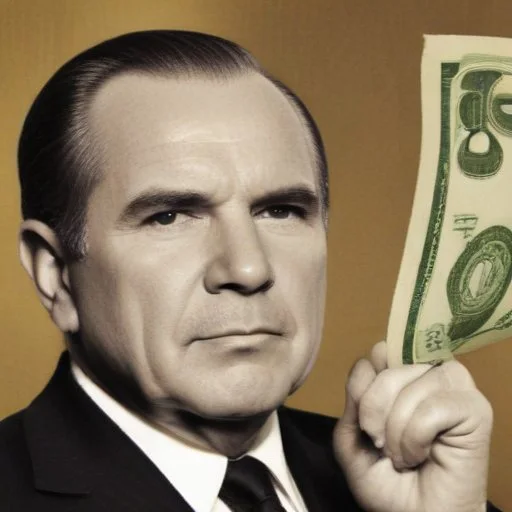
The gold standard, a system in which currencies were pegged to the value of gold, had been in place since the late 19th century. However, by the late 1960s, the United States' gold reserves were dwindling, and the country was facing a severe balance of payments crisis. Foreign investors, particularly in Europe, began to lose confidence in the US dollar, and currency speculators started to short the currency, further devaluing it.
The aftermath of Nixon's decision saw the US dollar's value plummet, and foreign investors scrambled to adjust. The move had far-reaching consequences, including:
Nixon's decision had a profound impact on the cultural and social fabric of the United States. The rise of inflation eroded the purchasing power of the average American, leading to widespread discontent and social unrest. The move also marked a shift in the US's economic relationship with the rest of the world, as the country began to adopt a more protectionist stance.
The decision to abandon the gold standard was met with widespread criticism, both at home and abroad. Many saw it as a betrayal of the US dollar's credibility and a threat to global economic stability. Nixon's action was also seen as a symbol of American economic imperialism, as the country's currency was no longer tied to a tangible asset.
"The time has come for a new economic policy for the United States." - Richard Nixon, August 15, 1971
In his memoirs, Paul Volcker recalled the tension and uncertainty surrounding the decision to abandon the gold standard. "It was a moment of high drama, and we knew that we were taking a risk. But we also knew that we had to act."
Nixon's decision paved the way for the rise of floating exchange rates and the modern global economy. It also marked a shift in the US's economic priorities, as the country began to focus on managing its own economy, rather than trying to maintain a fixed exchange rate with gold.
The abandonment of the gold standard had a profound impact on American culture. The rise of inflation eroded the purchasing power of the average American, leading to widespread discontent and social unrest. The 1970s became known as the "Age of Inflation," with prices rising by over 100% during the decade. This led to a decline in the standard of living, particularly among the middle and working classes.
The cultural impact of Nixon's decision was also felt in the world of art and literature. The 1970s saw a surge in countercultural movements, with artists and writers critiquing the excesses of capitalism and the erosion of traditional values. The punk rock movement, which emerged in the mid-1970s, was particularly influenced by the economic and social upheaval of the time.
In the world of film, the 1970s saw a shift towards more realistic and gritty portrayals of American life. Movies like "The Godfather" and "Chinatown" reflected the public's growing distrust of institutions and the rise of corruption in American society.

Historians have long debated the significance of Nixon's decision to abandon the gold standard. Some, such as economist Milton Friedman, have argued that the move was necessary to free the US economy from the shackles of the gold standard, which was seen as restrictive and outdated.
Others, such as Economic historian Barry Eichengreen, have argued that the decision was a mistake, leading to a surge in inflation and a decline in the value of the US dollar. Eichengreen has written that the abandonment of the gold standard marked the end of the Bretton Woods system, which had provided stability to the global economy in the post-war period.
More recently, historians have begun to reevaluate the significance of Nixon's decision in the context of the Cold War. Some have argued that the move was a deliberate attempt to undermine the Soviet Union, which was seen as vulnerable to economic pressure.
The economic impact of Nixon's decision was felt immediately. The value of the US dollar plummeted, causing a surge in imported goods prices and a decline in American exports. The trade deficit ballooned, and the US economy entered a period of stagflation, marked by high inflation and stagnant economic growth.
The inflationary spiral that followed had a devastating impact on fixed-income earners, such as pensioners and those living on fixed incomes. The savings of millions of Americans were eroded, and the economy entered a period of uncertainty and volatility.
However, the long-term impact of Nixon's decision was more positive. The floating exchange rate allowed the US economy to adapt more quickly to changes in the global economy, and the rise of the dollar as a global reserve currency helped to establish the US as a dominant economic power.
Paul Volcker, Nixon's Under Secretary of the Treasury for International Monetary Affairs, was a key architect of the plan to float the US dollar. A career bureaucrat with a reputation for integrity and independence, Volcker was instrumental in convincing Nixon of the need to abandon the gold standard.
Volcker's role in the crisis was significant, as he was one of the few officials who understood the complexities of the international monetary system. His expertise and gravitas helped to calm the markets and reassure investors that the US government was in control.
In his later years, Volcker would go on to become Chairman of the Federal Reserve, where he would play a key role in taming the inflationary monster that had been unleashed by Nixon's decision.
The geopolitical context of Nixon's decision cannot be overstated. The late 1960s and early 1970s were a time of great turmoil in the global economy, with the rise of Japan and Germany as economic powers and the decline of the British Empire.
The US was facing a severe balance of payments crisis, and the gold standard was seen as restrictive and outdated. The Smithsonian Agreement of 1971, which established a new exchange rate system, was seen as a temporary fix, but it was clear that a more fundamental change was needed.
Nixon's decision to abandon the gold standard was also influenced by the Cold War. The US was facing a growing challenge from the Soviet Union, and the ability to manipulate the value of the dollar was seen as a key tool in the economic struggle against communism.