


In a move that would transform the face of Indonesia's transportation infrastructure, President Soeharto inaugurated the Jagorawi Toll Road, the country's first toll highway, on September 11, 1978. This monumental project connected Jakarta, Bogor, and Ciawi in West Java, spanning a length of 59 kilometers.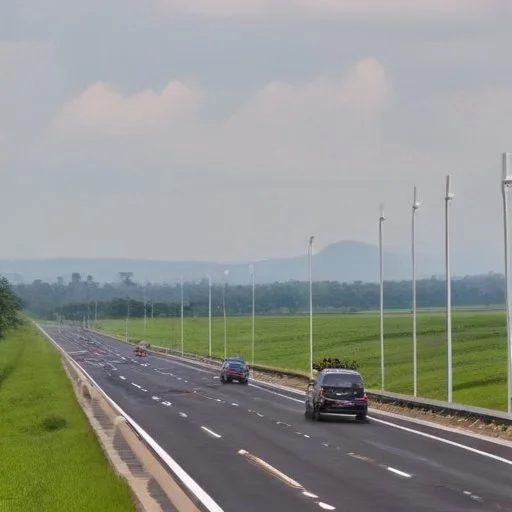
The Jagorawi Toll Road not only improved connectivity between Jakarta, Bogor, and Ciawi but also had a profound impact on the social and cultural fabric of the region. The toll road facilitated the growth of urban centers, enabled the exchange of goods and services, and fostered increased social mobility.
The Jagorawi Toll Road received widespread recognition for its engineering excellence and the positive impact it had on the region. The project was awarded the 1979 ASEAN Highway Engineering Award, a testament to the innovative spirit and perseverance of the Indonesian people.
The Jagorawi Toll Road paved the way for future infrastructure development projects in Indonesia, serving as a model for sustainable and modern transportation systems. Today, the toll road remains a vital artery, facilitating the flow of people, goods, and services, and continues to play a vital role in shaping the country's economic and social landscape.
The inauguration of the Jagorawi Toll Road was more than just a ceremonial event; it marked a turning point in Indonesia's history, signaling a new era of growth, development, and modernization. As the nation continues to evolve, the legacy of the Jagorawi Toll Road serves as a beacon, inspiring future generations to strive for excellence and push the boundaries of what is possible.
The construction of the Jagorawi Toll Road had a profound impact on Indonesia's economy. The project created thousands of jobs, stimulated local industries, and increased economic activity in the region. According to estimates, the toll road increased the gross regional domestic product (GRDP) of West Java by 2.5% in the first year of operation alone. The road also reduced transportation costs by 30%, making goods and services more competitive in the global market.
President Soeharto was a visionary leader who recognized the importance of modernizing Indonesia's infrastructure. Born in 1921, Soeharto rose to power in the 1960s and ruled Indonesia for over three decades. He was known for his authoritarian style of governance, but his commitment to development and modernization earned him widespread support. The Jagorawi Toll Road was one of his flagship projects, and its success cemented his legacy as a champion of progress.
The Jagorawi Toll Road was a technological marvel of its time. The road featured a state-of-the-art toll collection system, which was a first for Indonesia. The system used a combination of manual and automatic toll booths, reducing congestion and increasing efficiency. The road's design and construction also showcased innovative engineering techniques, including the use of reinforced concrete and advanced drainage systems.
The Jagorawi Toll Road had a profound cultural impact on the region. The road connected urban centers, fostering greater social mobility and cultural exchange. The road also enabled the growth of tourism, as visitors from across the country flocked to the scenic towns of Bogor and Ciawi. The toll road became a symbol of modernity and progress, inspiring a new generation of Indonesians to embrace change and development.
The Jagorawi Toll Road was a key component of President Soeharto's political strategy. The project was designed to demonstrate the government's commitment to development and modernization, boosting Soeharto's popularity and legitimacy. The road's success also helped to consolidate power and influence, as Soeharto's government used the project to demonstrate its ability to deliver large-scale infrastructure projects.