


In a dramatic turn of events, President Viktor Yanukovych of Ukraine was impeached by the Verkhovna Rada, the Ukrainian parliament, in a near-unanimous vote of 328-0 on February 22, 2014. This historic decision marked the culmination of the Euromaidan rebellion, a wave of protests that had been sweeping the nation since November 2013.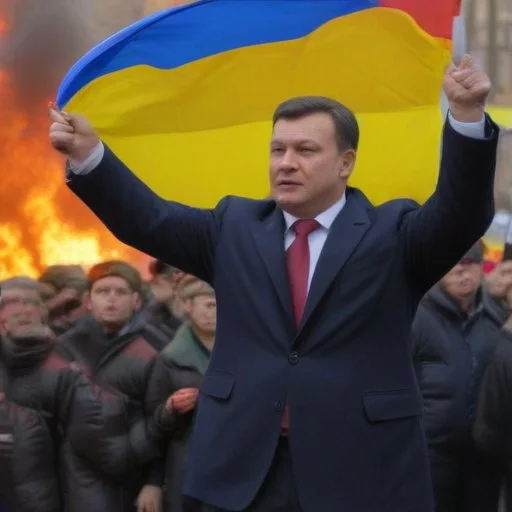
Viktor Yanukovych's presidency was marked by allegations of corruption, authoritarianism, and a turn towards Russia. His decision to reject a trade deal with the European Union in favor of closer ties with Moscow sparked widespread outrage and protests. The Euromaidan movement, made up of students, intellectuals, and ordinary citizens, sought to bring Ukraine closer to Europe and distance it from Russia's influence.
The protests, which began on Independence Square in Kiev, grew in size and intensity, with thousands of Ukrainians braving subzero temperatures and police brutality to demand change. The movement was fueled by a sense of national pride, a desire for democracy, and a rejection of Yanukovych's increasingly autocratic rule.
The impeachment of Yanukovych marked a major shift in Ukraine's political landscape. The event paved the way for new elections, which saw Petro Poroshenko take office as the new president. Ukraine's relations with Europe and Russia were forever changed, with the country moving closer to European integration.
The Euromaidan rebellion was more than just a political movement – it was a cultural and social awakening. The protests brought together Ukrainians from all walks of life, united in their desire for change. The movement inspired a new generation of Ukrainians to take an active role in shaping their country's future.
"We will not go away, we will not be silent, we will not be intimidated." – A popular chant among Euromaidan protesters
The Euromaidan rebellion shares similarities with other democratic movements, such as the Arab Spring and the Iranian Green Movement. While each movement has its unique characteristics, they all share a common goal – the pursuit of democracy, freedom, and human rights.
Ihor, a 25-year-old protester, recalled the moment he was tear-gassed by police: "I felt like I was fighting for my country's future. We knew it wouldn't be easy, but we were determined to bring about change."
The Euromaidan rebellion set a precedent for future protests and democratic movements in Ukraine and beyond. The event demonstrated the power of people coming together to demand change and the importance of government accountability.
The impeachment of Viktor Yanukovych and the Euromaidan rebellion will be remembered as a pivotal moment in Ukraine's history, a testament to the power of people coming together to demand change and shape their own destiny.
In the months leading up to the impeachment of Viktor Yanukovych, the Euromaidan movement was gaining momentum. Protests, which started as small gatherings of students and intellectuals, grew in size and intensity. The movement was fueled by a sense of national pride, a desire for democracy, and a rejection of Yanukovych's increasingly autocratic rule.
One of the key moments in the early days of the movement was the brutal beating of journalist and activist, Tetyana Chornovol, on December 25, 2013. This event sparked widespread outrage and galvanized public support for the protests.
Vitali Klitschko, a former professional boxer and leader of the Ukrainian Democratic Alliance for Reform party, played a key role in the Euromaidan protests. Klitschko's charismatic leadership and commitment to democratic values made him a popular figure among protesters.
As a politician, Klitschko was a vocal critic of Yanukovych's government, and his party's platform focused on promoting European integration and combating corruption. Klitschko's involvement in the protests helped to galvanize support among Ukraine's political elite.
The Euromaidan movement's slogan, "Україна понад усе!" or "Ukraine above all!", became a rallying cry for protesters. This phrase, which was coined by Ukrainian writer and intellectual, Yuriy Lutsenko, emphasized the importance of national unity and pride.
The slogan was often chanted during protests, and its popularity reflected the movement's focus on promoting Ukrainian identity and culture. The phrase has since become an important symbol of Ukrainian patriotism.
The Euromaidan protests share some similarities with the Arab Spring, a wave of protests that swept across the Middle East and North Africa in 2010-2012. Both movements were driven by a desire for democratic reform and an end to authoritarian rule.
However, there are also key differences between the two movements. While the Arab Spring was characterized by a focus on economic and social grievances, the Euromaidan protests were more narrowly focused on Ukraine's integration with Europe and corruption.
The Euromaidan protests took place against the backdrop of a complex geopolitical landscape. Ukraine, strategically located between Europe and Russia, has long been a site of competition between East and West.
Russia's interests in Ukraine were a key factor in Yanukovych's decision to reject the EU trade deal, and the subsequent protests. The protests' success was seen as a victory for European integration and a setback for Russian influence in the region.