


On May 11, 1812, Britain's political landscape was forever altered when Prime Minister Spencer Perceval became the first and only British Prime Minister to be assassinated while in office. The shocking event took place in the lobby of the House of Commons, sending ripples of disbelief throughout the nation.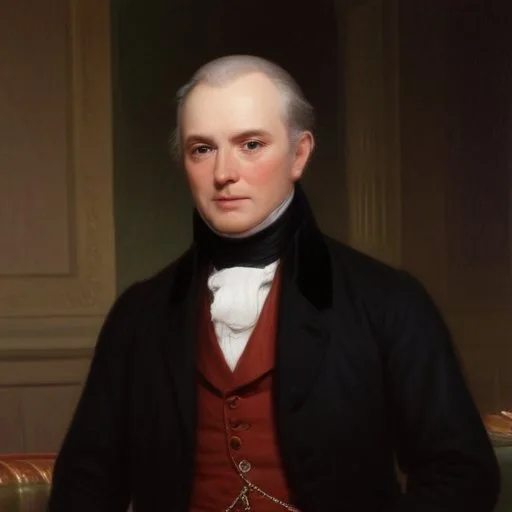
In the early 19th century, Britain was grappling with the Napoleonic Wars, and the country was in a state of turmoil. Perceval, a member of the Tory party, had taken office in 1809 and was facing opposition from various factions, including the Whigs and the Radicals.
John Bellingham, a disgruntled merchant, had a personal vendetta against the government. In 1804, he had been falsely accused of smuggling and imprisoned for several months. Despite his protests of innocence, he was denied compensation for his ordeal, leaving him embittered and seeking revenge.
On that fateful day, Perceval was walking through the lobby of the House of Commons, attending to his duties, when Bellingham emerged from the crowd and fired a single shot at point-blank range. The Prime Minister fell to the ground, mortally wounded, and died shortly thereafter.
The news of Perceval's assassination sent shockwaves throughout the nation. The government was thrown into chaos, and the politicians were left reeling. The assassination marked a dark day in British history, and it would take years for the country to recover from the trauma.
Perceval's assassination led to a significant shift in British politics. The Tory party, which had been in power for over a decade, was forced to re-examine its policies and leadership. The event also led to increased security measures in the House of Commons, with the installation of metal detectors and improved surveillance.
The assassination had a profound impact on British culture and society. It led to a renewed focus on the responsibilities of those in power and the need for accountability. The event also sparked a national debate on the role of the government in protecting its citizens.
Perceval's assassination is often compared to that of Abraham Lincoln, the 16th President of the United States, who was assassinated in 1865. Both events share similarities in their shocking nature and the profound impact on the nation.
One eyewitness account, provided by Henry Grattan, an Irish politician, described the scene as "a dreadful spectacle." Another account, by a journalist, noted that Perceval's death was "a terrible blow to the government and the country."
Perceval's assassination marked a turning point in British history, leading to a renewed focus on political reform and accountability. The event also served as a catalyst for improved security measures in government buildings and public spaces.
In conclusion, the assassination of Spencer Perceval is a poignant reminder of the sacrifices made by those in public office. It is a testament to the enduring impact of a single event on the course of history.
In the years leading up to Perceval's assassination, the British government was grappling with the fallout of the Napoleonic Wars. Trade embargoes and naval blockades had severely impacted the British economy, leading to widespread discontent among the population. The situation was further exacerbated by the British government's decision to restrict trade with France, which had led to a rise in smuggling and other forms of illegal activity. Against this backdrop of economic uncertainty and political tension, John Bellingham's personal vendetta against the government gained momentum.
Bellingham's own experiences as a merchant had been severely impacted by the war, and he had lost a significant amount of money due to the government's actions. His failed attempts to seek compensation for his losses had left him feeling bitter and resentful towards the government, and he began to see Perceval as the embodiment of the system that had wronged him.
The assassination of Perceval can be seen as a culmination of these broader historical forces, which had created an environment of discontent and disillusionment among the British population.
John Bellingham was born in 1769 in St. Neots, Huntingdonshire, England. Little is known about his early life, but it is believed that he came from a middle-class family and received a decent education. He went on to become a successful merchant, trading goods between Britain and Russia.
However, Bellingham's life took a dramatic turn in 1804 when he was falsely accused of smuggling and imprisoned for several months. The experience left him feeling embittered and seeking revenge against the government, which he felt had wronged him.
Bellingham's character can be seen as a complex mix of entrepreneurial spirit and bitter resentment, driven by a desire for justice and revenge.The assassination of Perceval had significant political implications for the British government. The event marked a turning point in British politics, leading to a shift in power from the Tory party to the Whigs. The Whigs, who had been in opposition for over a decade, saw the assassination as an opportunity to capitalize on the public's desire for change and reform.
The new government, led by Lord Liverpool, was forced to adopt a more conciliatory approach towards the French, and the British economy began to recover from the devastating effects of the war. The assassination also led to increased scrutiny of government policies and practices, paving the way for future reforms.
The assassination of Perceval can be seen as a catalyst for political change in Britain, marking a significant shift in the balance of power and paving the way for future reforms.
The assassination of Perceval sent shockwaves throughout British society, leading to a renewed focus on the role of the government in protecting its citizens. The event sparked a national debate on the responsibilities of those in power and the need for accountability.
In the aftermath of the assassination, the British public began to question the government's ability to provide for their safety and security. The event led to increased demands for greater transparency and accountability in government, and paved the way for future reforms.
The cultural impact of Perceval's assassination can be seen in the renewed focus on accountability and transparency in government, which continues to shape British politics to this day.The assassination of Perceval took place against the backdrop of the Napoleonic Wars, which had thrown Europe into chaos. The British government was struggling to contain the spread of French influence, and the war had created an environment of uncertainty and fear.
The assassination was seen as a significant blow to British prestige and power, and it led to increased tensions with France. The event marked a turning point in the war, as the British government was forced to re-evaluate its strategies and seek new alliances.
The geopolitical context of Perceval's assassination highlights the broader implications of the event, which extended far beyond British shores and shaped the course of European history.