


Zulfikar Ali Bhutto, the charismatic Prime Minister of Pakistan, met a tragic end on April 4, 1979, on the gallows of Adiala Jail in Rawalpindi. His execution, a result of a military coup and a sham trial, sent shockwaves across the globe, leaving a lasting impact on Pakistani politics and democracy.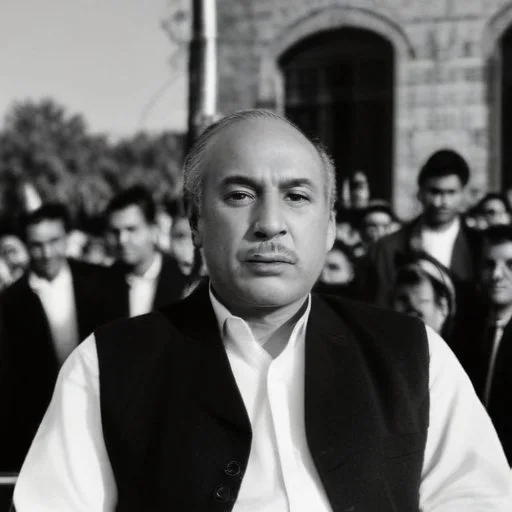
Bhutto's rise to power was a testament to his unwavering connection with the Pakistani people. His populist politics and socialist reforms had earned him widespread popularity, especially among the working class and rural communities. He was known for his charisma, his rhetorical flair, and his ability to connect with the masses.
In 1977, General Ziaul Haq, the army chief, seized power in a bloodless coup, citing corruption and misrule as reasons for his actions. Bhutto was arrested, tried, and convicted on trumped-up charges of murder and treason. The trial was widely criticized for its lack of transparency and fairness, with many arguing that it was a sham.
The international community was shocked and outraged by Bhutto's conviction and sentence. World leaders, including Jimmy Carter, pleaded for clemency, but General Zia was unmoved. The execution of Bhutto was a brutal reminder of the fragility of democracy and the power of military might.
Quotes and Memorable Sayings
"I am a democrat, a humanist, and a socialist... I believe in the concept of welfare state, where the state is responsible for the welfare of its citizens."
Bhutto's legacy is complex and multifaceted. He is remembered as a champion of democracy, a leader who fought for the rights of the common man. His execution marked a dark period in Pakistani history, but his ideals continue to inspire generations of Pakistanis.
The execution of Bhutto marked a turning point in Pakistani politics. It led to a period of martial law, which lasted for over a decade. The country's democratic institutions were weakened, and the military's grip on power was strengthened. The event also had a profound impact on Pakistan's relationships with the international community.
"I remember the day Bhutto was executed. It was as if the country had lost its soul. I was just a child then, but I knew that something was terribly wrong. It was a darker day than I had ever seen before." - A Pakistani citizen who lived through the event
What if Bhutto had lived? Would Pakistan's political landscape be different today? Would the country have avoided the turmoil and instability that followed his execution? These are questions that continue to haunt Pakistanis to this day.
The execution of Zulfikar Ali Bhutto is a painful reminder of the fragility of democracy and the power of military might. It is a testament to the enduring legacy of a leader who fought for the rights of the common man. As Pakistan continues to navigate the complexities of democracy and governance, the lessons of Bhutto's life and death remain as relevant as ever.
Zulfikar Ali Bhutto was born on January 5, 1928, in Larkana, Sindh, Pakistan, to a wealthy landowning family. His early life was marked by privilege and access to quality education, which shaped his political ideology and worldview. Bhutto's charisma and oratory skills were evident from an early age, making him a natural leader among his peers.
Throughout his life, Bhutto was driven by a strong sense of justice and a desire to empower the Pakistani people. His idealism and vision for a socialist Pakistan led him to champion the cause of the working class and rural communities, earning him widespread popularity.

In the 1960s, Bhutto emerged as a prominent figure in Pakistani politics, rapidly gaining popularity for his charismatic leadership and socialist agenda. His landslide victory in the 1970 general elections propelled him to the forefront of Pakistani politics, making him the first civilian president of Pakistan.
During his early years in power, Bhutto implemented a range of reforms, including nationalizing key industries, implementing land reforms, and promoting social welfare programs. His government also played a crucial role in negotiating the Simla Agreement with India in 1972, which marked a significant milestone in Indo-Pakistan relations.
Zulfikar Ali Bhutto's impact on Pakistani culture was profound and far-reaching. He promoted the arts, literature, and music, believing that they were essential to Pakistan's national identity. Bhutto's government established the Pakistan Television Corporation, which played a crucial role in promoting Pakistani culture and entertainment.
Bhutto himself was a patron of the arts, and his love for poetry and literature was well-known. He was particularly fond of the works of Allama Iqbal, Pakistan's national poet, and often quoted his poetry in his speeches.
The execution of Zulfikar Ali Bhutto marked a significant shift in Pakistani politics, with the military's grip on power strengthening in the years that followed. The Pakistan Peoples Party (PPP), founded by Bhutto, was banned, and many of its leaders were jailed or forced into exile.
The event also had a profound impact on Pakistan's relationships with the international community, particularly with the United States. The Carter administration, which had been critical of Bhutto's government, was forced to re-evaluate its stance on Pakistan, leading to a period of diplomatic tension between the two nations.
The 1970s was a complex and tumultuous period in global politics, with the Cold War at its peak. The execution of Bhutto must be seen in the context of the prevailing geopolitical landscape, with the United States and Soviet Union vying for influence in the region.
The military coup and subsequent execution of Bhutto were likely influenced by the global power dynamics of the time, with the United States choosing to support military dictators in the region to counter Soviet influence. The event had far-reaching implications for regional security and global politics, contributing to the rise of Islamist radicalism and the ongoing struggle for democracy in Pakistan.