


Prince Norodom Sihanouk, the charismatic leader of Cambodia, relinquished his power and was subsequently placed under house arrest, marking the end of his remarkable 20-year reign and paving the way for the brutal Khmer Rouge regime. This dramatic event in 1970 would forever alter the course of Cambodian history, plunging the nation into chaos and destruction.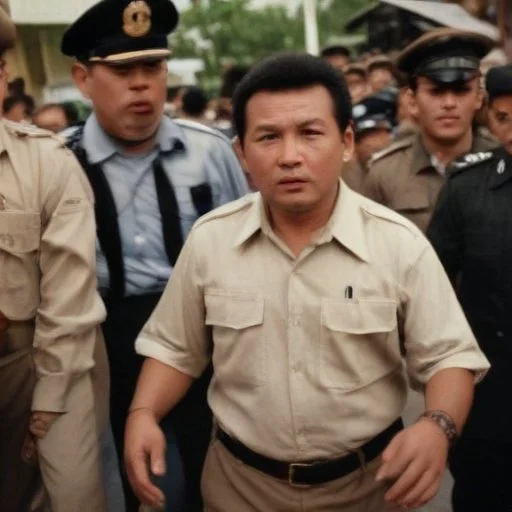
Prince Norodom Sihanouk's journey to power began in 1941, when he was crowned king at the tender age of 18. Over the years, he skillfully navigated the complex web of international politics, maintaining Cambodia's independence and sovereignty amidst the tumultuous backdrop of World War II and the Cold War.
Sihanouk's popularity soared as he championed Cambodia's independence from French colonial rule, declaring the nation's autonomy in 1953. His regime was marked by modernization efforts, economic growth, and a commitment to neutrality in the face of the escalating conflicts in neighboring Vietnam.
In 1970, a bloodless coup, orchestrated by Prime Minister Lon Nol and Prince Sisowath Sirik Matak, seized power while Sihanouk was abroad. The once-beloved leader was stripped of his authority and placed under house arrest, marking the end of his reign and the beginning of a new era in Cambodian politics.
The Khmer Rouge, a radical communist organization, capitalized on the power vacuum, gradually consolidating their control over the country. The ensuing years were marked by brutality, repression, and widespread human rights abuses, as the Khmer Rouge implemented their radical agrarian socialism policies.
Sihanouk's fall from power and subsequent house arrest were a devastating blow to the nation. His regime's collapse paved the way for one of the darkest periods in Cambodian history, during which an estimated 1.5 to 3 million people perished under the Khmer Rouge's brutal rule.
Sihanouk would spend the next several years in exile, first in China and later in North Korea, where he continued to advocate for Cambodian independence and sovereignty. His legacy as a champion of Cambodian nationalism remains contested, with some hailing him as a hero and others condemning his role in the country's descent into chaos.
Sihanouk's fall from power and the subsequent rise of the Khmer Rouge regime had far-reaching consequences, extending beyond Cambodia's borders to shape regional and international politics. The event serves as a poignant reminder of the fragility of power and the devastating consequences of political upheaval.
Sihanouk's story is a testament to the complexities of power, politics, and human nature. His remarkable life, marked by both triumph and tragedy, serves as a powerful cautionary tale, reminding us of the importance of accountability, justice, and human dignity.
Prince Norodom Sihanouk was a charismatic leader known for his cunning and adaptability. Throughout his reign, he skillfully navigated the complexities of international politics, leveraging his charm and wit to maintain Cambodia's independence.
However, Sihanouk's personality was also marked by authoritarian tendencies, suspecting plots against him and fearing domestic opposition. This paranoia led to the imprisonment and execution of political opponents, tarnishing his legacy.
Despite his flaws, Sihanouk remains a revered figure in Cambodian history, celebrated for his unwavering commitment to national sovereignty and modernization.

Historians have long debated the significance of Sihanouk's reign, with some viewing him as a champion of Cambodian nationalism and others criticizing his authoritarianism.
Some have argued that Sihanouk's regime was marked by significant economic and social progress, citing improvements in education, healthcare, and infrastructure.
Others, however, have emphasized the darker aspects of his rule, highlighting human rights abuses, corruption, and political repression.
The ongoing historiographical debate surrounding Sihanouk's legacy serves as a testament to the complexity of his reign, underscoring the need for continued scholarly inquiry and reflection.
The tumultuous backdrop of the Cold War played a significant role in Sihanouk's downfall, as the United States and the Soviet Union vied for influence in Southeast Asia.
The CIA-backed coup that ousted Sihanouk was, in part, a response to his perceived leftist leanings and his efforts to establish diplomatic relations with China.
The subsequent rise of the Khmer Rouge, backed by China and North Korea, further complicated the regional power dynamics, drawing Cambodia into the orbit of the Eastern Bloc.
The event serves as a stark reminder of the far-reaching consequences of great power rivalry in shaping local politics and global events.

Prince Norodom Sihanouk played a significant role in shaping Cambodian cultural identity, promoting traditional arts, literature, and music.
His love of cinema led him to establish the Cambodian Film Institute, which fostered a vibrant film industry that showcased the country's rich cultural heritage.
Sihanouk's dedication to preserving Cambodia's cultural traditions has left a lasting impact, with many Cambodians still regarding him as a champion of national identity.
Sihanouk's fall from power was, in part, a result of domestic political rivalries and institutional weaknesses.
TheCambodian military, led by Prime Minister Lon Nol, had grown increasingly dissatisfied with Sihanouk's leadership, viewing him as weak and ineffectual.
The coup was also fueled by longstanding personal and ideological rivalries within the Cambodian elite, which ultimately contributed to the collapse of Sihanouk's regime.