


Billy Wright, the notorious Protestant paramilitary leader, met a bloody end in the very place he thought was safest - Maze Prison in Northern Ireland. The 37-year-old founder of the Loyalist Volunteer Force, responsible for countless atrocities, was fatally shot by three Irish nationalist inmates, sending shockwaves throughout the already tumultuous region.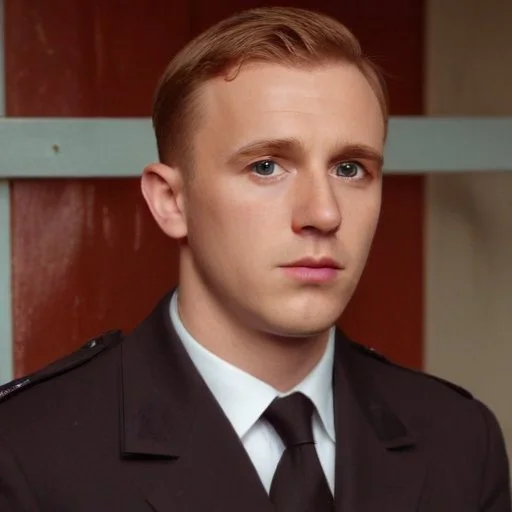
Billy Wright rose to prominence in the 1990s as the leader of the Loyalist Volunteer Force (LVF), a Protestant paramilitary group. His brutal tactics and extremist views made him a feared figure in Northern Ireland, earning him the nickname "King Rat."
In the years leading up to his assassination, Wright's actions became increasingly erratic and violent. He was imprisoned multiple times for various offenses, including murder and extortion. However, his influence continued to grow, and he became a rallying figure for Protestant extremists.
In December 1997, Wright was taken into custody and imprisoned in Maze Prison, where he was being held for his alleged involvement in the murder of a Catholic taxi driver. It was here that he would meet his demise.
On December 27, 1997, three Irish nationalist inmates, suspected of being members of the Irish National Liberation Army (INLA), attacked Wright in the prison's recreation room. Wright was shot multiple times and died shortly after arrival at the hospital.
The assassination of Billy Wright sent shockwaves throughout Northern Ireland, further straining the fragile peace process. Protestant extremists retaliated with a wave of violence, targeting Catholic civilians and sparking fears of a return to the sectarian bloodshed of the past.
The event also marked a significant shift in the region's power dynamics, as Protestant paramilitary groups began to fragment and lose influence. The Irish government and the British government eventually launched investigations into Wright's activities and the prison's security lapses, leading to significant reforms.
Billy Wright's assassination served as a grim reminder of the region's troubled past and the need for continued reconciliation efforts. It highlighted the importance of addressing the root causes of sectarian violence and the role of extremist ideologies in perpetuating conflict.
In the years following Wright's death, Northern Ireland made significant strides towards peace and reconciliation. The Good Friday Agreement, signed in 1998, established a power-sharing government and paved the way for the eventual disarmament of paramilitary groups.
Billy Wright's brutal legacy serves as a warning against the dangers of extremism and the importance of promoting tolerance and understanding in the face of division.
The historiography of Billy Wright's assassination is marked by a distinct lack of consensus among historians and scholars. While some view the event as a pivotal moment in the Troubles, others downplay its significance in the broader context of Northern Irish politics.
Revisionist historians, such as Ed Moloney, argue that Wright's death was a result of British political maneuvering, aimed at weakening Protestant paramilitary groups and paving the way for the Good Friday Agreement.
Others, like Henry McDonald, contend that the assassination was a consequence of the LVF's own brutality and intransigence, which ultimately led to its downfall.
Regardless of interpretation, the event remains a crucial part of Northern Ireland's complex and contested history.
Billy Wright's life was marked by a tumultuous childhood, punctuated by periods of violence and instability. His father, a former British soldier, was known for his extreme right-wing views, which likely influenced Wright's early radicalization.
Wright's relationships with women were often characterized by violence and abuse, with some of his partners later speaking out about the trauma they suffered at his hands.
In contrast, Wright's relationships with his fellow loyalists were marked by a messianic fervor, with many viewing him as a charismatic leader and defender of the Protestant faith.
Despite his brutal nature, Wright's personal life remains shrouded in mystery, with many details of his relationships and motivations still unknown.
The political fallout from Wright's assassination was immediate and far-reaching. The British government, already reeling from the IRA's 1997 ceasefire, faced intense pressure to respond to the sudden escalation of violence.
In the aftermath, Protestant extremists launched a wave of retaliatory attacks, targeting Catholic civilians and property.
The Irish government, led by Bertie Ahern, condemned the assassination and called for calm, while Sinn Féin leader Gerry Adams denounced Wright as a "murderer" and a "criminal".
The event ultimately led to increased diplomatic efforts to broker a lasting peace, culminating in the Good Friday Agreement the following year.
Billy Wright's assassination had a profound impact on Northern Irish culture, symbolizing the violent extremes of the Troubles.
In the years following his death, artists and writers began to grapple with the legacy of Wright and the LVF, seeking to understand the roots of sectarian violence.
Films like The Wind That Shakes the Barley and Hunger explored the complexities of the Troubles, while novels like Eoin MacNamee's Resurrection Man delved into the psychological motivations of loyalist paramilitaries.
Wright's image has also been co-opted by some extremist groups, who view him as a martyr and a symbol of resistance against perceived Catholic and Irish nationalist aggression.
The geopolitical context of Billy Wright's assassination was marked by a complex web of alliances and rivalries between Protestant and Catholic paramilitary groups.
The LVF, with its close ties to British intelligence and security services, was seen as a key player in the loyalist faction.
In contrast, the INLA, responsible for Wright's assassination, was viewed as a rival force, closely aligned with Irish republican groups like Sinn Féin.
The event highlighted the deep-seated divisions within Northern Irish society, where extremist ideologies and rival nationalist identities continued to fuel violence and instability.