


The Provisional Irish Republican Army's (IRA) mortar attack on the Royal Ulster Constabulary (RUC) police station at Newry on February 22, 1985, is infamous for being one of the deadliest incidents during Northern Ireland's troubled period, known as the Troubles. The attack, which claimed the lives of nine police officers and left many more wounded, marked a stark escalation in the conflict, plunging the already volatile region into further chaos and uncertainty.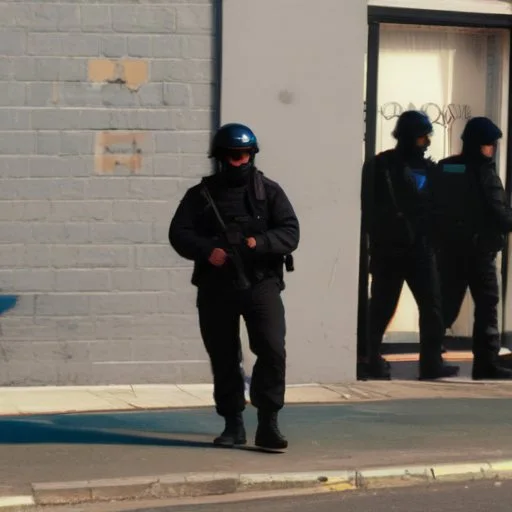
The Troubles, a complex and multifaceted conflict, had been simmering in Northern Ireland since the late 1960s. The IRA, seeking to end British rule and unify Ireland, clashed with loyalist groups and the British government. The RUC, tasked with maintaining law and order, found itself in the midst of the conflict, often caught between rival factions.
At approximately 6:30 pm, a series of mortar bombs were launched from a hijacked lorry parked near the RUC station in Newry. The attack, carefully planned and executed, caught the police off guard, resulting in catastrophic consequences. Nine officers, all members of the RUC's reserve force, were killed instantly, while many more suffered severe injuries.
The IRA's South Armagh Brigade, notorious for their ruthlessness, claimed responsibility for the attack. While no single individual was identified as the mastermind behind the operation, it is believed that senior IRA figures, such as Thomas Murphy and Slab Murphy, played key roles in planning and coordinating the attack.
The Newry mortar attack sent shockwaves throughout Northern Ireland, prompting widespread outrage and condemnation. The incident led to a significant increase in security measures, including the deployment of British troops to the region. The attack also fueled further unrest, with retaliatory attacks from loyalist groups and a surge in recruitment for both the IRA and loyalist militias.
The attack on Newry had a profound impact on the social fabric of Northern Ireland. It reinforced the sense of fear and mistrust that had been building between the Catholic and Protestant communities, further entrenching the division between nationalists and unionists. The incident also sparked a wave of anti-British sentiment, galvanizing support for the IRA among some sections of the nationalist community.
The attack sparked heated debate and recrimination, with many questioning the IRA's motives and tactics. Critics argued that the attack was a brutal and indiscriminate act of terrorism, while others saw it as a legitimate response to British occupation and repression. The incident remains a contentious issue, with some still debating the morality and effectiveness of the IRA's actions.
Survivors of the attack, including RUC officers and local residents, shared harrowing accounts of the incident. One officer, who was severely injured in the blast, recalled: "I remember the sound of the explosion, the feeling of being thrown across the room... It was like nothing I'd ever experienced before."
The Newry mortar attack served as a catalyst for further violence and unrest in Northern Ireland. The incident prompted a re-evaluation of security measures and a renewed focus on negotiated settlements. The attack also influenced the British government's approach to the conflict, with increased efforts to engage with nationalist parties and address underlying grievances.
The Newry mortar attack remains a powerful symbol of the devastating consequences of the Troubles. As Northern Ireland continues to grapple with its complex past, the incident serves as a poignant reminder of the human cost of conflict and the importance of striving for peace and reconciliation.
The Newry mortar attack was not an isolated incident, but rather part of a larger pattern of IRA violence in the 1980s. The South Armagh Brigade, responsible for the attack, had been engaging in a campaign of terror against British and RUC targets in the region. In the years leading up to the attack, the brigade had carried out numerous bombings, ambushes, and assassinations, causing widespread fear and instability.
In the months preceding the attack, there were several indications that the IRA was planning a major operation. Intelligence reports suggested that the IRA had acquired a large quantity of explosives and was actively recruiting new members. However, despite these warnings, the RUC and British security forces were caught off guard by the sheer scale and audacity of the attack.
The attack on Newry was also part of a broader IRA strategy to target "soft" targets, such as police stations and commercial centers, in an effort to disrupt the daily lives of Northern Ireland's citizens and undermine confidence in the government. This strategy was designed to create a sense of chaos and uncertainty, ultimately forcing the British government to negotiate with the IRA.
Thomas "Slab" Murphy, a senior IRA figure, was widely suspected of being the mastermind behind the Newry mortar attack. A member of the IRA's Army Council, Murphy was known for his ruthless tactics and ability to evade capture. Despite being one of the most wanted men in Northern Ireland, Murphy remained at large for many years, earning him a reputation as a cunning and elusive opponent.
Murphy's involvement in the attack was likely driven by his desire to strike a major blow against the British government and the RUC. As a senior IRA commander, he was deeply committed to the republican cause and was willing to use any means necessary to achieve his goals. Murphy's role in the attack has been the subject of much speculation, but his influence on the IRA's military strategy is undeniable.
The Newry mortar attack had a profound impact on the cultural fabric of Northern Ireland. The attack reinforced the sense of fear and mistrust that had been building between the Catholic and Protestant communities, further entrenching the division between nationalists and unionists. The incident also sparked a wave of anti-British sentiment, galvanizing support for the IRA among some sections of the nationalist community.
In the aftermath of the attack, many artists and writers responded to the tragedy by creating works that reflected the sense of outrage and sadness that pervaded the community. The attack also inspired a new wave of republican ballads, which honored the memories of those who had lost their lives in the struggle for independence.

The Newry mortar attack marked a significant escalation in the conflict between the IRA and the British government. The attack prompted a major review of security procedures and led to a significant increase in the deployment of British troops in Northern Ireland. The incident also led to a renewed focus on negotiated settlements, with the British government acknowledging the need for greater engagement with nationalist parties.
In the years following the attack, the British government implemented a range of new policies aimed at addressing the underlying grievances of the nationalist community. These included measures to improve economic development, address discrimination, and promote greater political representation for nationalists. The attack also led to a renewed focus on cross-border cooperation, with the Irish government playing a more active role in the peace process.
The Newry mortar attack took place against the backdrop of a complex and rapidly changing geopolitical landscape. The 1980s were marked by a series of significant international developments, including the rise of Soviet influence in Eastern Europe and the increasing importance of the European Community. The attack also coincided with a period of heightened tension between the British and Irish governments, which were engaged in a series of diplomatic talks aimed at finding a solution to the Northern Ireland conflict.
The attack was widely condemned by governments around the world, with many countries issuing statements of condolence and support for the victims and their families. The incident also sparked a renewed focus on international cooperation, with many countries recognizing the need for greater collaboration in the fight against terrorism.