


The Provisional Irish Republican Army's (IRA) 18-month ceasefire came to a violent end on February 9, 1996, when a massive bomb ripped through London's bustling Canary Wharf, killing two innocent civilians and injuring over 100 people. This senseless act of terror marked a devastating turning point in the region's fragile peace process, sending shockwaves throughout the UK and beyond.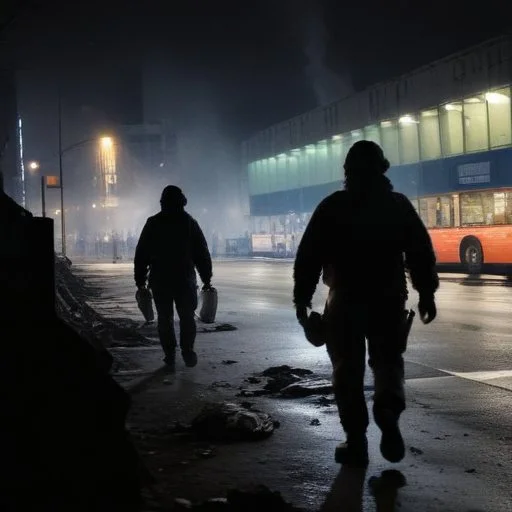
The roots of the conflict date back to the late 1960s, when the IRA's armed campaign against British rule in Northern Ireland began. The conflict, known as the Troubles, claimed thousands of lives and left many more scarred over the decades. In 1994, the IRA declared a ceasefire, which was seen as a major step towards peace. However, the subsequent 18-month period was marked by frustration and distrust, ultimately leading to the breakdown of the ceasefire.
The bombing occurred at 7:01 pm on a chilly winter evening, when a 500-pound bomb hidden in a truck exploded on South Quay, near the iconic Canary Wharf tower. The blast was so powerful that it shattered windows and damaged buildings up to a mile away. The two fatalities, John Jeffries and Inam Bashir, were innocent civilians who became tragic victims of the IRA's actions.
The bombing was widely condemned by politicians, civic leaders, and ordinary citizens across the UK and Ireland. British Prime Minister John Major called the bombing "an appalling and tragic event," while Irish Prime Minister John Bruton condemned it as "a brutal and cruel act." The bombing led to a surge in security measures, with increased surveillance and checkpoints in London and beyond.
The Canary Wharf bombing marked a significant setback for the peace process, undermining trust and confidence in the region. The bombing led to a renewed sense of fear and uncertainty, with many questioning the IRA's commitment to peace. The incident also galvanized the British government to take a tougher stance on Irish republicanism, leading to increased pressure on the IRA to disarm and disband.
The Canary Wharf bombing has also had a lasting impact on popular culture, with references to the event appearing in films, literature, and music. The bombing has become a symbol of the fragility of peace and the devastating consequences of violence, serving as a poignant reminder of the importance of dialogue and understanding in resolving conflicts.
The Canary Wharf bombing was a devastating act of terror that marked a turning point in the region's fragile peace process. The bombing serves as a poignant reminder of the importance of dialogue, understanding, and compromise in resolving conflicts, and its legacy continues to shape our understanding of the complexities of Irish politics and the struggle for peace.
John Jeffries, one of the two victims of the Canary Wharf bombing, was a 45-year-old father of two who worked as a newspaper dispatcher. He was known to his friends and family as a kind and gentle soul who always put others before himself. Jeffries was on his way home from work when the bomb exploded, killing him instantly.
His family described him as a "lovely person" who would do anything for anyone. His death was met with an outpouring of grief from the community, with many paying tribute to his kind nature and senseless loss of life.
The Troubles, a period of sectarian violence and political unrest in Northern Ireland, were deeply rooted in the region's complex history and geopolitics. The conflict was fueled by decades of British rule, discriminatory policies, and socioeconomic disparities between the Protestant and Catholic communities.
The IRA's campaign against British rule was seen by many as a fight for Irish independence and self-determination. The British government, on the other hand, viewed the IRA as a terrorist organization bent on destroying the rule of law and order. This geopolitical context of competing narratives and interests laid the groundwork for the fragile peace process and ultimately, the Canary Wharf bombing.
The Canary Wharf bombing has been referenced in various forms of art and media, reflecting its significance as a cultural touchstone. In films like Omagh and Shadow Dancer, the bombing is depicted as a pivotal moment in the Troubles, highlighting the human cost of violence and political turmoil.
In literature, authors like Eoin McNamee and Anna Burns have explored the themes of identity, trauma, and reconciliation in the context of the Canary Wharf bombing. The event has also been referenced in music, with bands like U2 and The Cranberries addressing the conflict and its aftermath in their songs.

The Canary Wharf bombing had significant economic implications for the region, with estimates suggesting that the damage and disruption cost the UK economy over £100 million. The bombing also led to a decline in investor confidence, with many businesses reconsidering their operations in London and Northern Ireland.
In the long term, the bombing spurred increased investment in security measures and emergency response systems, creating new economic opportunities in the sector. However, the bombing also underscored the need for a political solution to the conflict, as the ongoing violence and uncertainty continued to undermine the region's economic potential.
The Canary Wharf bombing marked a significant shift in the political landscape, as the British government responded to the attack with a tougher stance on Irish republicanism. The bombing led to increased pressure on the IRA to disarm and disband, paving the way for the eventual Good Friday Agreement in 1998.
The bombing also led to a renewed focus on political dialogue, with the British and Irish governments engaging in intense diplomatic efforts to salvage the peace process. The event underscored the need for a comprehensive political solution to the conflict, one that would address the underlying issues driving the violence and instability.