


The Quit India Movement, launched on August 8, 1942, was a nationwide protest that marked a significant turning point in India's struggle for freedom from British rule. This movement, sparked by Mohandas Gandhi's call for swaraj or complete independence, was a watershed moment in India's history, paving the way for the country's eventual freedom in 1947.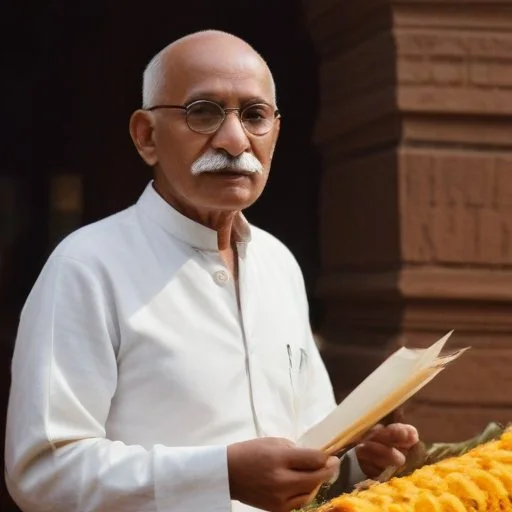
In the early 1940s, India was still under British rule, and the country was reeling from the effects of World War II. The British government had unilaterally declared India's participation in the war, without consulting the Indian people or their leaders. This move led to widespread discontent and resentment among Indians, who felt that the British were exploiting their country's resources to fuel their own war efforts.
Mohandas Gandhi, the Indian freedom fighter, was the driving force behind the Quit India Movement. Gandhi, who had already gained international recognition for his non-violent resistance movement, issued a call to action, urging Indians to demand complete independence from British rule. Other key figures involved in the movement included Jawaharlal Nehru, Maulana Azad, and Sardar Patel, who all played important roles in mobilizing the Indian masses and organizing the protests.
August 8, 1942: Gandhi launches the Quit India Movement, calling for complete independence from British rule.
August 9, 1942: Gandhi and other Indian leaders are arrested by the British, sparking widespread protests and demonstrations across India.
September 1942: The British government responds to the protests with brutal force, killing and injuring hundreds of protesters.
October 1942: The Indian National Congress passes a resolution, stating that India would only cooperate with the British in the war effort if the country was granted complete independence.
The Quit India Movement marked a significant shift in India's struggle for independence. For the first time, the Indian masses had come together to demand complete independence from British rule, rather than just limited self-governance. The movement also led to a hardening of the British government's stance, with the British government refusing to grant India independence until the end of World War II.
The Quit India Movement had a profound impact on Indian culture and society. The movement inspired a new generation of Indians to take up the cause of independence, and it marked a turning point in the country's struggle for freedom. The movement also led to a renewed focus on Indian identity and a sense of national pride, as Indians began to assert their independence from British rule.
"The struggle of India's liberation is a part of the world struggle for freedom. India's freedom is indivisible from the freedom of the world." - Mohandas Gandhi
The Quit India Movement has been compared to other anti-colonial movements around the world, including the American Revolution and the Algerian War of Independence. While these movements shared common goals and ideals, the Quit India Movement was unique in its emphasis on non-violent resistance and its focus on Indian identity and culture.
One of the most famous accounts of the Quit India Movement comes from Jawaharlal Nehru, who wrote about his experiences in his autobiography. Nehru described the movement as a "watershed moment" in India's struggle for independence, and he vividly recalled the sense of excitement and urgency that gripped the Indian people during those tumultuous days.
The Quit India Movement paved the way for India's eventual independence in 1947. The movement marked a turning point in the country's struggle for freedom, and it inspired a new generation of Indians to take up the cause of independence. The movement also influenced future anti-colonial movements around the world, as people began to assert their rights and demand independence from colonial powers.
Mohandas Gandhi was awarded the Bharat Ratna, India's highest civilian honor, for his role in leading the Quit India Movement. Other leaders involved in the movement, including Jawaharlal Nehru and Sardar Patel, were also awarded the Bharat Ratna for their contributions to India's struggle for independence.
The Quit India Movement has been the subject of numerous academic studies and historical analyses. The movement has also been included in school curricula around the world, as a way of teaching students about the importance of non-violent resistance and the struggle for independence.
Did you know that the Quit India Movement was initially called the "August Kranti" or "August Revolution"? This name was later changed to reflect the movement's focus on Indian independence.
The Quit India Movement has inspired countless Indians to take up the cause of independence and fight for their country's freedom. The movement's emphasis on non-violent resistance and civil disobedience has also inspired people around the world to stand up against oppression and fight for their rights.
The Quit India Movement was a defining moment in India's struggle for independence, marking a turning point in the country's history and paving the way for eventual freedom in 1947. This movement, sparked by Mohandas Gandhi's call for swaraj or complete independence, was a testament to the power of non-violent resistance and the Indian people's determination to assert their rights and demand freedom from colonial rule.
The life of Maulana Azad was a testament to his unwavering commitment to Indian independence. Born on November 11, 1888, Azad was a scholar, poet, and politician who played a pivotal role in the Quit India Movement. He was a key figure in the Indian National Congress and served as its president from 1940 to 1946. Azad's eloquence and persuasive abilities made him a powerful orator, and his speeches inspired countless Indians to join the fight for independence.
Azad's involvement in the Quit India Movement was crucial, as he helped mobilize support for the movement across the country. He traveled extensively, delivering impassioned speeches and rallying the masses to demand complete independence from British rule. Despite being arrested by the British in 1942, Azad continued to inspire the Indian people, and his leadership played a significant role in the eventual attainment of independence.

The August Kranti, or August Revolution, was the initial name given to the Quit India Movement. This name was chosen to reflect the sense of urgency and revolution that characterized the movement. However, the name was later changed to Quit India to emphasize the demand for complete independence from British rule.
The August Kranti name was significant, as it evoked the idea of a sudden and dramatic change in the Indian independence movement. The Quit India Movement marked a turning point in India's struggle for freedom, as it shifted the focus from limited self-governance to complete independence. This shift was a crucial factor in the eventual attainment of independence in 1947.
The Quit India Movement had a profound impact on Indian culture and society. The movement inspired a new generation of Indians to take up the cause of independence and assert their national identity. The emphasis on non-violent resistance and civil disobedience also led to a renewed focus on Indian values and traditions.
The movement's impact on Indian culture was evident in the proliferation of patriotic songs, poems, and literature that emerged during this period. These creative works served as a powerful medium for expressing nationalist sentiments and inspiring the masses to join the fight for independence.

The Quit India Movement marked a significant shift in the Indian independence movement's political strategy. The movement's emphasis on non-violent resistance and civil disobedience was a deliberate attempt to challenge the British government's authority and expose its brutality.
The British government's response to the movement, characterized by brutal force and repression, only served to galvanize the Indian people and strengthen their resolve for independence. The movement's political impact was profound, as it paved the way for future protests and demonstrations that would ultimately lead to India's independence.
The Quit India Movement was a testament to the power of mass mobilization and social change. The movement's success was a direct result of the Indian people's ability to come together and demand complete independence from British rule.
The movement's impact on social dynamics was significant, as it bridged the gap between different social classes and united the Indian people in their quest for freedom. The movement's emphasis on non-violent resistance also helped to promote a culture of peace and non-violence, which continues to influence Indian society to this day.